


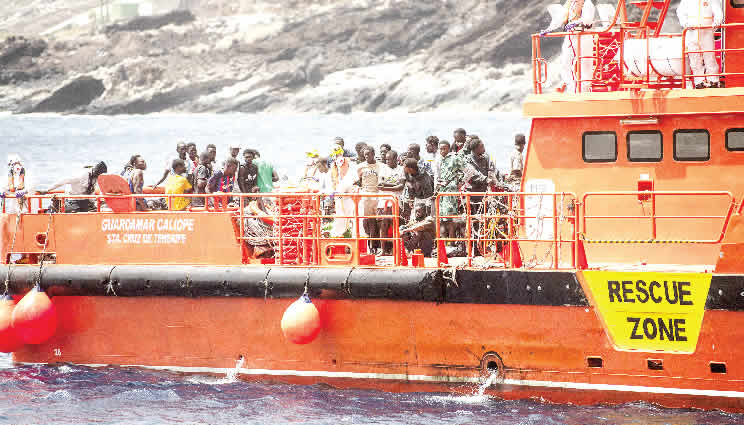
On Tuesday, emergency responders successfully rescued 136 African migrants who were attempting to reach Europe from a boat near the Canary island of El Hierro. This island, known for being the second smallest and located farthest south and west in the Canary Islands, is situated in the Atlantic Ocean off the coast of Africa. The migrants were brought to La Restinga port in Spain aboard a vessel operated by the Spanish sea search and rescue agency.
This rescue operation comes at a time when Spain is grappling with a significant increase in the number of migrants arriving on its shores. Spanish Prime Minister Pedro Sanchez is scheduled to embark on a three-day visit to West Africa, starting Tuesday, in response to this pressing issue. The prime minister’s trip aims to address the surge in migrant arrivals, which has become a critical concern for his government.
Spain’s coastguard reports that it rescues boats carrying numerous African migrants almost daily, as many seek to reach the Canary Islands, which serve as a primary transit point for those aiming for mainland Europe. The local government of the Canary Islands has urgently requested additional support from the European Union to manage the growing migratory pressure, emphasizing that the islands should not bear the burden alone.
During his visit, Sanchez plans to meet with leaders from Mauritania, The Gambia, and Senegal three key countries involved in the migration crisis. It remains unclear what measures or incentives he might propose to Mauritania, a major departure point for migrants, to enhance efforts in curbing the flow of people attempting to leave for the Canaries. Recent estimates suggest that approximately 200,000 individuals are currently waiting in Mauritania to embark on this perilous journey.
Fernando Clavijo, the regional leader of the Canary Islands, recently met with Sanchez and underscored the urgent need for the European Union to take action. He pointed out that the influx of migrants poses a broader challenge for Europe, as many of these individuals ultimately aim to reach Spain and other European nations, not just the Canary Islands.
Data from Spain’s interior ministry indicates a staggering increase in migrant arrivals this year. From January 1 to August 27 2024, the Canary Islands welcomed 22,304 migrants, marking a 126 percent rise compared to the same timeframe in 2024, when only 9,864 migrants arrived. Overall, Spain reported a total of 31,155 migrant arrivals by mid-August, reflecting a 66.2 percent increase from the previous year’s figures.
As autumn approaches, it is anticipated that the numbers will continue to rise, as favorable weather conditions facilitate Atlantic crossings. Last year’s total migrant arrivals reached a record 39,910, and current trends suggest that 2024 could see even higher figures, solidifying the Atlantic route to the Canary Islands as a key pathway for migrants, despite the inherent dangers involved.
The journey across the Atlantic is fraught with peril, characterized by treacherous currents that have led to thousands of deaths and disappearances each year. Many migrants travel on overloaded and often unseaworthy vessels, further increasing the risks they face.
The situation is not limited to the Canary Islands, as other regions of Spain, such as the small enclave of Ceuta, have also reported a significant rise in migrant arrivals in recent weeks. The challenges posed by this growing migration crisis are pressing, prompting calls for more comprehensive responses from both Spanish authorities and the broader European community.
Post Views: 407