


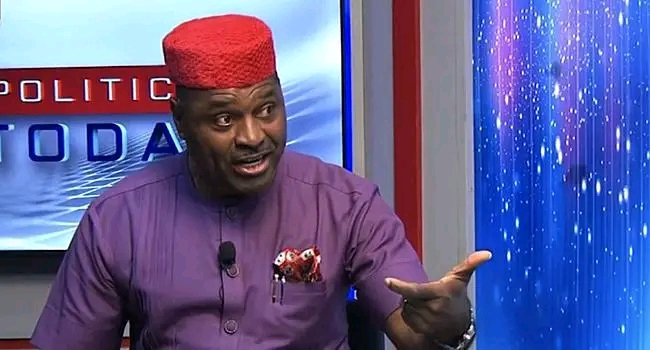
“2027 Presidency: Kenneth Okonkwo Warns That Divided Opposition Could Hand Victory to Tinubu”
Former Labour Party presidential campaign spokesperson, Kenneth Okonkwo, has stirred fresh political debate ahead of Nigeria’s 2027 general elections, arguing that a vote for Peter Obi under the current political circumstances could ultimately strengthen President Bola Ahmed Tinubu’s chances of securing re-election.
Speaking during recent political discussions on the future of Nigeria’s opposition movement, Okonkwo emphasized the need for a united opposition front capable of presenting a single, formidable presidential candidate against the ruling All Progressives Congress (APC). According to him, fragmentation among opposition parties could split votes and inadvertently benefit the incumbent president.
Okonkwo, who previously played a prominent role in Peter Obi’s 2023 presidential campaign, maintained that Nigeria’s opposition forces must prioritize strategic alliances over individual political ambitions if they hope to mount a successful challenge in the next election cycle. He argued that lessons from previous elections demonstrate how divided opposition blocs often struggle to overcome the electoral advantages enjoyed by ruling parties.
His comments come amid growing political realignments and consultations among opposition figures as discussions intensify over possible coalitions ahead of the 2027 presidential election. Political analysts note that coalition-building may become a defining factor in determining the competitiveness of the next electoral contest, particularly as major opposition parties seek ways to consolidate support across Nigeria’s diverse regions.
Supporters of Peter Obi, however, continue to argue that the former Anambra State governor remains one of the country’s most influential opposition figures, citing his strong performance in the 2023 election and sustained popularity among young voters and reform-minded Nigerians. Critics of Okonkwo’s position contend that democratic competition should allow multiple candidates to contest freely without pressure for political mergers.
As Nigeria gradually enters another phase of political positioning, the debate over opposition unity, coalition politics, and electoral strategy is expected to shape national conversations in the months and years leading up to the 2027 presidential election.