

On September 16, 2024, a notable divergence emerged between the Dangote Petroleum Refinery and the Nigerian National Petroleum Company Limited (NNPC) regarding the pricing of Premium Motor Spirit (PMS), commonly known as petrol. This development follows the commencement of petrol supply from the Dangote Refinery, marking a significant milestone in Nigeria’s quest for energy self-sufficiency.
While both the Dangote Refinery and NNPC provided conflicting accounts of the price at which petrol was dispensed, independent oil marketers indicated that they were still awaiting clarity on the pricing from NNPC, which serves as the sole off-taker for the product. According to reports, major oil marketers received petrol from NNPC at a rate of N766 per litre. In contrast, NNPC stated that it purchased the product from Dangote at N898 per litre.
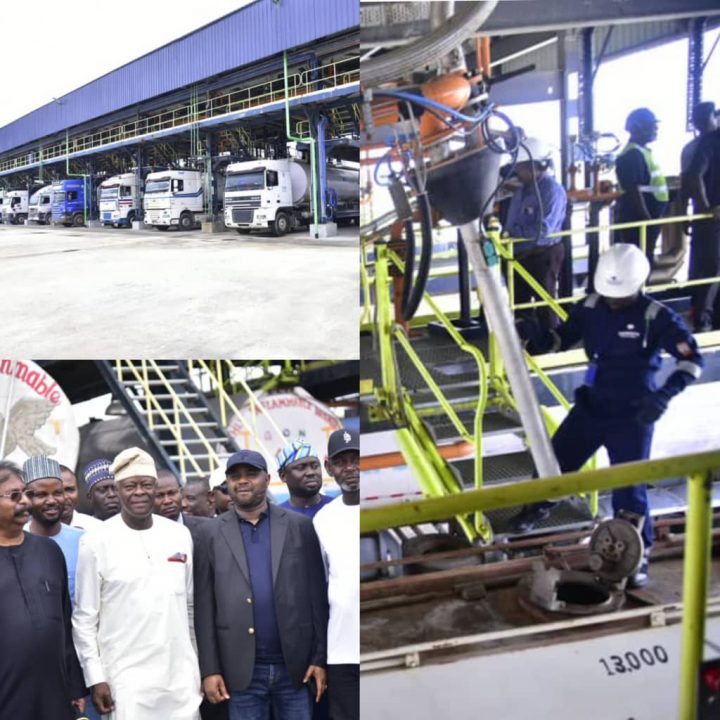
On the first day of petrol distribution from the Dangote refinery, NNPC confirmed that it was set to load 16.8 million litres of petrol, a figure lower than the 25 million litres initially announced by the refinery. Olufemi Soneye, NNPC’s spokesperson, reported that over 70 trucks loaded with PMS departed the Dangote facility, which has a production capacity of 650,000 barrels per day.
In a WhatsApp message, Soneye provided further details, stating, “We successfully loaded PMS today at the Dangote refinery. The report stating that we purchased it at N1,300 per litre is false. For this initial loading, the price was N898 per litre. I can also confirm that we will receive 16.8 million litres. As of now, we have loaded over 70 trucks.”
However, Dangote Refinery quickly refuted NNPC’s pricing claim. Anthony Chiejina, the Chief Branding and Communications Officer of Dangote Group, described the assertion as “misleading and mischievous.” He accused the NNPC of attempting to undermine the significant achievement of the refinery in addressing Nigeria’s long-standing energy crisis. Chiejina urged the public to disregard NNPC’s statement and await an official announcement on pricing from the Technical Sub-Committee on Naira-based crude sales to local refineries, which is set to commence on October 1, 2024.
Chiejina clarified that the current stock of crude sold to NNPC was procured in U.S. dollars, emphasizing that the Dangote refinery aims to provide petrol across all Local Government Areas in Nigeria, addressing both availability and quality. He asserted, “With this action, there will be petrol in every Local Government Area of the country regardless of their remote nature.”
The President of the Independent Petroleum Marketers Association of Nigeria (IPMAN), Abubakar Maigandi, expressed concerns that IPMAN members had not yet received the official price from NNPC, which could impact their operations. He noted, “We are hearing of different prices, but we have not heard from NNPC directly on the amount that they would want to sell the product to us.”
A major oil marketer, who spoke on the condition of anonymity, confirmed that they sourced petrol from NNPC at N766 per litre, while also emphasizing the logistics involved in the transaction. “When NNPC gives marketers allocation, they will simply go to Dangote to pick up. The payment will be to NNPC, while NNPC in turn pays to Dangote,” the source explained.
In terms of future supply, the Executive Vice President of Downstream at NNPC, Dapo Segun, stated that the price of petrol would be determined by market forces rather than regulatory intervention. He explained, “NNPC is not a regulator. We can’t say NNPC sets the price. The government is not involved. It is the market forces that set the price.” Segun highlighted the negotiation process that led to the agreement on pricing for the petrol.
The Vice President of Dangote Industries Limited, Devakumar Edwin, remarked that the refinery’s production capacity would significantly alleviate the recurring fuel scarcity that has plagued Nigeria for over five decades. He expressed confidence in the facility’s ability to meet the country’s petrol needs while also maintaining a surplus for export. “The production capacity is so large that we can meet all the requirements of Nigeria and we have a huge surplus to export,” Edwin stated.
With the capability to load 290 tankers per day, Edwin emphasized the refinery’s efficiency and commitment to resolving the fuel scarcity crisis. He also noted that logistics for transporting products would be optimized to minimize congestion and reduce costs, with plans to enhance sea transport options.
In a related statement, Minister of Finance and Coordinating Minister of the Economy, Wale Edun, expressed optimism that the refinery’s operations would curb illegal fuel smuggling to neighboring countries, thereby generating additional foreign exchange revenue for Nigeria. Edun highlighted the importance of energy sufficiency for the nation’s industrialization and overall economic growth.
As the Dangote refinery begins its operations, the implications for petrol pricing and availability in Nigeria remain significant. Stakeholders are keenly observing how these developments will unfold and impact the broader energy landscape in the country. With promises of increased production and improved logistics, there is hope that the challenges of fuel scarcity may soon be addressed, benefiting consumers and the economy alike.