



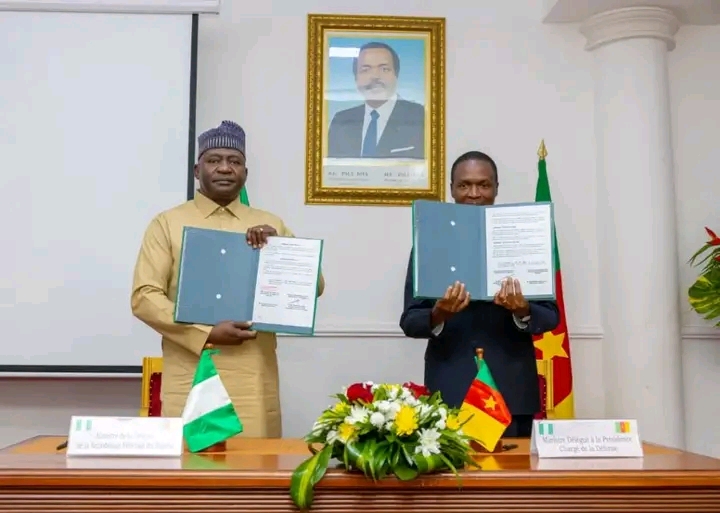
Nigeria, Cameroon Deepen Defence Ties with New Border Security and Maritime Safety Agreement.
Nigeria and Cameroon have taken a significant step toward strengthening regional security cooperation after signing a new Memorandum of Understanding (MoU) aimed at enhancing border security, maritime safety, and defence collaboration in the Gulf of Guinea.
The agreement underscores the commitment of both neighbouring countries to address shared security challenges, including cross border crime, piracy, illegal trafficking, terrorism, and other transnational threats that continue to affect stability and economic activities across the region.
According to officials from both nations, the pact will facilitate closer intelligence sharing, coordinated border surveillance, joint security operations, and enhanced cooperation between military and maritime agencies. The initiative is also expected to improve the protection of strategic maritime routes within the Gulf of Guinea, a region that remains vital to international trade and energy transportation.
Security experts have long advocated stronger collaboration between Nigeria and Cameroon, particularly given their shared border and common security concerns. Both countries have previously worked together through multinational efforts to combat insurgency and criminal activities in border communities. The new agreement is expected to further consolidate those efforts while promoting regional peace, economic growth, and safer maritime commerce.
The Gulf of Guinea has witnessed sustained international attention due to security challenges affecting shipping activities and coastal communities. Analysts believe that improved cooperation between key regional actors such as Nigeria and Cameroon could contribute significantly to broader efforts aimed at securing West and Central African waters.
The latest MoU reflects a growing recognition among African nations that collective security approaches are essential for tackling increasingly complex threats that transcend national boundaries. Observers say the agreement could serve as a model for deeper regional defence cooperation and maritime governance across Africa.