


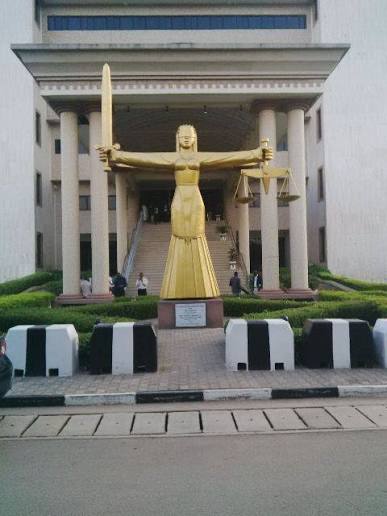
Abuja Court Remands FIJ Journalist Daniel Ojukwu in Kuje Prison Over Cyber stalking Charges Linked to Buhari Era Official.
A Federal High Court in Abuja has ordered the remand of Daniel Ojukwu, a journalist with the Foundation for Investigative Journalism (FIJ), at the Kuje Correctional Centre over a 12-count cyberstalking and defamation case linked to his investigative reports on a former aide to ex President Muhammadu Buhari.
The court, presided over by Justice Joyce Abdulmalik, reportedly ordered Ojukwu’s detention until December 1, 2026, after adjourning proceedings on his bail application. The case involves allegations brought by the Nigeria Police Force against Ojukwu and FIJ founder, Fisayo Soyombo.
According to the prosecution, the charges concern several reports published by FIJ between November 2023 and January 2024 about Adejoke Orelope Adefulire, who served as Senior Special Assistant to former President Buhari on Sustainable Development Goals (SDGs).
The police allege that the publications amounted to cyberstalking and defamation, claiming that some of the reports were intended to harass the former presidential aide and cause fear. These remain allegations to be determined by the court.
Investigative Reports at the Centre of the Case
The disputed publications examined government funded projects and financial transactions involving the Office of the Senior Special Assistant to the President on Sustainable Development Goals.
One of the reports, published on November 7, 2023, questioned an alleged payment of approximately N147.1 million to a company described in the investigation as a restaurant for classroom construction projects in Lagos State.
Another report examined a separate N47.5 million contract, while other publications raised questions about the handling of funds recovered by the Economic and Financial Crimes Commission (EFCC) and the condition of solar installations at completed classroom projects.
The police contend that the reports contained defamatory and allegedly false information. However, the underlying investigative findings and the allegations against the journalists have not been conclusively determined by the court.
Defence Challenges Continued Detention
During the proceedings, Ojukwu’s lawyer, Atanda Kayode, reportedly opposed the request for his client’s remand, drawing the court’s attention to a pending bail application.
The defence also asked that the journalist be allowed to continue enjoying the administrative bail previously granted by the police, arguing that he had not breached its conditions.
However, Justice Abdulmalik declined the request and adjourned the hearing of the bail application until December 1. The judge also declined the prosecution’s request for a bench warrant against Soyombo, stating that he had not been brought before the court.
A Case With a History of Press Freedom Concerns
The latest development follows Ojukwu’s highly publicized arrest in May 2024, when he was detained by police officers after going missing in Lagos.
His detention attracted widespread criticism from journalists, civil society organisations and press freedom advocates, who questioned the circumstances surrounding his arrest and the use of cybercrime legislation against investigative reporters.
The journalist was eventually released on May 10, 2024, after spending nine days in police custody. At the time, the police maintained that his arrest followed a petition alleging violations of the Cybercrimes Act.
The renewed court proceedings have brought attention back to the relationship between Nigeria’s cybercrime laws, investigative journalism and the constitutional right to freedom of expression.
Implications for Journalism and Accountability in Nigeria
The case raises broader questions about how cyberstalking and defamation provisions should be applied when journalists publish investigations involving public officials and the management of public funds.
While public officials retain the right to seek legal remedies against genuinely defamatory publications, press freedom advocates maintain that criminal proceedings should not become instruments for intimidating journalists or discouraging legitimate scrutiny of government activities.
Section 39 of Nigeria’s Constitution guarantees freedom of expression and the right to receive and impart information, while Section 22 recognizes the responsibility of the press to hold government accountable.
For Nigeria’s media industry, the outcome of the proceedings could carry important implications for investigative reporting, public accountability and the protection of journalists working on sensitive public interest stories.
As the case awaits its next hearing on December 1, attention will remain on the court’s handling of the bail application and the substantive allegations against the defendants.