


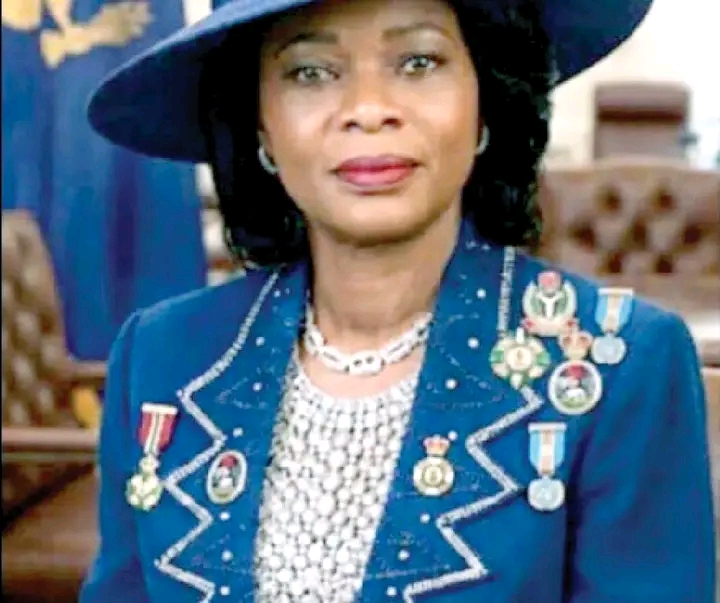
Reported by Musa Antiketu,| Journalist at Obaland magazine.
Akasoba Duke-Abiola Signal
ABUJA/NEW YORK — Nigerian legal scholar, peace advocate and traditional leader Prof. Akasoba Duke-Abiola has reportedly accepted a nomination to be considered for the position of United Nations Secretary-General, placing her name in a potentially significant conversation about African representation, women’s leadership and the future direction of global multilateralism.
Duke-Abiola’s reported acceptance is being framed around a commitment to public service, the protection of vulnerable communities and the advancement of international peace. However, Obaland magazine’s review of the United Nations’ official 2026 selection records could not independently confirm that Duke-Abiola has been formally submitted by a UN Member State or added to the organisation’s official list of candidates as of August 8, 2026.
That distinction is important because the UN Secretary-General position is not filled through an informal public nomination alone. Under the established process, candidates are formally presented by Member States to the presidents of the General Assembly and Security Council. The names, nominating states and supporting documents are then made public as part of the selection process.
The development nevertheless draws attention to Duke-Abiola’s long-standing involvement in peace advocacy, conflict resolution, human rights and public affairs, areas that have shaped much of her public profile over the years.
A Nigerian voice in a changing global leadership debate
The reported move comes at a particularly consequential moment for the United Nations.
The organisation is currently undertaking the process of selecting a successor to António Guterres, who became the ninth UN Secretary-General in January 2017. The 2026 process represents the first selection of a new UN chief in a decade and is taking place against the backdrop of wars, humanitarian emergencies, geopolitical rivalry, climate pressures, economic inequality and growing questions about the effectiveness of multilateral institutions.
The UN has described the current selection process as one requiring candidates with strong leadership abilities, international experience, diplomatic capacity and a commitment to the purposes and principles of the UN Charter.
The organisation formally began the latest process after a joint letter from the presidents of the General Assembly and Security Council was issued to Member States on November 25, 2025, inviting nominations.
The process has subsequently produced a number of formally recognised candidates from different parts of the world.
Among those officially listed are former Chilean president Michelle Bachelet, former Ecuadorian foreign minister María Fernanda Espinosa Garcés, International Atomic Energy Agency Director-General Rafael Mariano Grossi, former Costa Rican and UN official Rebeca Grynspan, former Senegalese president Macky Sall, Guyanese diplomat Carolyn Rodrigues Birkett and Ugandan diplomat Olara Otunnu.
Virginia Gamba, who was nominated by the Maldives in March 2026, subsequently withdrew her candidacy. Michelle Bachelet’s nomination by Chile was also later withdrawn by Chile, according to the UN’s official record.
Against that background, any claim that another individual has entered the contest requires formal verification through the UN’s nomination process.
Duke-Abiola’s background in peace and conflict resolution
Duke-Abiola is not a newcomer to international peace advocacy.
She has for years been associated with the Akasoba Centre for Peace and Conflict Resolution, an organisation through which she has participated in initiatives involving conflict resolution, peacebuilding and international engagement.
Her previous activities have brought her into contact with senior Nigerian and international figures. In 2013, The Nation reported that Duke-Abiola, identified as the Akasoba of Kalabari and chair of the Akasoba Centre for Peace and Conflict Resolution, invited political and traditional leaders to a peace initiative aimed at addressing the political crisis in Rivers State. The personalities associated with that initiative included former Nigerian Head of State Yakubu Gowon, former Zambian president Kenneth Kaunda and former UN Secretary-General Boutros Boutros-Ghali.
Her organisation also presented a Global Peace Initiative Prize in 2013 to then-UN Secretary-General Ban Ki-moon and South African President Jacob Zuma. Contemporary reporting said the award recognised their contributions to global peace efforts and disarmament.
These activities provide context for Duke-Abiola’s stated interest in international peace and diplomacy.
They do not, however, by themselves establish eligibility or formal candidacy for the UN Secretary-General position.
A history of political and public engagement
Duke-Abiola has also played a role in Nigerian political affairs.
In 2014, she emerged as an aspirant for the Peoples Democratic Party’s presidential ticket ahead of the 2015 general election. Several Nigerian media organisations reported her dispute with the party over access to presidential nomination and expression-of-interest forms.
TheCable reported at the time that the PDP accused Duke-Abiola of refusing to collect nomination documents even after the party said the forms had been made available to her through her lawyers.
Other reports documented her legal challenge against the party over its handling of the presidential nomination process. P.M. News reported that she filed a suit at the Federal High Court in Abuja against the PDP and joined the Independent National Electoral Commission in the case.
That history illustrates the breadth of her public engagement, extending from legal and political affairs to peacebuilding and advocacy.
Her profile has also included academic work. A 2025 academic paper lists Queen Akasoba Duke-Abiola as a corresponding author affiliated with the Institute of Governance and Development Studies at Nasarawa State University, Keffi. The research examined the potential role of cloud-seeding technology in addressing food security and climate-related challenges in Nigeria.
What a formal UN nomination would mean
A formal nomination for Secretary-General is considerably more significant than an expression of interest or an endorsement by an individual or organisation.
The United Nations’ current procedure requires Member States to submit candidates through formal communications to the presidents of the General Assembly and Security Council. The candidates are then included in the public selection process.
The Secretary-General is ultimately appointed by the General Assembly following a recommendation from the Security Council. Because of the structure of the Security Council, the five permanent members — China, France, Russia, the United Kingdom and the United States — possess veto power over the recommendation process.
This means that even a formally nominated candidate must navigate a highly political and diplomatic process involving both the broader UN membership and the Security Council.
The 2026 process has also introduced public-facing engagement designed to give candidates an opportunity to explain their visions and respond to questions from Member States and civil society.
The UN held interactive dialogues with candidates in April and June 2026. During these sessions, candidates were expected to address leadership experience, UN reform and the organisation’s three principal pillars: peace and security, development, and human rights.
A town-hall event involving candidates was also scheduled for July 23, 2026, as part of the broader selection process.
Africa and the question of representation
For Africa, the Secretary-General selection carries particular importance.
The continent has historically argued for stronger representation in global decision-making institutions, particularly as African states face conflicts, displacement, climate change, debt pressures, food insecurity, terrorism and uneven economic development.
The UN Secretary-General occupies a unique diplomatic position. The office does not function as the president of a world government, but the Secretary-General serves as the organisation’s chief administrative officer and has significant diplomatic responsibilities, including good offices, conflict prevention and advocacy on international crises.
The question of regional representation has therefore remained an important consideration in discussions around the selection of UN leadership.
A Nigerian candidate would inevitably generate interest within Africa, particularly if backed through the formal Member State nomination process.
Nigeria has historically played a prominent role in UN peacekeeping, diplomacy and multilateral affairs. The country has also supplied military and police personnel to UN peacekeeping operations and has repeatedly sought a stronger role in international institutions.
However, African representation alone would not determine the outcome of the Secretary-General contest. The successful candidate would need to demonstrate the diplomatic support, competence, integrity and international credibility required to command broad confidence among UN Member States.
Why verification matters
For Obaland magazine, the distinction between a reported nomination and a formally recognised UN candidacy is central to responsible journalism.
As of August 8, 2026, the UN’s official selection page lists seven current candidates and does not list Akasoba Duke-Abiola among them.
Consequently, Obaland magazine cannot independently state at this stage that Duke-Abiola is an official candidate for the position of UN Secretary-General.
Her reported acceptance may represent an emerging development, a nomination that has not yet appeared in the UN’s public database, or a nomination occurring through a channel that requires further clarification. Until a Member State formally communicates the nomination and the UN publishes the relevant documentation, the precise status of the reported candidacy remains unclear.
That caveat does not diminish the significance of the development. It instead places it within the proper diplomatic and institutional context.
The road ahead
If Duke-Abiola’s reported nomination is subsequently confirmed through the United Nations’ formal process, her candidacy would add a Nigerian and potentially African perspective to an already competitive field.
It would also place her record on peacebuilding, legal scholarship, human rights advocacy, political engagement and international diplomacy under much greater scrutiny.
The selection process will ultimately depend on the ability of candidates to convince Member States that they possess the independence, diplomatic skill and leadership capacity required to guide the world’s principal multilateral organisation.
For Africa, the debate extends beyond the identity of one candidate. It raises broader questions about whether the continent can secure a stronger voice in the institutions responsible for shaping global security, development, human rights and international cooperation.
For Nigeria, any serious bid for the UN’s highest administrative office would equally be a test of the country’s diplomatic influence and its ability to mobilise international support around an African candidate.
For now, however, the most accurate assessment is that Akasoba Duke-Abiola has reportedly accepted a nomination, but her formal status as a candidate for UN Secretary-General remains unconfirmed in the United Nations’ official public records as of August 8, 2026.
Obaland magazine will continue to monitor the UN selection process and update this report if formal documentation confirming her candidacy is published.
Sources
1. United Nations — Selection and Appointment of the Next Secretary-General: Official UN record of the 2026 selection process and current candidates.
2. United Nations General Assembly — Interactive Dialogues with Secretary-General Candidates: Official information on the public candidate engagement process.
3. United Nations — About the Secretary-General: Official explanation of the Secretary-General’s appointment process and Security Council role.
4. The Nation Nigeria — Rivers Crisis: Monarch Invites Jonathan, Amaechi, Others for Peace Talks: Historical reporting on Duke-Abiola’s peace and conflict-resolution activities.
5. TheCable — Come and Take Forms, PDP Tells Duke-Abiola: Historical reporting on Duke-Abiola’s 2014 presidential political activities.
6. P.M. News — Abiola’s Wife Sues PDP over Jonathan’s Sole Candidacy: Historical report on her legal challenge concerning the 2015 presidential nomination process.
7. International Journal of Social Science, Management, Peace and Conflict Research: 2025 academic publication listing Duke-Abiola as a corresponding author on research concerning cloud seeding, food security and climate resilience in Nigeria.
Nigerian professor Akasoba Duke-Abiola has reportedly accepted a UN Secretary-General nomination, but the United Nations has yet to list her as an official candidate as of August 8, 2026.