


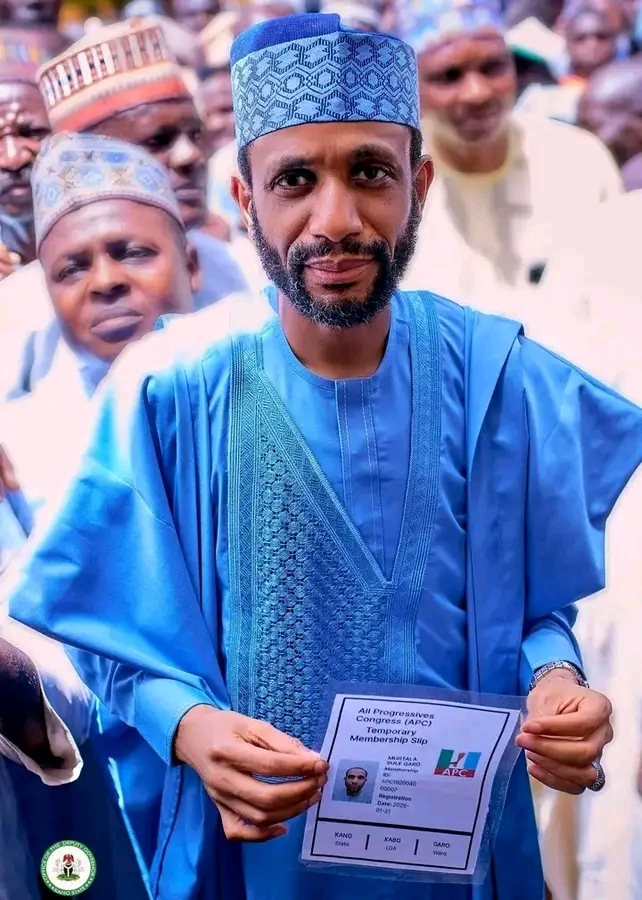
“APC Primary Turnout Signals Renewed Public Confidence in Nigeria’s Democracy Kano Deputy Governor”
The Deputy Governor of Kano State, Murtala Garo, has described the large voter turnout recorded during the recent primary election of the All Progressives Congress (APC) as a strong indication of Nigerians’ growing confidence in democratic participation and electoral processes.
Speaking after the conclusion of the APC primary exercise, Garo said the enthusiastic participation of party members and supporters demonstrated that citizens remain committed to shaping the country’s political future through democratic means despite prevailing economic and governance challenges.
According to the deputy governor, the high turnout reflected increasing public trust in internal party democracy and underscored the importance of credible electoral systems in sustaining national unity and political stability. He noted that active participation in party primaries is critical to strengthening democratic institutions and ensuring accountability among elected officials.
The APC primary, which attracted significant crowds across several voting centres, comes at a time when political activities are intensifying ahead of future electoral contests in Nigeria. Political observers say turnout figures in party primaries are often viewed as an early indicator of grassroots mobilisation and public engagement within the country’s democratic system.
Garo also commended party officials, electoral coordinators, and security personnel for maintaining order throughout the exercise. He urged political stakeholders across party lines to prioritise peaceful conduct, transparency, and issue based campaigns as Nigeria continues to consolidate its democracy.
Analysts note that voter participation in party primaries has become increasingly significant in Nigeria’s evolving political landscape, especially amid ongoing national conversations around electoral reforms, youth participation, governance, and institutional credibility.
The APC, Nigeria’s ruling party, has continued to position internal democratic processes as central to its political structure, while opposition parties and civil society groups have repeatedly called for stronger electoral accountability and inclusive participation nationwide.