


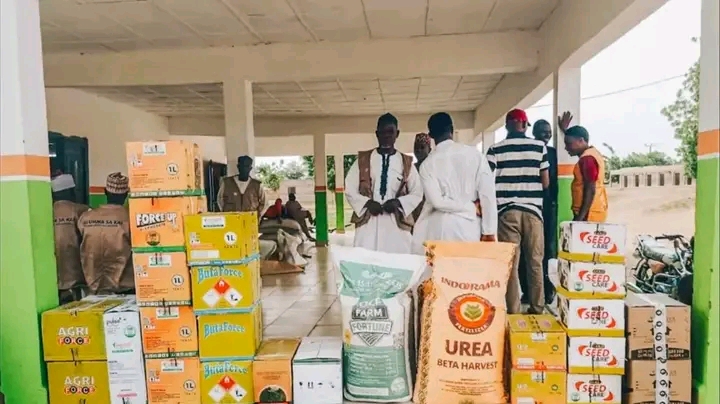
Bauchi Foundation Trains 28 Seed Producers, Distributes Agro Inputs to Strengthen Food Security and Climate Resilience.
A major agricultural intervention in Bauchi State is targeting improved food production and stronger climate resilience after the Foundation for Sustainable Smallholder Solutions (FSSS), with support from the HEINEKEN Africa Foundation (HAF), trained 28 community representatives in improved seed production and distributed more than 1,000 agro inputs to farmers’ hubs across Northern Bauchi.
The intervention was implemented under the Empowerment of Small holders to Thrive and Build Climate Resilience through Regenerative Agriculture (ESTRRA) Project, which seeks to address persistent challenges facing smallholder farmers, including limited access to quality farm inputs and dependence on informal seed sources.
The two day seed production training, held in Azare, brought together representatives from seven Community Based Organisations (CBOs) across the project’s beneficiary areas. More than half of the participants were women. The trainees received practical instruction on the production of rice, millet, sorghum, groundnut and cowpea, with emphasis on seed quality management, varietal purity, field inspection and certification requirements.
According to findings from the project’s 2026 baseline assessment, 87 per cent of seeds used by farmers in Northern Bauchi come from farmer saved or local sources, while only 12 per cent are obtained from improved or certified sources. To help close this gap, each participating organisation received foundation seeds, fertilisers and crop protection products to establish community seed multiplication fields.
The seven organisations are expected to establish at least three hectares each, creating a combined minimum of 21 hectares of community led seed production fields. The initiative is designed to strengthen local seed systems and improve farmers’ access to quality planting materials beyond the immediate project cycle.
In addition, FSSS and HAF distributed more than 1,000 units of agro inputs to Farmers’ Hubs serving communities across seven local government areas in Bauchi State. The supplies included fertilisers, herbicides, seed-treatment products, crop protection chemicals and knapsack sprayers to support crop establishment, weed control, nutrient management and pest protection during the 2026 farming season.
The intervention also included business management training for Farmers’ Hub managers, covering record-keeping, stock management, pricing, costing and accountability. Organisers say the approach is intended to make essential agricultural inputs more accessible to rural farmers while strengthening the sustainability of community based agricultural service systems.
Dr Abubakar Hassan Inuwa, Senior Agronomist at FSSS, said the initiative goes beyond the distribution of seasonal farm support, focusing instead on building the capacity of communities to produce quality seeds themselves and develop stronger local agricultural systems.
The ESTRRA Project is part of broader efforts to improve smallholder productivity, strengthen rural livelihoods and promote climate resilient agriculture in Northern Bauchi. By combining farmer training, improved input access and community led seed production, the initiative aims to contribute to food security while reducing the challenges associated with farmers travelling long distances to access essential agricultural supplies.