


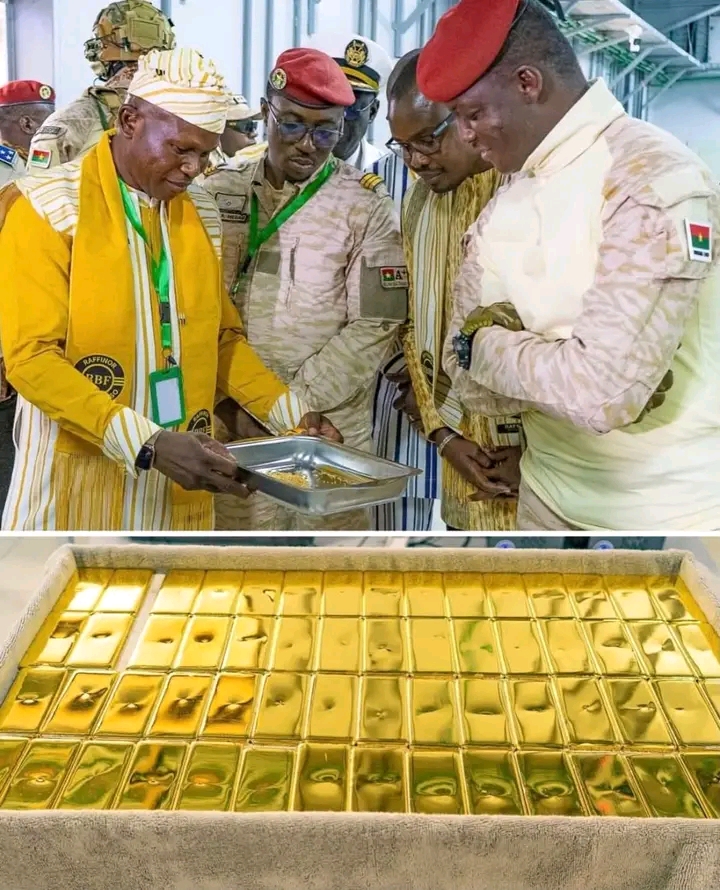
Burkina Faso Opens First Gold Refinery, Targets 515 Tonne Annual Capacity in Mining Sector Overhaul.
OUAGADOUGOU, Burkina Faso Burkina Faso has inaugurated its first national gold refinery as the military led government intensifies efforts to expand domestic processing, strengthen state oversight of the mining industry and retain a greater share of the value generated from the country’s mineral resources.
President Ibrahim Traoré inaugurated the RAFFINOR BF facility in Ouagadougou on September 28, 2026. The refinery represents a significant addition to Burkina Faso’s gold processing infrastructure, with authorities positioning it as part of a broader strategy to increase national control over the mineral value chain.
RAFFINOR BF has an initial theoretical refining capacity of 164 tonnes of gold annually, while a second phase is expected to raise capacity to 515 tonnes per year. The facility covers five hectares and includes a foundry, gold analysis laboratory, secure storage facilities, a jewellery unit and administrative infrastructure. Government officials say the plant is designed to process doré gold into refined bars with a purity of up to 99.9 percent.
The project reportedly cost more than 11 billion CFA francs, with financing involving the state through the Société Nationale des Substances Précieuses (SONASP) and private-sector partners. The government says domestic refining should increase the value retained within Burkina Faso and improve oversight of gold production and marketing.
The refinery also comes as Burkina Faso seeks to address challenges surrounding informal mining, gold trafficking and the movement of mineral wealth outside the country. According to reporting by Premium Times, the country produced more than 94 tonnes of gold in 2025, while authorities have struggled with regulation of parts of the informal mining sector amid insecurity and illicit trading.
The government has framed the refinery within President Traoré’s wider economic policy of increasing domestic control over strategic resources. At the inauguration, officials said the objective is not simply to extract minerals but to expand processing and other stages of the value chain inside Burkina Faso.
The development reflects a broader push across parts of Africa to capture more value from mineral resources locally rather than exporting largely unprocessed commodities. Al Jazeera has reported that countries across the continent, including Burkina Faso and Mali, are pursuing greater state involvement and domestic processing as part of efforts to reduce dependence on external markets and strengthen control of strategic resources.
However, the refinery’s long term impact will depend on factors including its ability to secure sufficient gold supplies, operate consistently, meet international market requirements and translate increased processing capacity into broader economic benefits. The planned expansion to 515 tonnes would also exceed Burkina Faso’s reported recent annual gold production, meaning the government’s longer term ambition could involve processing gold from additional sources beyond domestic production.
For Burkina Faso, the inauguration marks a new phase in its attempt to move further along the gold value chain. Whether RAFFINOR BF can substantially increase domestic value retention and reduce illicit flows will become clearer as the refinery moves from inauguration into sustained commercial operations.