

“Dangote Refinery Dominance Sparks National Debate as Nigeria’s N14.4 Trillion Petrol Market Enters New Era”
Nigeria’s downstream petroleum sector is undergoing a historic transformation as the Dangote Refinery increasingly assumes control of the country’s estimated N14.4 trillion petrol market, prompting growing concerns among industry stakeholders over market concentration, pricing power, and long term competition.
Industry analysts and energy economists warn that the refinery’s expanding dominance following a sharp decline in petrol imports could reshape Nigeria’s fuel supply architecture in ways that may deliver efficiency gains while also raising potential monopoly risks. The development comes as domestic refining capacity begins to replace decades of import dependence, marking a major shift in Africa’s largest oil producing economy.
End of Import Reliance Reshapes Market Dynamics
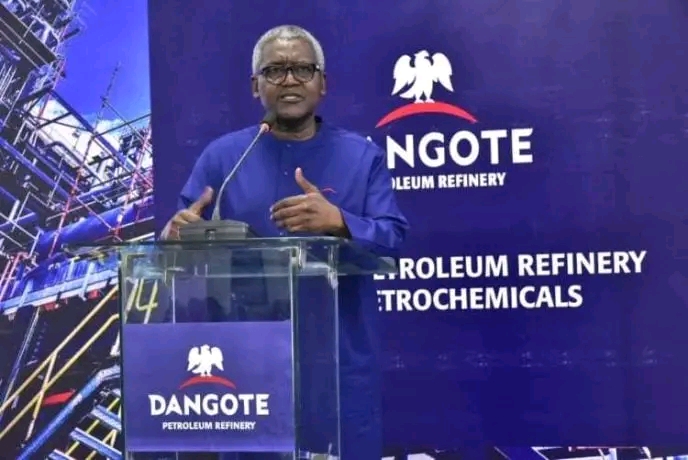
Recent industry data indicates that petrol import volumes into Nigeria have significantly reduced as locally refined products from the Dangote facility gain wider distribution nationwide. The refinery, with a projected capacity of 650,000 barrels per day, is now positioned as the primary supplier of Premium Motor Spirit (PMS), fundamentally altering the structure of the downstream market.
For decades, Nigeria relied heavily on fuel imports despite being a crude oil producer a system widely criticized for subsidy burdens, foreign exchange pressure, and supply inefficiencies. Analysts note that local refining has the potential to stabilize supply chains and conserve foreign reserves. However, experts caution that reduced importer participation may weaken competitive pricing mechanisms.
Energy policy observers argue that when a single producer becomes the dominant supplier in a liberalized market, regulatory oversight becomes increasingly important to protect consumers and ensure transparent pricing.
Calls for Regulatory Safeguards Intensify
Stakeholders, including marketers and consumer advocacy groups, are now urging stronger supervision by regulators such as the Nigerian Midstream and Downstream Petroleum Regulatory Authority (NMDPRA) to prevent price distortions and maintain fair market access.
Some economists have called for structured pricing frameworks or competition safeguards, emphasizing that market liberalization must be balanced with consumer protection policies. Others argue that fears of monopoly may be premature, noting that additional private and state backed refineries including modular plants and rehabilitated national refineries could introduce competition over time.
Government officials have maintained that deregulation remains central to Nigeria’s petroleum reforms, stressing that market forces should determine pricing while regulators ensure compliance with fair-trade principles.
Economic Opportunities and Strategic Risks
Supporters of the refinery highlight its broader economic benefits, including job creation, reduced import bills, improved energy security, and Nigeria’s potential emergence as a refined petroleum export hub for West and Central Africa.
Yet critics warn that excessive dependence on a single domestic supplier could expose the country to supply vulnerabilities if operational disruptions occur. Energy experts therefore advocate diversification of refining capacity alongside transparent regulatory enforcement.
The debate underscores a pivotal moment in Nigeria’s energy transition one that reflects both the promise of industrial self sufficiency and the complexities of maintaining competitive markets within emerging African economies.
Broader Implications for Africa’s Energy Landscape
Across the continent, policymakers are closely monitoring Nigeria’s experience as several African nations pursue local refining projects to reduce import reliance. The success or challenges of Nigeria’s new fuel market structure could shape future energy investment models across Africa.
As the Dangote refinery scales operations, the balance between industrial transformation and market fairness is expected to remain a central policy discussion in Nigeria’s economic agenda.