


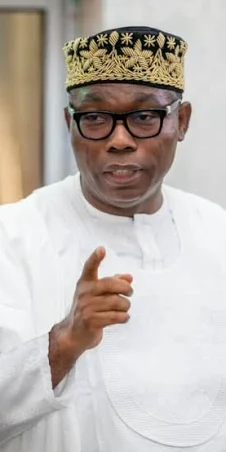
Ebola Outbreak: Adewole Adebayo Opposes Any Move to Postpone Nigeria’s 2027 Elections.
Nigerian politician Adewole Adebayo has warned against any attempt to cancel political campaigns or postpone the 2027 general elections because of the ongoing Ebola outbreak, arguing that public health concerns should be addressed without unnecessarily disrupting the country’s democratic process.
Adebayo made the remarks during a dinner organise by his presidential campaign council in Abuja on Sunday, where he questioned whether the reported Ebola case justified suspending political activities or altering the electoral timetable.
He maintained that Nigeria could protect public health while allowing political parties to continue their preparations for the forthcoming elections, provided they comply with relevant health and safety guidelines.
According to News reports on Monday, Adebayo argued that a single confirmed case should not automatically be treated as sufficient grounds for declaring an epidemic or postponing a major national election.
His comments come as Nigerian health authorities work to contain the Ebola outbreak and strengthen surveillance measures following the confirmation of a case in the country.
Adebayo Cites Nigeria’s Previous Ebola Response
In defending his position, Adebayo referred to Nigeria’s response to the 2014 Ebola outbreak, which the country successfully contained after the virus was introduced through an infected traveller from Liberia.
He cited the response under former President Goodluck Jonathan, highlighting the importance of transparency, public awareness and effective coordination among health authorities.
Nigeria’s experience in 2014 demonstrated the value of rapid identification of suspected cases, contact tracing, isolation and coordinated public health interventions.
However, the current outbreak presents fresh challenges, and public health experts continue to emphasize the importance of early detection, accurate information and strict adherence to infection prevention measures.
Adebayo also criticized the Federal Government’s handling of information surrounding the current situation, calling for greater transparency in communicating developments to Nigerians.
His comments reflect a broader debate over how governments should balance public health emergencies with the protection of democratic institutions and citizens’ political rights.
Federal Government Weighs Public Health Risks Against Political Activities
The debate over election preparations follows comments by the Minister of Health and Social Welfare, Professor Muhammad Pate, who reportedly said there was no immediate need to cancel political campaigns, conferences or other large gatherings.
According to Punch, the minister indicated that any restrictions would depend on the evolving public health situation, scientific evidence and consultations with relevant experts.
Such an approach would allow authorities to assess the risks as new information emerges rather than impose blanket restrictions without sufficient justification.
Nevertheless, the continuation of political activities does not remove the need for preventive measures. Campaign organisations, public institutions and event organisers must remain attentive to official health advisories and be prepared to adjust their activities if the situation deteriorates.
For Nigeria, the challenge is to ensure that the response to Ebola remains guided by evidence while maintaining public confidence in both the healthcare system and the electoral process.
Ebola Outbreak Raises Wider Concerns Across Africa
Nigeria’s reported Ebola case has heightened concerns about the geographical spread of the outbreak and the capacity of African countries to respond effectively to emerging infectious diseases.
A Reuters report published on October 23 highlighted concerns surrounding delayed detection and the possibility of further transmission following the confirmation of a case in Nigeria.
The developments have reinforced the importance of cross border cooperation, effective disease surveillance, prompt testing and the rapid identification of people who may have been exposed to the virus.
Ebola is a serious viral disease that can cause severe illness and death. Transmission occurs through direct contact with the blood or other bodily fluids of an infected person who is symptomatic, or with contaminated materials.
Public health authorities generally advise people to avoid contact with suspected cases, maintain appropriate infection prevention practices and seek immediate medical attention if they develop symptoms following a possible exposure.
For Nigeria, containing the outbreak will require continued coordination among federal and state health agencies, healthcare workers, international partners and affected communities.
2027 Elections: Democracy and Public Safety Remain Central
Adebayo insisted that the 2027 elections should proceed as scheduled and that political parties should not be prevented from mobilizing supporters solely because of the outbreak.
He also said his campaign would continue its political activities while observing applicable health guidelines.
Beyond the election controversy, Adebayo announced that his manifesto had been translated into several Nigerian languages, including Hausa, Igbo and Yoruba, with additional versions intended to make his policy proposals accessible to more voters.
He encouraged Nigerians to examine the document and question candidates about their proposed approaches to national security, public welfare and governance.
His position adds another dimension to the discussion about electoral preparedness, particularly as political parties begin positioning themselves ahead of the 2027 general elections.
However, any decision concerning public gatherings or election arrangements must ultimately take account of applicable electoral laws, official guidance and the evolving epidemiological situation.
While political participation is fundamental to democracy, protecting lives remains an equally important responsibility of government.
The immediate priority for Nigeria is therefore to contain the Ebola outbreak through timely detection, effective contact tracing, transparent communication and evidence-based public health measures, while ensuring that any decisions affecting the electoral process are justified, proportionate and consistent with the law.
Political status clarification: Although Punch described Adebayo as the Social Democratic Party’s presidential candidate in its October 26 report, a statement published on the SDP’s website disputes his eligibility, claiming that he was expelled from the party in May 2026 and was not its duly nominated candidate for the 2027 election. His current party status and nomination remain contested and should not be presented as settled fact without further verification.