


Reported by Musa Antiketu,| Journalist at Obaland magazine.
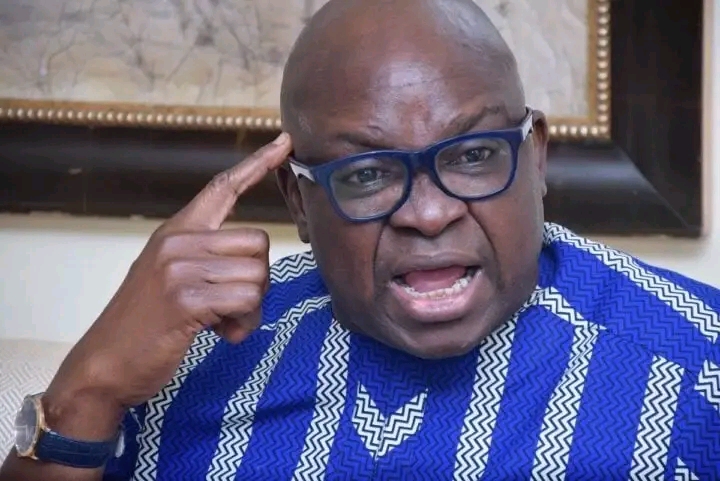
Former Ekiti State Governor Ayodele Fayose has argued that Peter Obi’s decision to leave the African Democratic Congress (ADC) for the Nigeria Democratic Congress (NDC) may have weakened the opposition’s prospects in the 2027 presidential election.
Fayose’s position comes amid a major realignment within Nigeria’s opposition ahead of the 2027 general elections. Obi, who contested the 2023 presidential election under the Labour Party, joined the ADC as part of an opposition coalition before later leaving the party for the NDC in May 2026.
The former Ekiti governor had earlier described Obi as the principal political force capable of giving the ADC national relevance. In January, Fayose warned that the party could struggle significantly if it failed to field Obi as its presidential candidate. Premium Times, TheCable, Vanguard and Tribune reported those comments at the time.
However, the political equation changed after Obi and former Kano State Governor Rabiu Musa Kwankwaso departed the ADC and moved to the NDC. The defections created a fresh division within the opposition coalition, with Atiku Abubakar remaining associated with the ADC while Obi emerged as the NDC’s presidential standard-bearer. Reports indicate that Obi subsequently secured the NDC presidential ticket for the 2027 election.
Fayose has since argued that the split could benefit President Bola Tinubu by dividing opposition votes. In June, he said the opposition had “destroyed their journey” by failing to remain united under one platform, warning that the emergence of separate ADC and NDC structures could make Tinubu’s path to re-election easier. P.M. News and other Nigerian media outlets reported the remarks.
The argument reflects a broader concern within Nigeria’s opposition politics: whether competing presidential candidates can consolidate enough regional and national support to challenge the incumbent effectively.
Obi’s supporters, however, maintain that his move to the NDC provides him with a clearer political platform and a stronger opportunity to pursue his presidential ambition. The NDC has also sought to position itself as a major opposition vehicle ahead of the 2027 polls.
Fayose’s assessment remains a political opinion rather than an established prediction of the election outcome. With the 2027 presidential contest still ahead, factors including party structures, candidate alliances, voter turnout, regional voting patterns, campaign organisation and the credibility of the electoral process will ultimately shape the strength of each contender.
For Obaland magazine, the development underscores the fluid nature of Nigeria’s opposition politics. The movement of prominent political figures between parties has continued to reshape alliances, while the central question remains whether opposition leaders can overcome competing ambitions and present a sufficiently coordinated challenge to the ruling All Progressives Congress.
Sources
Ayodele Fayose says Peter Obi’s exit from the ADC may have weakened opposition prospects for Nigeria’s 2027 presidential election amid growing political realignments.