Reported by Musa Antiketu,| Journalist at Obaland magazine.
The Federal Capital Territory (FCT) Police Command has commenced disciplinary proceedings against four police officers accused of abandoning their assigned duty posts, conducting unauthorised traffic enforcement and allegedly extorting ₦52,000 from the Chairman of the Independent Corrupt Practices and Other Related Offences Commission (ICPC), Dr Musa Adamu Aliyu (SAN).
The development has drawn renewed attention to concerns over police professionalism, unlawful roadside checkpoints and allegations of extortion involving law enforcement personnel in Nigeria.
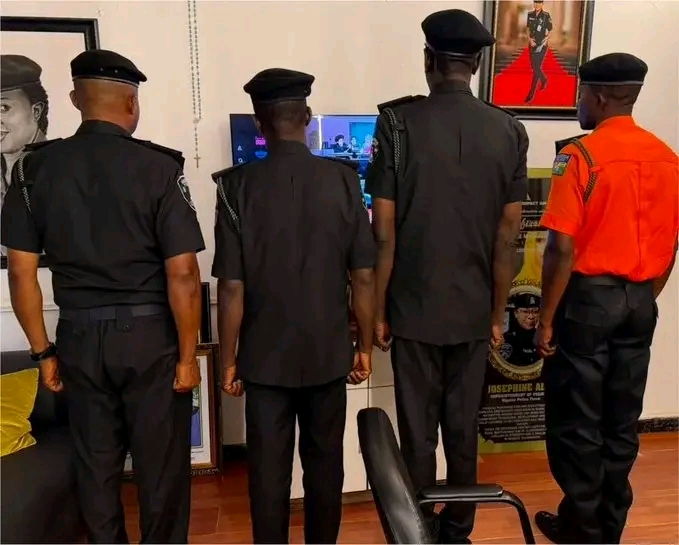
The officers—identified as Assistant Superintendent of Police (ASP) Clement Ehigala, ASP Sunday Okpe, Inspector Samuel Onoja and Sergeant Yakubu Emmanuel—are facing an orderly-room trial following an incident reportedly linked to an unauthorised traffic operation in Abuja.
According to a statement attributed to the FCT Police Command’s spokesperson, SP Josephine Adeh, the incident occurred on July 11, 2026, at approximately 3:34 p.m., when the four officers allegedly left their designated duty posts and proceeded to the Banex Plaza Junction area of Wuse II.
The officers were accused of engaging in traffic enforcement outside their authorised responsibilities and stopping a motorist over an alleged traffic violation.
The motorist was subsequently identified as the ICPC chairman.
The police command said the officers allegedly collected ₦52,000 from him, prompting an investigation and the eventual commencement of disciplinary proceedings.
FCT Commissioner of Police, CP Ahmed Muhammed Sanusi, reportedly ordered the immediate arrest of the officers and directed that they face an orderly-room trial over the allegations.
The charges before the internal disciplinary process reportedly include abandoning their lawful duty posts, engaging in unauthorised traffic enforcement and alleged extortion.
The case has generated significant public interest because of the identity of the alleged victim. The ICPC is Nigeria’s principal federal agency responsible for investigating and prosecuting corruption-related offences within its statutory mandate, making the allegation particularly sensitive in a country where public confidence in law enforcement and anti-corruption institutions remains a major national concern.
However, the significance of the case does not rest solely on the status of the alleged victim. At its core, the incident raises broader questions about police conduct and the experience of ordinary Nigerians who encounter law enforcement officers at checkpoints and during roadside operations.
Police Promise Accountability
The FCT Police Command has reiterated its commitment to professionalism and accountability, stressing that officers found culpable after due process will face appropriate sanctions.
The command’s position is consistent with its stated policy of zero tolerance for misconduct and corruption within its ranks.
In an earlier briefing on the case, CP Sanusi said four officers had been taken into custody in connection with the alleged extortion of the ICPC chairman. He said the officers had reportedly abandoned their official assignments and operated as a group at an unauthorised checkpoint around the Banex area of Wuse.
The commissioner described the conduct as criminal and vowed that personnel found responsible would be dealt with according to the law and police regulations.
Reports by TheCable, The Guardian, the International Centre for Investigative Reporting (ICIR) and other Nigerian media outlets similarly said the officers were detained following allegations that they extorted money from the ICPC chairman during an unauthorised stop-and-search operation in Abuja.
The police account reported by those outlets alleged that the officers compelled the ICPC chairman to withdraw money through a Point-of-Sale (PoS) operator before allegedly sharing the proceeds among themselves.
The precise amount has been reported differently across various accounts. Several initial reports cited ₦53,000, while the subsequent report on the orderly-room trial published by Vanguard and another account cited ₦52,000. Obaland magazine has retained the ₦52,000 figure in the headline and main account because it is the amount stated in the police statement concerning the disciplinary proceedings.
From Arrest to Disciplinary Trial
The progression of the case from arrest to orderly-room trial represents an important stage in determining the officers’ responsibility.
An orderly-room trial is an internal disciplinary mechanism used by the Nigeria Police Force to examine allegations of misconduct against serving personnel. It is distinct from a criminal prosecution before a court of law.
Consequently, the commencement of the trial does not, in itself, establish the guilt of the four officers. The allegations remain subject to the disciplinary process, and any criminal liability arising from the incident would ordinarily require appropriate legal proceedings.
The distinction is important in maintaining the principles of due process and fairness. While the police command has publicly expressed its determination to punish wrongdoing, the officers are still entitled to have the allegations against them properly examined before final disciplinary decisions are reached.
The case therefore presents two simultaneous responsibilities for the police authorities: to demonstrate that allegations of misconduct are taken seriously and to ensure that disciplinary proceedings are conducted transparently and fairly.
If the allegations are established, appropriate sanctions would send a strong message that police authority cannot be used for personal financial gain. If the allegations are not substantiated, the disciplinary process should equally provide a mechanism for clearing the officers’ names.
Illegal Checkpoints and Public Trust
The controversy has also revived a longstanding national debate over the proliferation of unauthorised police checkpoints and roadside extortion.
Across Nigeria, motorists and other road users have frequently raised concerns about encounters with law enforcement officers at checkpoints, particularly allegations involving demands for money, unlawful searches and harassment.
The police leadership has repeatedly issued directives aimed at restricting unauthorised checkpoints and preventing personnel from abusing their powers.
The latest incident is particularly notable because the police command alleged that the officers had left their designated duty posts before setting up the unauthorised traffic operation.
That allegation, if established, goes beyond the issue of the money allegedly collected. It raises questions about command and control within the police structure, the monitoring of officers in the field and the effectiveness of existing mechanisms for preventing personnel from operating outside their official assignments.
For a modern police institution, accountability must extend beyond individual officers. Effective supervision should ensure that officers are deployed appropriately, operate within the law and remain answerable to their commanders and the public.
The credibility of the Nigeria Police Force depends significantly on whether citizens believe that officers who violate the law will be held accountable regardless of their rank or position.
ICPC Connection Adds Symbolic Weight
The fact that the alleged victim is the chairman of the ICPC has given the incident additional public significance.
The ICPC is mandated to investigate and prosecute certain corruption offences and promote anti-corruption standards in public institutions. Its chairman is therefore one of the country’s most prominent officials in the fight against corruption.
The reported allegation that such an official was allegedly stopped and made to part with money by police officers has been viewed by commentators as a striking illustration of the challenges facing Nigeria’s anti-corruption and law-enforcement architecture.
Yet the broader lesson should not be that police misconduct only becomes important when a prominent individual is involved.
Ordinary citizens who face similar allegations of extortion deserve the same level of protection and access to justice.
The case provides an opportunity for law enforcement authorities to demonstrate that accountability is not determined by the identity or social status of the person affected.
A police institution that protects only prominent citizens cannot fully restore public confidence. The standard must be the same for everyone.
Police Directive on Unlawful Phone Searches
The controversy has also brought renewed attention to police practices involving the stopping of citizens and the inspection of mobile phones.
During his briefing, CP Sanusi reportedly reiterated the position of the Inspector-General of Police that officers should not engage in indiscriminate searches of citizens’ mobile phones during routine patrols.
He urged residents who encounter unlawful demands by police personnel to report such conduct through the appropriate police emergency channels.
The issue of phone searches has been particularly contentious among Nigerian youths, many of whom have complained about being stopped by police officers and asked to submit their devices for inspection without clear legal justification.
Such encounters have contributed to strained relations between young Nigerians and law enforcement agencies.
The police command’s renewed emphasis on the directive is therefore significant. However, public confidence will ultimately depend on enforcement.
Directives and policy statements can only produce lasting change when officers who violate them face credible consequences.
A Test for Police Reform
The case comes against the backdrop of wider efforts to improve policing in Nigeria.
The country has experienced repeated calls for police reform, particularly following the #EndSARS protests of 2020, which brought national and international attention to allegations of police brutality, harassment and extortion.
Since then, government officials and police authorities have repeatedly pledged to improve professionalism, accountability and relations between officers and citizens.
But reform is measured not by promises alone. It is measured by what happens when allegations of misconduct arise.
The FCT case therefore presents an opportunity for the police command to demonstrate that internal accountability mechanisms can function effectively.
A credible disciplinary process should establish the facts, identify individual responsibility and ensure that sanctions are proportionate to proven violations.
At the same time, police reform must address the institutional factors that contribute to misconduct.
Better training, improved supervision, modern policing technology, effective complaint mechanisms and stronger internal oversight are essential to reducing opportunities for corruption.
The use of body-worn cameras, vehicle tracking systems and digital reporting mechanisms could also improve accountability by creating verifiable records of police interactions with members of the public.
However, technology alone cannot solve institutional problems. Effective leadership, ethical standards and a culture of accountability remain fundamental.
The Need for Public Confidence
For many Nigerians, the relationship with the police is shaped by everyday encounters rather than official statements.
When citizens approach a police checkpoint, they should expect protection and lawful enforcement—not intimidation or demands for money.
Similarly, police officers should be able to carry out their duties with professionalism and without being unfairly judged because of the misconduct of others.
This balance is essential.
The vast majority of police personnel perform difficult and often dangerous duties under challenging conditions. Their work should be recognised and supported. At the same time, the authority granted to police officers comes with a responsibility to respect the law and the rights of citizens.
Allegations of extortion undermine that relationship.
The FCT Police Command’s decision to commence disciplinary proceedings against the four officers is therefore an important step, but the ultimate test will be the credibility and outcome of the process.
If the officers are found culpable, decisive and lawful sanctions would reinforce the message that police authority cannot be abused for private gain.
If evidence does not establish the allegations, the officers should be treated fairly and cleared through due process.
For Obaland magazine, the central issue is bigger than the ₦52,000 allegedly collected in Abuja. It is about the standard of public service Nigerians should expect from institutions entrusted with maintaining law and order.
It is also about ensuring that accountability applies consistently—from the most senior public official to the ordinary citizen.
The incident involving the ICPC chairman has attracted national attention because of who the alleged victim is. But the lasting significance of the case will depend on whether it contributes to a broader culture in which every Nigerian can interact with the police without fear of unlawful extortion.
The FCT Police Command has promised zero tolerance for misconduct. The orderly-room trial now provides an opportunity to demonstrate what that commitment means in practice.
For a police institution seeking to strengthen public trust, accountability must not be selective, temporary or driven by publicity. It must be consistent, transparent and grounded in the rule of law.
The outcome of the case will therefore be closely watched—not only by the police officers involved and the ICPC, but by millions of Nigerians who continue to demand a police service that is professional, accountable and worthy of public confidence
FCT Police have commenced an orderly-room trial of four officers accused of abandoning duty, conducting unauthorised traffic enforcement and allegedly extorting ₦52,000 from ICPC Chairman Musa Aliyu in Abuja.
FCT Police Begin Trial of Four Officers Over Alleged ₦52,000 Extortion of ICPC Chairman in Abuja!