

“Former Oyo First Lady Calls for Review of N300 Feeding Allowance for Visually Impaired Students, Highlights Welfare Gaps”
Ogbomoso, Nigeria Chief (Mrs.) Oluwakemi Alao-Akala, former First Lady of Oyo State, has called on government authorities and stakeholders to urgently reassess the current ₦300 daily feeding allowance provided to visually impaired students in special schools, describing it as “grossly inadequate” amid rising living costs.
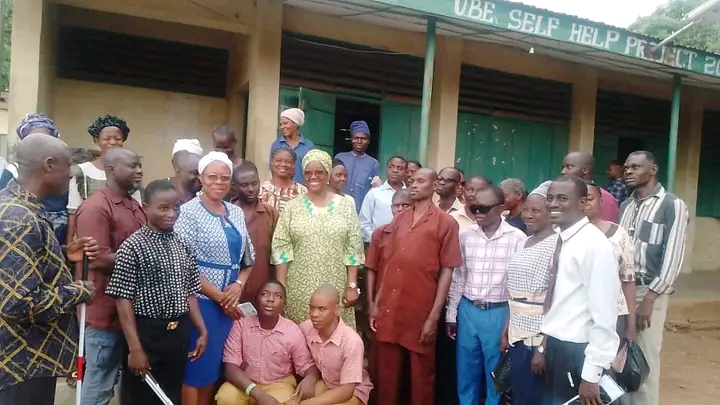
Speaking during a humanitarian visit to the Nigeria Training Centre for the Blind and the Oyo State Special Basic School in Ogbomoso on Wednesday, Alao-Akala reiterated her concern that the allowance, which is intended to cover meals for students throughout the day, falls far short of meeting their nutritional needs in the context of Nigeria’s escalating food prices.
“What comes to them is not encouraging. ₦300 per day is not enough for anyone,” she said, urging state and federal authorities to revisit and increase the allocation to reflect economic realities and the cost of a nutritious diet for children with special needs. “Their wellbeing matters to all of us.”
The former First Lady, on a mission that also saw her deliver donated items including uniforms, liquid soap, beads, disinfectants, and air fresheners to enhance the school environment, emphasized the importance of vocational skills development and inclusive educational support for visually impaired learners.
“Our engagement here is about dignity, opportunity, and ensuring these students are supported not only educationally but also in their daily living needs,” she noted, highlighting the resilience and creativity displayed by the pupils and their capacity for independent living when given proper resources and encouragement.
Alao-Akala’s appeal aligns with broader advocacy efforts for improved welfare policies for persons living with disabilities in Nigeria, where inclusion and adequate social support remain key challenges for disability rights groups and civil society organizations.
School officials and educators at the institutions echoed the call for enhanced funding, noting that adequate nutrition is essential not just for health but for effective learning and overall child development. They pointed out that the current allocation struggles to cover even basic meal costs amidst Nigeria’s inflationary environment.
As debates continue around funding mechanisms for education and social welfare from general school feeding programmes to specialized support for learners with special needs Alao-Akala’s intervention underscores the urgent need for policy review and commitment to inclusive education financing across state and federal levels.