


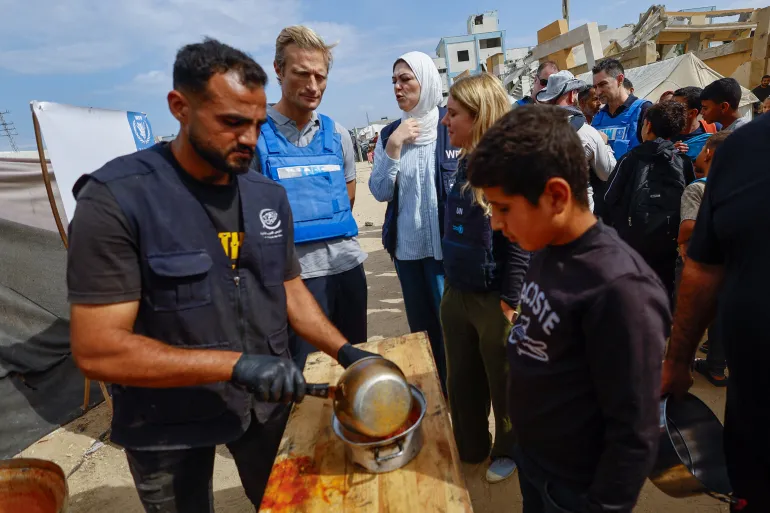
Gaza Hunger Crisis Deepens as UN Cuts Food Aid to 500,000 Palestinians Over Funding Shortages.
October 19, 2026
The humanitarian crisis in the Gaza Strip has taken a worrying turn after the United Nations World Food Programme (WFP) announced significant reductions in food assistance, leaving approximately 500,000 Palestinians at risk of losing vital monthly support because of severe funding shortages.
According to a report by Reuters on Monday, October 19, the agency is reducing the number of people receiving monthly food assistance in Gaza from 1.6 million to 1.1 million. The decision comes as millions of Palestinians continue to struggle with food insecurity, displacement and the destruction of essential infrastructure following years of conflict.
The reductions will affect several aspects of the WFP’s emergency response. Food parcels provided to families will be cut from two to one, while the quantity of wheat flour distributed will also decrease. The agency is further reducing the number of hot meals served daily from 250,000 to 150,000. In some hard-to-reach areas, vulnerable families will receive hot meals every other day instead of daily.
Funding Shortages Threaten Humanitarian Operations
The WFP said it had received less than half the funding for its Palestinian operations in 2026 compared with previous years. The agency estimates that it needs approximately $450 million over the next six months to maintain essential operations in Gaza and the occupied West Bank.
Acting WFP Executive Director Carl Skau warned that the reductions were coming at a particularly difficult time, as displaced families face another winter without adequate shelter, reliable access to basic services or sufficient security.
The agency has stressed that sustained international financial support is essential to protect the limited progress made in improving food security and to prevent conditions from deteriorating further.
The funding crisis also highlights the growing challenges confronting humanitarian organisations attempting to deliver assistance in areas affected by prolonged conflict, damaged infrastructure and widespread displacement.
Millions Still Face Severe Food Insecurity
The latest figures from the WFP indicate that approximately 1.4 million people in Gaza, representing around two-thirds of the population, are experiencing crisis-level food insecurity or worse. About 200,000 people are facing emergency conditions.
Although increased humanitarian assistance following the ceasefire has contributed to some improvements in food availability, aid organisations warn that these gains remain fragile.
Many Palestinian families continue to live in temporary shelters or damaged buildings, with limited access to clean water, healthcare, sanitation and stable sources of income. The destruction of homes and businesses has also left many households dependent on humanitarian assistance for their daily survival.
The reduction in food support could place additional pressure on families already struggling to secure basic necessities, particularly children, older people, displaced households and individuals with specific nutritional needs.
Ceasefire Progress and Reconstruction Challenges
The latest aid cuts come amid continuing challenges in implementing the broader Gaza ceasefire and reconstruction arrangements brokered by the United States in 2025.
While the ceasefire created opportunities for increased humanitarian deliveries and a reduction in large-scale fighting, progress towards reconstruction and a lasting political settlement has remained limited.
Disagreements over security arrangements, the future governance of Gaza, the disarmament of Hamas and the withdrawal of Israeli forces continue to complicate efforts to establish lasting stability.
Humanitarian organisations maintain that a sustainable recovery will require more than emergency food deliveries. Restoring essential services, rebuilding homes, reopening economic opportunities and ensuring consistent access for humanitarian and commercial supplies will be critical to improving living conditions.
The continuing humanitarian challenges also underline the importance of protecting civilians and ensuring that people in need can access food, medical supplies and other essential assistance.
International Support Needed to Prevent Further Deterioration
The WFP’s announcement has renewed calls for international donors to increase financial support for humanitarian operations in Gaza and the occupied West Bank.
Without additional funding, aid organisations could face further difficulties maintaining food distribution programmes at a time when large sections of the Palestinian population remain dependent on external assistance.
For families already struggling to recover from years of conflict, the loss of regular food support could deepen existing hardships and undermine fragile improvements in nutrition and food availability.
The immediate challenge is to secure the resources required to sustain humanitarian assistance while creating conditions for long-term recovery. As winter approaches, the ability of international agencies to maintain food supplies and support vulnerable households will remain a major test of the global humanitarian response.