

As the #EndBadGovernance protests, which began on August 1, 2024, continue to reverberate across Nigeria, many citizens, particularly in the northern regions, are left grappling with the aftermath of violence, loss, and ongoing economic hardship. Despite President Bola Tinubu’s call for the protests to cease, demonstrators have persisted in voicing their frustrations over soaring inflation and the government’s failure to address the dire cost of living crisis that has affected millions.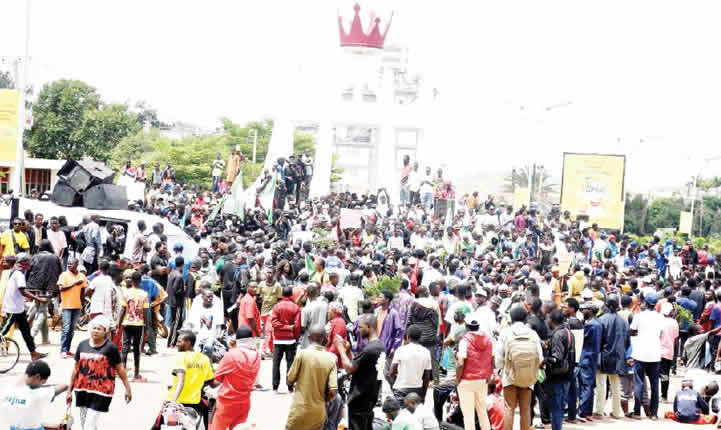

The protests, sparked by economic grievances, have turned deadly, with reports indicating that at least 17 individuals lost their lives across various states including Abuja, Kano, Niger, Borno, Kaduna, and Jigawa. The opening day of these demonstrations was marked by chaos, as protesters faced violent crackdowns from security forces, who were accused of using excessive force, including live ammunition.
In Suleja, a significant town in Niger State, the situation escalated tragically when six protesters were feared dead after an attempt to storm a police station. Eyewitness accounts describe a harrowing scene where four individuals succumbed to their injuries on-site, while others were rushed to Gwagwalada General Hospital, where two more tragically passed away before receiving care.
The Nigeria Police Force has faced widespread criticism for its handling of the protests. While spokesperson Muyiwa Adejobi acknowledged that there were fatalities, he insisted that police involvement in these deaths was nonexistent. In stark contrast, Major-General Onyema Nwachukwu of the Nigerian Army confirmed that a soldier had indeed shot and killed a teenager, Ismail Muhammad, in Zaria, underscoring the reality of violence perpetrated by security forces during the protests.
Amnesty International condemned the actions of security personnel, alleging that they deliberately employed lethal tactics against protesters. Their report indicated that at least 21 protesters were killed during a week of demonstrations, highlighting a disturbing trend of state violence against citizens exercising their right to protest.
Nobel Laureate Wole Soyinka also decried the government’s response, stating, “Live bullets as state response to civic protest – that becomes the core issue.” He emphasized that hunger marches are a universal cry for help and should not be met with violence.
Beyond the fatalities, countless individuals have emerged from the protests with severe injuries and traumatic experiences. Femi Kuku, a cameraman for the African Independent Television, narrowly escaped death when security forces opened fire on journalists covering the protest. In the chaos, he fell into an uncovered manhole, leading to a dislocated leg. “It was my colleagues who picked me up and rushed me to the hospital,” he recounted, reflecting on the harrowing incident.
In Gombe, medical officials reported that at least eight individuals sought treatment for injuries sustained during the protests, with six remaining hospitalized. One patient in the Intensive Care Unit suffered critical bullet wounds, while other victims recounted their terrifying experiences. Mohammed Abdulrawuf, an 18-year-old, tearfully shared how he was shot while trying to flee the chaos, despite not participating in the protests. “I was at my uncle’s house when the chaos erupted,” he explained. “As I tried to leave, I was shot in the leg. This could end my dream of serving in the military.”
Similarly, Rabiu Ibrahim, a 27-year-old commercial motorcyclist, described how he was brutally assaulted by security forces. “I had just returned from my grandfather’s house when I was beaten and injured by the police,” he said, highlighting the indiscriminate nature of the violence.
The protests also resulted in significant property damage, with reports indicating that hoodlums vandalized and looted businesses, including a Living Faith Church in Daura, Katsina State, where church property worth millions was stolen. In Kano, Barakat Stores suffered losses exceeding N5 billion due to looting, prompting calls for government assistance to the victims.
The plight of the vulnerable was further highlighted by the brutal treatment of Hamza Waziri, a physically challenged protestor, who was attacked by police while exercising his right to protest. The incident drew widespread condemnation, with the National Commission for Persons with Disabilities demanding justice for Waziri, citing clear violations of his rights.
In response to the unrest, various organizations and political figures, including the pan-Yoruba socio-political group Afenifere, have called for thorough investigations into the killings and the actions of security forces. They emphasize the need for accountability and justice for victims of police brutality.
Governor Uba Sani of Kaduna State has also pledged to ensure justice for Ismail Muhammad’s family, vowing to conduct a comprehensive investigation into the circumstances surrounding the teenager’s death.
As the protests continue to wane, organizers from the Take It Back Movement assert that they have not retreated from their demands. Damilare Adenola, the director of mobilization, remarked, “The protest has not died down. We should be talking about how the government continually cracks down on free speech.”
The ongoing situation calls for urgent attention from the government to address the grievances of the people, provide support for victims and their families, and uphold the rights of citizens to protest peacefully. As Nigeria grapples with these challenges, the voices of the affected will remain crucial in shaping the future of governance and accountability in the country.