


Reported by Musa Antiketu,| Journalist at Obaland magazine.
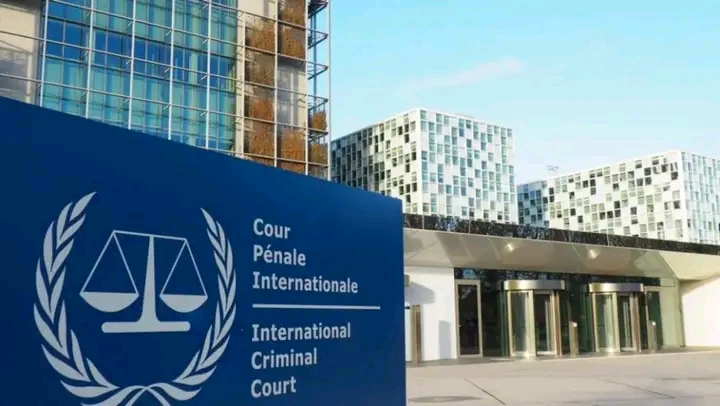
The International Criminal Court (ICC) is facing renewed pressure over its credibility and future as Chad and Venezuela move to withdraw from the institution, with both countries raising concerns about alleged bias, unequal treatment and the court’s effectiveness.
The developments have intensified an already growing debate over the role of the world’s permanent international criminal tribunal, particularly in Africa and the wider Global South, where governments and political actors have repeatedly accused the court of disproportionately focusing on African cases.
Venezuela formally notified the United Nations on July 24, 2026, of what its government described as an “irrevocable” decision to withdraw from the Rome Statute, the treaty that established the ICC. Foreign Minister Félix Plasencia said Caracas believed the court had demonstrated geographical bias by concentrating disproportionately on Africa and Latin America.
Days later, Chad announced its intention to begin the process of leaving the ICC, accusing the institution of ineffectiveness and bias against African countries. The Chadian government submitted a notification to the United Nations, beginning a withdrawal process that is expected to take at least one year under the Rome Statute.
The two announcements represent another significant challenge for an institution that has faced criticism from governments across different regions and political orientations. They also come amid growing international controversy surrounding the ICC, including pressure from the United States and the recent removal of its chief prosecutor, Karim Khan, over misconduct allegations.
Venezuela Accuses ICC of Geographical Bias
Venezuela’s decision to withdraw follows years of tension between Caracas and the ICC over an investigation into alleged crimes against humanity committed during the country’s political unrest.
According to Reuters, Venezuela’s government accused the court of displaying a geographical and political bias that disproportionately affects countries in Africa and Latin America. Caracas argued that the international justice system has not been applied equally and that the court’s operations undermine the sovereignty and self-determination of countries in the Global South.
The decision was formally communicated to the United Nations by Foreign Minister Plasencia on instructions from interim President Delcy Rodríguez.
The move did not come unexpectedly. Venezuela’s National Assembly had previously voted to cancel the country’s commitments to the Rome Statute, paving the way for the formal notification of withdrawal.
However, Venezuela’s departure from the ICC does not automatically erase the court’s jurisdiction over conduct that occurred while the country was bound by the Rome Statute.
This distinction is particularly important because the ICC’s investigation into Venezuela predates the latest withdrawal process.
The ICC opened a preliminary examination into Venezuela in 2018 following allegations relating to violence during anti-government demonstrations and political unrest. In November 2021, the court announced that it would proceed with a formal investigation.
In June 2023, an ICC Pre-Trial Chamber authorised the Prosecutor to resume the investigation after reviewing Venezuela’s arguments that its domestic authorities were capable of addressing the allegations.
The chamber concluded that Venezuela’s domestic investigations did not sufficiently reflect the scope of the alleged crimes under consideration. The decision was subsequently appealed by Caracas, but the ICC Appeals Chamber confirmed the authorisation to resume the investigation in March 2024.
That history means Venezuela’s withdrawal is not simply a political decision to disengage from an international institution. It also intersects with ongoing questions about accountability for alleged violations committed during the period in which Venezuela was subject to the Rome Statute.
UN Body Raises Concern Over Venezuela’s Withdrawal
The international response to Venezuela’s decision has also been significant.
A United Nations fact-finding mission expressed grave concern about the withdrawal, warning that disengagement from the ICC could weaken accountability mechanisms in Venezuela.
The UN body urged Caracas to reconsider its decision and stressed the importance of continued international mechanisms for addressing alleged human rights violations.
The concern reflects a broader argument from human rights advocates that international courts remain particularly important in countries where domestic judicial systems are unable or unwilling to investigate allegations involving powerful political or security actors.
For victims and their families, the ICC is often viewed as a court of last resort when national justice systems fail to provide credible investigations or prosecutions.
Yet the controversy also highlights a fundamental problem facing the ICC: legitimacy depends not only on the court’s legal mandate but also on whether governments and affected populations perceive its work as impartial.
Chad Becomes Another African State to Leave
Chad’s decision adds another African dimension to the ICC’s growing membership crisis.
The Chadian government announced its intention to withdraw from the court on July 27, accusing the institution of failing to deliver effective and equitable justice.
The Associated Press reported that Chad became the fourth African country since 2025 to initiate a withdrawal process, following Niger, Mali and Burkina Faso.
Those three Sahelian countries had previously announced their intention to leave the ICC amid broader political realignments following military takeovers and deteriorating relations with several Western governments.
Chad’s decision is therefore significant beyond its immediate legal implications. It contributes to a wider African debate over whether international justice mechanisms adequately reflect the continent’s interests and whether African countries should strengthen alternative regional mechanisms for accountability.
For years, the ICC has faced accusations of disproportionately targeting Africa. The criticism became particularly prominent during the court’s early years, when a large proportion of its investigations involved African countries.
Supporters of the court, however, argue that the picture is more complicated.
Many African situations were referred to the ICC by African governments themselves or by the United Nations Security Council. The Democratic Republic of Congo, Uganda, the Central African Republic and Mali, among others, have been connected to ICC proceedings through referrals or other jurisdictional mechanisms.
The ICC has also maintained that its mandate is based on evidence and the legal requirements of the Rome Statute rather than geographical or political preferences.
That distinction is crucial to the current debate.
The existence of a large number of African cases does not, by itself, prove that the ICC is institutionally biased against Africa. At the same time, the repeated perception of unequal treatment cannot simply be dismissed, particularly when governments and civil society groups across the continent have raised similar concerns over many years.
Withdrawal Does Not Immediately End ICC Obligations
One of the most important facts surrounding the current developments is that leaving the Rome Statute is not an instantaneous process.
Article 127 of the Rome Statute provides that a state may withdraw by submitting written notification to the UN Secretary-General. The withdrawal generally takes effect one year after the notification is received, unless a later date is specified.
The statute also provides that withdrawal does not automatically release a country from obligations that arose while it was a party.
This means that the legal consequences of Chad’s and Venezuela’s decisions will extend beyond the date on which their withdrawals eventually become effective.
The principle is especially relevant to Venezuela because the ICC’s investigation concerns alleged conduct dating back to periods when Venezuela was a state party to the Rome Statute.
In other words, withdrawal should not be interpreted as an automatic legal shield against investigations or proceedings relating to crimes that fall within the court’s jurisdiction during the relevant period.
The United States Factor
The withdrawals have also unfolded against the backdrop of an increasingly confrontational relationship between the United States and the ICC.
The United States is not a party to the Rome Statute and has historically rejected the court’s jurisdiction over American nationals in many circumstances.
In 2025, President Donald Trump imposed sanctions on the ICC over its investigations involving Israel, a close US ally. In July 2026, Secretary of State Marco Rubio said Washington was pursuing a campaign aimed at weakening the institution.
The US response to Chad’s withdrawal was supportive.
According to AP, the US Bureau of African Affairs welcomed Chad’s decision and encouraged other ICC member states to reconsider their participation in the court.
This development adds another layer to the debate because it raises questions about whether the current wave of withdrawals is solely driven by dissatisfaction with the ICC or is also being influenced by changing geopolitical alliances.
Chad’s own foreign ministry reportedly indicated that US officials had raised concerns about the ICC and encouraged the country to reconsider its membership.
The development is particularly sensitive for Africa, where many countries depend on international partnerships in security, development and diplomacy.
A Crisis of Confidence for International Justice?
The latest withdrawals do not mean that the ICC is about to disappear. The court still has 125 member states, and its jurisdiction covers genocide, crimes against humanity, war crimes and the crime of aggression under the Rome Statute.
Nevertheless, every withdrawal creates political, diplomatic and operational consequences.
The ICC depends heavily on cooperation from member states. Unlike national courts, it does not have its own police force capable of independently arresting suspects across international borders.
Its effectiveness therefore depends substantially on governments providing evidence, facilitating investigations and executing arrest warrants.
A sustained pattern of withdrawals could consequently weaken the court’s ability to operate, particularly if departing states reduce cooperation with investigations or encourage others to follow.
The situation also presents an important challenge for Africa.
If African governments believe the ICC is structurally unfair, the continent faces a choice between attempting to reform the institution, strengthening regional justice mechanisms or pursuing a combination of both.
Africa already has experience with alternative mechanisms. The trial of former Chadian ruler Hissène Habré in Senegal demonstrated that serious international crimes can be prosecuted through arrangements outside the ICC framework.
There have also been longstanding proposals to strengthen the African Union’s legal and judicial institutions so that African states can take greater responsibility for prosecuting serious crimes committed on the continent.
However, regional alternatives also face limitations, including funding, political independence, jurisdictional disputes and the willingness of governments to prosecute sitting or former political leaders.
What the Developments Mean for Africa
For Africa, the latest ICC withdrawals present both a warning and an opportunity.
The warning is that international accountability mechanisms can lose legitimacy when large sections of the populations they are designed to protect believe they operate selectively.
The opportunity is for African governments and institutions to have a serious conversation about what an equitable international justice system should look like.
That conversation should go beyond whether African countries should remain inside or outside the ICC.
It should address deeper questions: How can international criminal justice be made genuinely universal? How should powerful states be held accountable? What role should the United Nations Security Council play? Can the African Union develop stronger independent judicial capacity? And how can victims obtain justice when national governments are unwilling to prosecute alleged perpetrators?
These questions are increasingly important as conflicts, military coups, political repression and mass displacement continue to challenge governments across Africa and other parts of the Global South.
For victims, the central issue is not institutional politics but justice.
Whether accountability is delivered through the ICC, national courts, regional tribunals or another credible international mechanism, the standard should remain the same: independence, due process, impartiality and equal application of the law.
The Road Ahead
Chad and Venezuela’s decisions have placed the ICC at another critical crossroads.
Venezuela has described its withdrawal as irrevocable, while Chad has initiated a process that will take at least a year before its departure becomes effective. Both countries have presented their decisions primarily through the language of sovereignty, fairness and dissatisfaction with the court’s treatment of the Global South.
The ICC, meanwhile, faces the difficult task of demonstrating that international criminal justice can operate independently of geopolitical interests.
For the institution, credibility will increasingly depend on its ability to apply the law consistently, communicate transparently and demonstrate that victims’ rights remain at the centre of its work.
For African governments, the challenge is equally profound. Criticism of the ICC may be legitimate, but leaving the institution without building stronger domestic and regional accountability systems could create a justice vacuum.
The current moment therefore demands neither blind defence of the ICC nor automatic endorsement of every criticism directed against it.
It demands a serious debate about the future of international justice.
As Chad and Venezuela move away from the Rome Statute, the bigger question for the Global South is not simply who leaves the ICC next. It is whether the international community can build a justice system that is sufficiently independent to challenge powerful actors, sufficiently fair to command confidence across regions, and sufficiently strong to ensure that victims of the world’s gravest crimes are not forgotten.
Chad and Venezuela are withdrawing from the International Criminal Court, citing bias and ineffectiveness. Obaland Magazine examines the legal, political and Pan-African implications of the ICC withdrawals.