


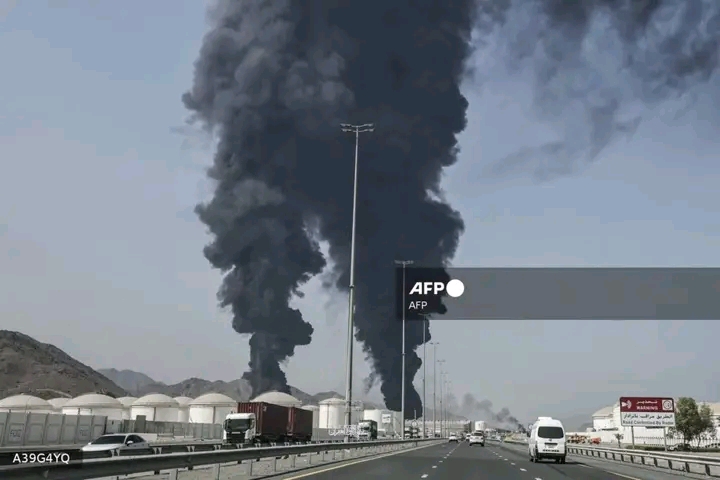
“Iran Launches Missile and Drone Strikes on Bahrain and UAE Aluminium Plants, Escalating Gulf Conflict”
Iran’s Islamic Revolutionary Guard Corps (IRGC) has carried out coordinated missile and drone strikes targeting major aluminium production facilities in Bahrain and the United Arab Emirates (UAE), marking a significant escalation in the widening Middle East conflict and raising concerns over global industrial supply chains and regional security.
Industrial Targets Hit in Retaliatory Operation
Iranian military authorities confirmed that the strikes were directed at key aluminium plants, including Aluminium Bahrain (Alba) and facilities operated by Emirates Global Aluminium (EGA). Tehran described the attacks as retaliation for what it alleged were earlier United States Israeli strikes against Iranian industrial infrastructure.
Bahrain’s state-backed aluminium producer acknowledged that its industrial complex was struck, reporting minor injuries to two employees while damage assessments remain ongoing.
Officials in the UAE also confirmed that air defence systems intercepted several incoming projectiles, though parts of an aluminium facility sustained damage during the incident.
Strategic Significance of Aluminium Facilities
The targeted facilitie
are among the largest aluminium production hubs globally, making the strikes economically and strategically sensitive. Aluminium is a critical material used in aerospace, automotive manufacturing, construction, and defence industries.
Analysts note that Gulf aluminium producers account for a notable share of global supply, meaning prolonged disruption could affect international markets already strained by geopolitical tensions.
Security observers say the attacks signal a shift toward targeting economic infrastructure rather than solely military installations, widening the potential consequences of the conflict.
Regional Tensions Intensify
The strikes form part of a broader cycle of retaliation following coordinated attacks earlier in 2026 that heightened confrontation between Iran and Western aligned partners in the Gulf. Regional governments have condemned the escalation, warning that continued attacks on civilian and industrial infrastructure risk triggering a wider regional war.
Gulf states have increasingly relied on advanced missile defence systems to intercept drones and ballistic missiles launched during the ongoing hostilities, underscoring the scale and persistence of the confrontation.
Diplomatic channels remain strained, with regional leaders urging de-escalation while reinforcing defensive measures to protect critical infrastructure and civilian populations.
Economic and Global Security Implications
Beyond immediate security concerns, the strikes highlight vulnerabilities in global supply chains tied to energy and industrial production in the Persian Gulf. Experts warn that attacks on manufacturing infrastructure could amplify economic shocks, particularly if maritime trade routes or industrial exports are disrupted.
International observers fear that continued tit for tat strikes may expand beyond military targets, increasing risks to commercial assets and foreign investments across the region.
Outlook
As tensions persist, analysts caution that retaliatory cycles between Iran and its adversaries may continue unless diplomatic intervention gains traction. The targeting of industrial facilities signals a new phase in the conflict one where economic leverage and infrastructure disruption are becoming central tools of warfare.