



In a tense escalation of violence in the Middle East, Iran has vowed to deliver “harsh punishment” for Israel, which it accuses of orchestrating the assassination of Ismail Haniyeh, a prominent leader of Hamas, on Wednesday. The strike, which took place in Tehran, has heightened fears of a broader conflict in the region.
Israeli officials have refrained from directly commenting on Haniyeh’s death. However, Prime Minister Benjamin Netanyahu acknowledged that Israel had recently inflicted significant blows on its adversaries, which included the targeted killing of a senior Hezbollah commander just hours prior to the strike in Tehran. Netanyahu warned citizens to brace for “challenging days ahead,” as tensions continue to mount.
During a televised address, Netanyahu stated, “Since the strike in Beirut, threats have emerged from all directions. We are prepared for any scenario and will stand united and determined against any threat.” This statement underscores the precarious situation in the region, with hostilities escalating on multiple fronts.
United Nations Secretary-General Antonio Guterres has expressed grave concerns over the potential for “dangerous escalation” in hostilities. In response to the unfolding crisis, the UN Security Council convened on Wednesday evening to deliberate on the situation.
The assassination of Haniyeh has left Hamas in a state of shock. The group’s armed wing declared that his death would “take the battle to new dimensions” and have significant repercussions for the ongoing conflict. Haniyeh was a key figure in Hamas’s leadership and played a crucial role in negotiations for ceasefires in Gaza. His assassination follows a devastating attack by Hamas on October 7, which resulted in the deaths of approximately 1,200 people in Israel. In retaliation, Israel has committed to dismantling Hamas.
Reports indicate that Haniyeh was killed shortly after attending the inauguration of Iran’s new president, Masoud Pezeshkian. A senior Hamas official disclosed that the strike occurred within the same building where Haniyeh had previously stayed during visits to Iran. Eyewitnesses claimed that a missile struck Haniyeh “directly,” highlighting the precision of the operation.
The assassination comes on the heels of Israel’s earlier action against Hezbollah, where senior commander Fuad Shukr was killed in Beirut. Israeli officials alleged that Shukr was responsible for a recent rocket attack that resulted in 12 fatalities in the Israeli-occupied Golan Heights. Hezbollah, however, has denied any involvement. The group confirmed that Shukr’s body was discovered in the debris of the building that was targeted, which also resulted in the deaths of four others, including two children.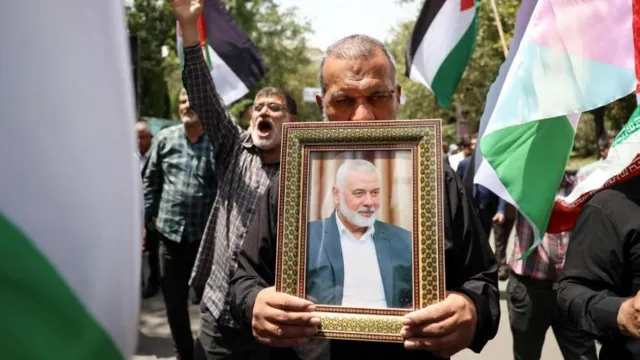
Given Hezbollah’s history of responding to the killings of its leaders with retaliatory attacks on Israel, a response from the group is anticipated. In previous instances, Hezbollah has launched barrages of rockets into Israeli territory following similar provocations.
In light of the escalating tensions, the United States has updated its travel advisory for citizens, urging them to avoid travel to Lebanon due to rising hostilities. Similarly, the UK Foreign Secretary has recommended that British nationals leave the country. Several airlines have also taken precautionary measures, canceling flights to Beirut, while United, Delta, and British Airways are expected to announce the suspension of flights to Tel Aviv.
The recent sequence of events, including the assassination of Haniyeh and the killing of Shukr, signals a critical juncture in the ongoing conflict between Israel, Hamas, and Hezbollah. The ramifications of these actions could significantly alter the landscape of Middle Eastern geopolitics, as all parties brace for the potential fallout and further escalation of violence.