

“Iran Rejects U.S. Influence Over Future Leadership, Envoy to Nigeria Responds to Trump Remarks”
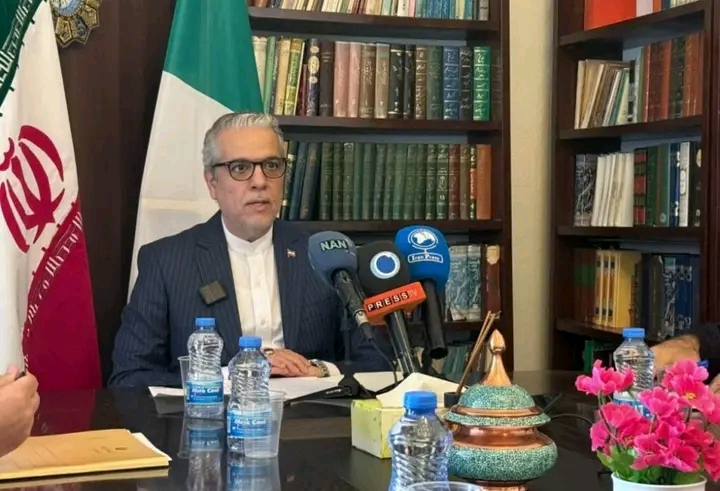
Iran has firmly rejected any suggestion that the United States should play a role in determining the country’s future leadership, with its envoy to Nigeria condemning recent remarks attributed to former U.S. President Donald Trump.
Speaking amid growing international debate, the Iranian diplomat stressed that the political future of Iran will be decided solely by its people and institutions, not by foreign governments.
The response follows comments in which Trump suggested that Washington should have influence over who emerges as the next leader of Iran, particularly in the context of discussions about the eventual succession to the country’s Supreme Leader, Ali Khamenei.
Iran’s Firm Response
The Iranian envoy described the suggestion as unacceptable interference in the sovereign affairs of the Islamic Republic.
According to the diplomat, Iran’s constitutional and political structures clearly outline how leadership transitions occur, emphasizing that the selection of a Supreme Leader is determined internally through established legal mechanisms.
Under Iran’s political system, the Supreme Leader is chosen by the Assembly of Experts, a body of clerics elected by the Iranian public. The institution is responsible for appointing and, if necessary, overseeing the performance of the country’s highest authority.
The envoy maintained that external pressure or commentary from foreign leaders would have no bearing on the process.
Rising Debate Over Iran’s Leadership Future
Speculation about Iran’s long term leadership succession has intensified in recent years due to the advanced age of Khamenei, who has served as the country’s Supreme Leader since 1989 following the death of revolutionary leader Ruhollah Khomeini.
Some analysts have suggested that potential successors could emerge from within Iran’s clerical and political establishment, though Iranian officials have repeatedly insisted that the process remains a domestic matter governed strictly by constitutional procedures.
The Iranian envoy reiterated that attempts by foreign governments to shape or influence such discussions undermine international norms of sovereignty and non-interference.
Broader Implications for U.S. Iran Relations
Relations between United States and Iran have been strained for decades, particularly over issues including nuclear policy, regional security, and economic sanctions.
Diplomatic observers say Trump’s remarks combined with Tehran’s sharp response highlight the enduring tensions between the two countries and the sensitivity surrounding Iran’s internal political affairs.
For many analysts, the exchange underscores a broader geopolitical reality: leadership transitions in strategic states like Iran often attract global attention, even as those nations insist on maintaining full sovereignty over the process.