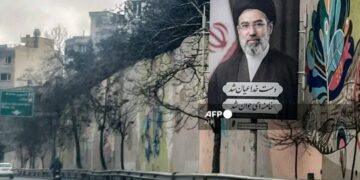



“Iran’s New Leader Mojtaba Khamenei Oversees Missile Strikes as Middle East Conflict Intensifies”
Iran has launched a fresh wave of missile attacks targeting Israel and parts of the Gulf region shortly after cleric Mojtaba Khamenei was named the country’s new supreme leader, marking a dramatic escalation in the already volatile Middle East conflict. The strikes came as Tehran signaled continuity in its hard line posture following the death of former leader Ali Khamenei, who was reportedly killed in late February airstrikes during the ongoing regional war.
Iranian state media said the missile launches were conducted under the authority of the newly appointed leader, with projectiles reportedly directed toward Israel and military or strategic targets across the Gulf. Several Gulf states, including Qatar, Saudi Arabia, and the United Arab Emirates, activated air-defense systems in response to missile and drone threats, highlighting the widening regional security risks.
The appointment of Mojtaba Khamenei followed a decision by Iran’s Assembly of Experts, the clerical body responsible for selecting the country’s supreme leader. At 56, the conservative cleric becomes only the third person to hold the powerful position since the 1979 Islamic Revolution, a development that has sparked debate among analysts over what some critics describe as an unprecedented dynastic succession within the Islamic Republic’s leadership structure.
Regional tensions have surged since the reported assassination of Ali Khamenei in strikes attributed to joint United States and Israeli operations targeting Iranian leadership and infrastructure. Israeli officials have warned that any successor to Iran’s previous leadership could also become a target, underscoring the high stakes nature of the unfolding confrontation between Tehran and its adventure
The widening conflict has already triggered broader geopolitical consequences. Oil prices have surged above $100 per barrel amid fears of supply disruptions, while several countries across the Gulf have heightened security alerts and defensive measures. Analysts warn that continued military exchanges between Iran and Israel risk drawing additional regional actors into the crisis, further destabilizing an already fragile security environment.
As the conflict intensifies, international observers and diplomatic actors are calling for urgent de-escalation to prevent a wider regional war that could have profound humanitarian, economic, and geopolitical implications far beyond the Middle East.