


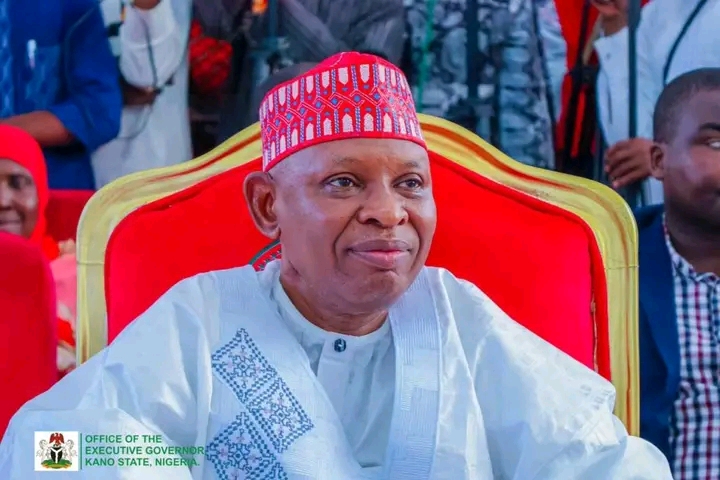
“Kano Governor Orders Political Appointees Seeking Elective Offices to Resign by March 31 Ahead of 2026 Elections”
The Governor of Abba Kabir Yusuf of Kano State has directed all political appointees intending to contest elective positions in the forthcoming 2026 general elections to resign from their current roles on or before March 31, 2026, in a move aimed at reinforcing governance discipline and electoral transparency.
The directive, announced through an official government communication, applies to commissioners, special advisers, senior special assistants, and other categories of political appointees serving within the state administration who have declared political ambitions or are preparing to seek party nominations.
Strengthening Governance and Electoral Fairness
According to the state government, the decision is designed to prevent conflicts of interest and ensure that public officeholders do not leverage government resources or influence while pursuing political campaigns. The administration emphasized that the policy aligns with democratic best practices and promotes fairness within the political process.
Political analysts note that requiring early resignation allows governance activities to continue uninterrupted while enabling aspirants to fully focus on political engagement without administrative distractions. The directive also reflects a growing trend among Nigerian state governments seeking to separate public service responsibilities from partisan political activities ahead of election cycles.
Alignment with Electoral Guidelines
Nigeria’s electoral framework, overseen by the Independent National Electoral Commission (INEC), encourages public officeholders seeking elective positions to disengage from official duties within stipulated timelines to maintain institutional neutrality. While constitutional provisions primarily address elected officials, many state governments adopt internal administrative rules extending similar standards to political appointees.
Observers say the Kano directive could shape internal party dynamics as aspirants prepare for party primaries expected later in the year. The early resignation deadline may also trigger cabinet reshuffles and administrative restructuring within the state government.
Political Reactions and Implications
Reactions across political circles in Kano have been mixed. Supporters of the policy argue that it demonstrates commitment to accountability and good governance, while critics suggest the timeline may pressure potential contenders who are still consulting political stakeholders.
Nonetheless, governance experts view the move as part of broader institutional efforts to deepen democratic norms at the subnational level, especially as political activities gradually intensify nationwide ahead of the 2026 electoral season.
Kano remains one of Nigeria’s most politically influential states, and developments within its political leadership often carry implications for regional political alignments and national party strategies.
Looking Ahead
With the March 31 deadline approaching, attention now turns to which appointees will formally step down and how the governor’s cabinet may be reconstituted. Analysts expect increased political mobilization across parties as aspirants transition from governance roles into full campaign mode.
The directive signals the beginning of early electoral positioning in northern Nigeria, underscoring the importance of institutional integrity as preparations for the next general elections gather momentum.