


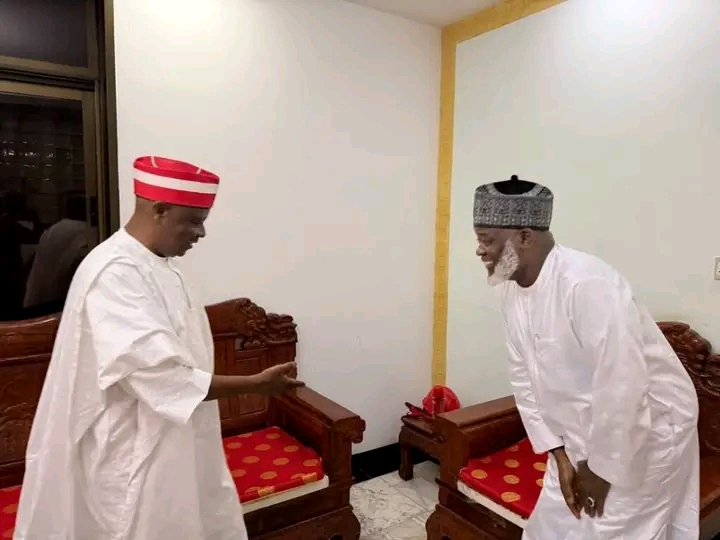
“Kwankwaso Meets Ex-Kano Deputy Governor Gawuna After APC Exit, Signalling Major Political Realignment Ahead of 2027″
Former Kano State Governor Rabiu Musa Kwankwaso has held a strategic meeting with former Kano Deputy Governor Nasiru Yusuf Gawuna, days after Gawuna resigned from the All Progressives Congress (APC) and stepped down from his federal board appointment a development widely interpreted as part of an emerging political realignment in northern Nigeria.
Photos from the meeting, which surfaced on Monday, show both political figures engaged in discussions amid growing speculation about shifting alliances ahead of Nigeria’s 2027 general elections. The engagement comes at a time when Kano’s political landscape is witnessing intensified consultations among influential actors repositioning within opposition politics.
Resignation Sparks Political Speculation Gawuna, who served as Kano deputy governor and was the APC governorship candidate in the 2023 election, recently confirmed his resignation from the ruling party, ending years of political association. Multiple reports indicate that his departure followed his resignation from a federal appointment, complying with directives requiring political appointees seeking elective office to step aside.
Political observers view the move as significant, given Gawuna’s influence within Kano politics and his longstanding rivalry with opposition blocs. Analysts suggest the resignation may position him for new alliances or a renewed governorship ambition ahead of the next electoral cycle.
Meeting Fuels Realignment Narrative
The meeting with Kwankwaso has amplified speculation about a broader coalition-building effort. Kwankwaso, a former presidential candidate and one of northern Nigeria’s most influential political figures, has recently been involved in a series of consultations across party lines as opposition forces explore possible collaborations.
Reports indicate that political stakeholders in Kano are closely monitoring the evolving relationship between both leaders, with insiders describing the engagement as part of ongoing dialogue aimed at reshaping political alignments in the state.
While neither camp has officially disclosed details of the discussions, analysts say such high-level meetings typically signal early coalition negotiations, particularly as political actors begin positioning for the 2027 elections.
Implications for Kano and National Politics
Kano remains one of Nigeria’s most politically strategic states due to its voting population and historical influence in national elections. The convergence of two heavyweight politicians from previously opposing camps could reshape party dynamics not only within the state but across the broader northern political bloc.
Observers note that recent defections, resignations, and consultations among major political figures reflect a wider trend of ideological and strategic repositioning within Nigeria’s opposition space as parties prepare for future electoral contests.
For now, the Kwankwaso Gawuna meeting underscores a rapidly evolving political environment in which alliances remain fluid and negotiations largely behind closed doors leaving the direction of Kano’s political future an open question.