


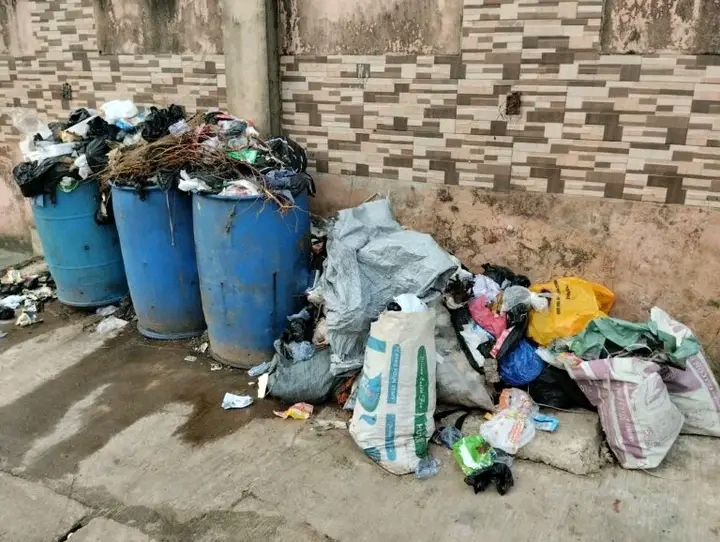
“Lagos Sanitation Drive Faces Fresh Test as Uncollected Refuse Heaps Frustrate Residents”
LAGOS, Nigeria Lagos residents have raised concerns over persistent heaps of uncollected refuse in parts of the state, warning that the situation is undermining the impact of the government’s revived monthly environmental sanitation exercise.
The complaints come as the Lagos State Government continues efforts to improve environmental cleanliness and waste management across the metropolis. Residents say sanitation activities are difficult to sustain when refuse cleared from homes, streets and public spaces is not promptly evacuated.
Reports from parts of Alimosho and other communities indicate that some waste heaps have remained uncollected for extended periods, with residents attributing the problem in some areas to delays involving waste collection operators. The situation has reportedly contributed to offensive odours, unsightly surroundings and concerns over possible public-health and environmental risks.
The Lagos State Government reintroduced the monthly environmental sanitation exercise in April 2026 after nearly a decade. The initiative is held on the last Saturday of each month and is intended to encourage residents to clean their homes, surroundings, drainage channels, markets and public spaces.
However, residents and observers have questioned the effectiveness of a sanitation programme that requires citizens to clean their surroundings without a sufficiently reliable system for the prompt evacuation of the resulting waste.
The concerns have emerged alongside broader criticism of waste collection in Lagos. In June, the state’s Commissioner for Environment and Water Resources, Tokunbo Wahab, acknowledged shortcomings in waste collection over the preceding months and apologized to residents, while outlining government plans to improve the system.
Governor Babajide Sanwo-Olu has also ordered intensified waste evacuation across the state, with authorities working to clear accumulated refuse in affected communities. Subsequent reports indicated that some residents welcomed the clean up efforts, although other locations continued to await evacuation.
Environmental experts and residents have increasingly stressed that sustainable sanitation requires more than periodic clean up exercises. Effective waste collection, adequate disposal infrastructure, consistent enforcement and responsible behaviour by residents and businesses are all essential to maintaining a cleaner and healthier Lagos.
For a megacity facing rapid population growth, flooding risks and intense pressure on public infrastructure, the continuing waste challenge highlights the need for a coordinated and dependable waste management system. Residents say the success of the monthly sanitation exercise will ultimately depend not only on public participation but also on the government’s ability to ensure that collected waste does not remain on the streets.
The situation places renewed focus on the relationship between civic responsibility and institutional efficiency. While residents are expected to keep their surroundings clean and dispose of waste responsibly, authorities and waste operators must also ensure that refuse is collected and evacuated promptly.
As Lagos continues its sanitation campaign, residents are calling for sustained action rather than periodic interventions, saying a cleaner environment can only be achieved through a waste management system that works consistently beyond sanitation days.