


“LAUTECH Crisis Deepens as Medical Sciences Students Block Campus Over Anatomy, Physiology Relocation”.
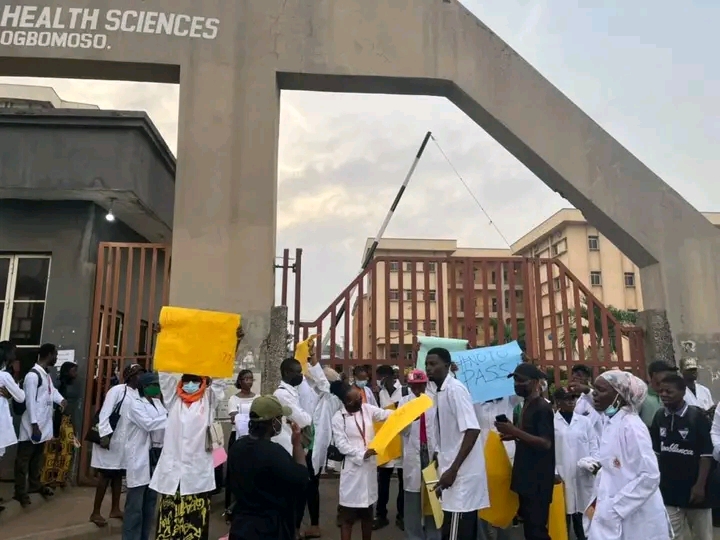
Ogbomoso, Nigeria Academic activities were disrupted at Ladoke Akintola University of Technology (LAUTECH) after medical sciences students staged a coordinated protest against the relocation of the Departments of Anatomy and Physiology, barricading the institution’s main entrance and restricting vehicular movement.
The demonstration, led primarily by students of the College of Health Sciences, reflects mounting concerns over the potential academic and professional implications of transferring two departments widely regarded as foundational to pre-clinical medical training. Students argue that Anatomy and Physiology are central to laboratory instruction, research development, and early clinical competence, warning that any abrupt restructuring could disrupt coursework and affect accreditation benchmarks.
Eyewitnesses reported that protesters assembled in the early hours at the university’s main gate, chanting solidarity songs and displaying placards demanding transparency, consultation, and an immediate reversal of the decision. The action temporarily slowed campus operations, though there were no confirmed reports of violence or damage to property as of press time.
University management has yet to issue a comprehensive public explanation detailing the rationale behind the relocation. However, internal sources suggest the move may be tied to broader administrative or structural adjustments within the College of Health Sciences.
Across Nigeria’s tertiary education landscape, departmental restructuring particularly within regulated programmes such as Medicine and Surgery often triggers concern among students due to strict compliance requirements set by national academic and professional oversight bodies. Stability in core departments is considered essential to maintaining training standards, institutional reputation, and graduate eligibility for professional certification.
The LAUTECH protest underscores wider tensions within Nigerian universities, where students increasingly demand greater participation in policy decisions affecting academic continuity and infrastructure. Dialogue between university authorities and student representatives is reportedly ongoing in an effort to de-escalate tensions and restore normalcy.