

Nigerian Afrobeats star Rema has sparked conversation again — this time by telling fans that if Afrobeats artistes only make music people already like, the genre will get stuck.
Speaking to a packed crowd at his concert over the weekend, Divine Ikubor, who goes by Rema, said his job as an artist is to push boundaries, not just repeat formulas.
“I don’t care what you say about me. I don’t care if you like what I like. But I make music that I like before you like it,” he told the audience.
“If I stick to what you like, Afrobeats is not going to move forward. And I will say it one more time, I am the f*_king Prince of Afrobeats.”
The 25-year-old didn’t hold back. Calling himself the “Prince of Afrobeats” with “a mandate to move the genre forward,” Rema positioned himself as both a custodian and a disruptor of the sound that made him global.
Rema’s comments come at a time when Afrobeats is facing one of its loudest identity debates online.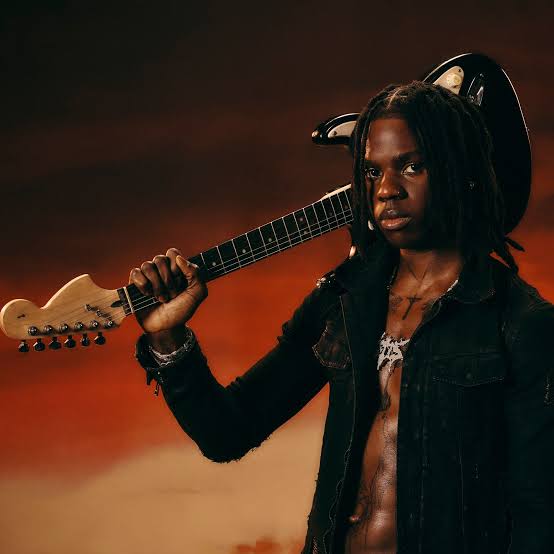

Over the last year, several top Afrobeats artistes have released songs and albums heavily influenced by dancehall, pop, R&B, amapiano, and even Latin sounds. Many of those records were clearly aimed at foreign charts and playlists.
The reaction from parts of the African audience has been swift. On social media, fans have accused artistes of “abandoning the roots” and chasing Western validation. Hashtags, quote tweets, and viral videos have called for a return to the drum patterns, pidgin lyrics, and local storytelling that first defined Afrobeats.
For traditionalists, Afrobeats is more than a genre — it’s cultural export. The fear is that in trying to appeal everywhere, it will end up sounding like nowhere.
Rema addressed that tension directly, though not by apologizing. Instead, he doubled down on artistic freedom.
From “Dumebi” in 2018 to global hit “Calm Down,” Rema has built his career by mixing. He was one of the first to popularize “Afrorave” — a blend of Afrobeats, Indian and Arabic influences, and rave energy.
That approach drew both praise and criticism. Some fans loved the experimentation. Others said it didn’t sound “African enough.”
“If every artist just gives you what you already know, we’ll be doing the same song for 10 years,” he implied. “Music has to travel. It has to change. It has to confuse you before it comforts you.”
He argued that the artists who moved genres forward — from Fela Kuti to 2Baba to Burna Boy and Wizkid — all did it by making music they believed in first, and letting the audience catch up later.
Afrobeats is bigger than ever in 2026. It fills arenas in Europe and North America, tops global streaming charts, and influences pop producers from London to Los Angeles. But with that scale comes pressure.
Record labels want hits that work on TikTok and US radio. Festival bookers want sounds that fit diverse lineups. And fans at home want to hear themselves in the music.
That tension is what Rema was speaking to. If every release is designed to satisfy one audience, the genre risks becoming predictable. If every release chases another market, it risks losing its core.
Rema’s answer is to stop trying to choose. Make what feels honest, and trust that evolution is part of the deal.
It’s a stance that mirrors what other global genres have gone through. Hip-hop, reggaeton, and K-pop all faced backlash when artists started blending outside sounds. Each time, the genre both expanded and fractured — and eventually grew stronger for it.
Critics say Rema is being dismissive of the fans who built him. “We made you,” one comment read. “Don’t forget where the sound came from.” Others argue he’s right — that art can’t be made by committee.
Supporters point to his track record. Rema was 19 when “Dumebi” broke out. By 22 he had one of the biggest Afrobeats songs in history with “Calm Down.” He’s toured the world, collaborated across genres, and consistently tried new production. To them, that’s exactly what a “Prince” should do: experiment, lead, and take the hits.
The genre isn’t going to settle the debate anytime soon. As more artistes sign global deals and tour internationally, the pressure to sound “universal” will only increase. At the same time, African audiences are more vocal and more connected than ever, and they want to be reflected in the music.
He didn’t announce a new project at the show, but he did remind the crowd why he’s remained one of Afrobeats’ most talked-about voices. He’s willing to be disliked in the short term if it means the sound moves in the long term.
For Rema, that’s not arrogance. It’s strategy. And if history is any guide, Afrobeats has always moved forward when someone was brave enough to sound different first — and let the world catch up later.
Whether fans agree with him now or not, the Prince has made his position clear: Afrobeats won’t grow by standing still