


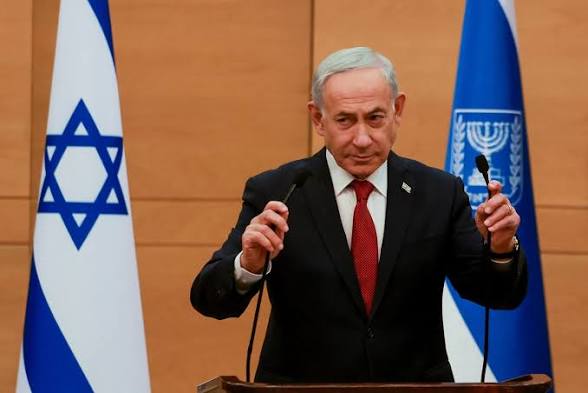
Netanyahu Offers Eisenkot First Turn in Rotational Premiership Deal as Israel Coalition Talks Intensify.
Israeli caretaker Prime Minister Benjamin Netanyahu has proposed a power sharing arrangement with his political rival, Gadi Eisenkot, offering him the opportunity to serve as prime minister first under a rotating leadership agreement.
Netanyahu made the proposal on Saturday, November 28, 2026, as Israel faces an ongoing political struggle over the formation of its next government following an inconclusive parliamentary election.
In a statement published on social media, Netanyahu said he was prepared to set aside his position as leader of the largest party and initially serve as alternate prime minister in a proposed national unity government led by Eisenkot.
He argued that the security challenges confronting Israel required political leaders to make compromises and prioritise the country’s future.
Netanyahu also called on Eisenkot to begin immediate negotiations, urging both sides to demonstrate a willingness to make concessions to establish a government capable of addressing Israel’s security concerns.
The proposal comes as Eisenkot, leader of the centrist Yashar party, works to assemble a governing coalition after receiving the mandate from President Isaac Herzog to form the next government.
Eisenkot had previously pledged to announce the formation of a new government by December 6, the official deadline, without requesting an additional 14 day extension.
His coalition-building efforts have involved negotiations with parties opposed to Netanyahu, although discussions have also taken place between his party and Netanyahu’s right wing Likud.
According to Reuters, Netanyahu’s proposal comes amid growing pressure on him following the inconclusive October 27 election, which left neither political camp with a clear path to forming a government.
Eisenkot’s response to the latest proposal had not been publicly confirmed at the time of reporting.
The proposed arrangement could reshape Israel’s coalition negotiations, although it remains uncertain whether the rival political camps will reach an agreement or whether Eisenkot will proceed with his efforts to form an alternative government.