


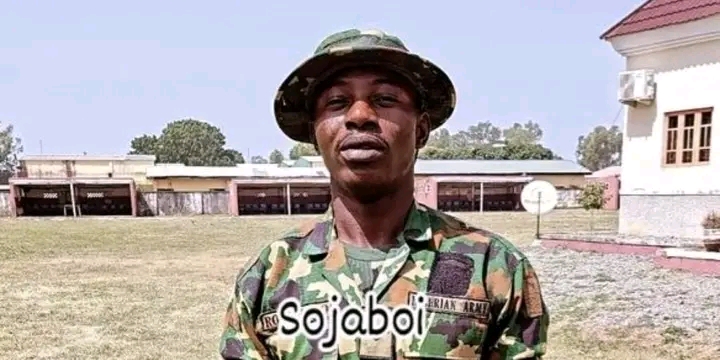
“Nigerian Army Dismisses Soldier ‘Soja Boi’ Over Indiscipline and Social Media Breaches, Clarifies Viral Controversy”
The Nigerian Army has officially confirmed the dismissal of a soldier popularly known as “Soja Boi,” stating that his removal from service was the result of serious disciplinary infractions and violations of military social media regulations, rather than solely the viral video that recently circulated online.
In a formal clarification issued by military authorities, the Army emphasized that the decision followed established internal procedures and was based on conduct deemed incompatible with the standards and ethical expectations of military personnel.
According to the Army, investigations revealed multiple acts of indiscipline alongside breaches of operational and communication protocols governing the use of social media by serving officers. Military officials stressed that personnel are bound by strict codes designed to safeguard operational security, institutional integrity, and public confidence in the armed forces.
The controversy gained national attention after a video featuring the soldier went viral across social media platforms, sparking public debate and widespread speculation about the circumstances surrounding his dismissal. However, Army spokespersons clarified that the disciplinary action was not an isolated reaction to online publicity but the culmination of documented misconduct.
“The Nigerian Army maintains zero tolerance for acts that undermine discipline, professionalism, or established communication guidelines,” the statement noted, adding that adherence to military regulations remains essential to maintaining order and operational effectiveness.
Security analysts say the incident highlights the growing tension between digital expression and institutional discipline within modern armed forces, particularly as social media increasingly shapes public perception of military institutions across Africa.
The Army reiterated its commitment to professionalism and warned serving personnel against unauthorized online engagements capable of compromising security or damaging the reputation of the service. Officials also urged the public to rely on verified information from official channels to avoid misinformation.
The case has reignited broader conversations about the role of social media among uniformed officers in Nigeria, where digital platforms have become powerful tools for communication but also present risks related to confidentiality and command hierarchy.
While public reactions remain mixed, military authorities insist that disciplinary standards apply uniformly to all personnel regardless of public sympathy or online attention.