


Reported by Musa Antiketu, | Journalist at Obaland magazine
WARSAW, POLAND — Nigeria’s Ambassador-designate to Poland, Chioma Ohakim, has paid tribute to one of history’s most remarkable yet often overlooked African heroes, August Agbola O’Browne (Agboola Browne), describing his courage during the Warsaw Uprising as a lasting symbol of freedom, resilience, and the enduring contribution of Africans to global history.
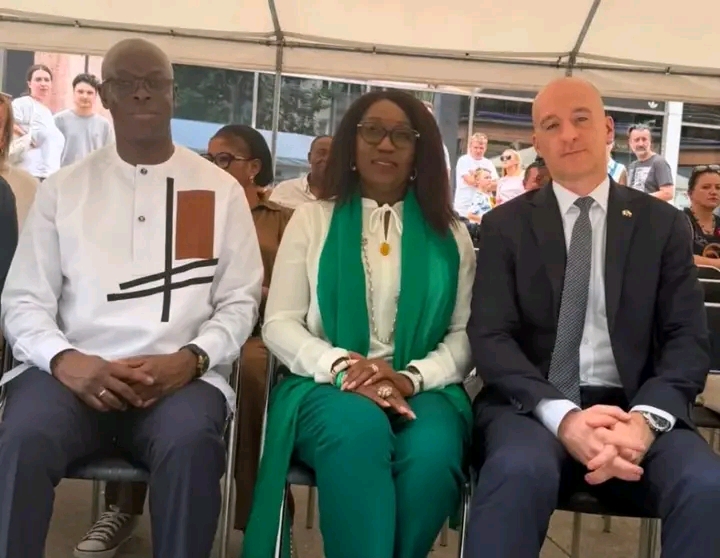
Speaking during commemorative activities marking the 82nd anniversary of the Warsaw Uprising, Ohakim praised Browne’s extraordinary role in one of the most significant resistance movements of the Second World War, noting that his sacrifice continues to strengthen historical ties between Nigeria and Poland while inspiring new generations to value justice, courage, and human dignity.
The remembrance ceremony, attended by Polish officials, diplomats, historians, members of the African community, and representatives of cultural institutions, celebrated the lives of those who fought against Nazi occupation during the 1944 Warsaw Uprising. Among the honoured names was Agboola Browne, widely recognised as the only known Nigerian to have actively participated in the historic rebellion.
Celebrating an Unsung Nigerian Hero
For decades, Agboola Browne’s story remained largely absent from mainstream historical narratives despite growing evidence documenting his participation in Poland’s resistance movement.
Born in Nigeria in the early twentieth century, Browne travelled to Europe as a young man and eventually settled in Poland before the outbreak of the Second World War. When Nazi Germany occupied Poland, he joined members of the underground resistance who later became part of the Warsaw Uprising against German forces.
Although the uprising was ultimately crushed after weeks of fierce fighting, it became one of the defining moments of Poland’s struggle for independence and national identity. Thousands of resistance fighters and civilians lost their lives, while large parts of Warsaw were destroyed.
By honouring Browne, Polish authorities continue to acknowledge that the struggle for freedom transcended nationality, race, and ethnicity.
Ambassador-designate Ohakim said Browne’s bravery reflects the values shared by both Nigeria and Poland—courage in the face of oppression and an unwavering commitment to freedom.
She noted that preserving such historical memories helps deepen cultural understanding while strengthening diplomatic relations between both countries.
A Symbol of Nigeria–Poland Friendship
According to the ambassador-designate, Agboola Browne’s legacy has become more than an individual story of heroism. It now represents an important chapter in the evolving relationship between Nigeria and Poland.
She explained that recognising Browne’s sacrifice demonstrates how Africans have contributed meaningfully to world history beyond the African continent, challenging stereotypes that often exclude African voices from major international historical events.
Ohakim stressed that Nigeria remains committed to promoting historical awareness, cultural diplomacy, and stronger people-to-people connections with Poland.
She encouraged scholars, educators, museums, and cultural organisations in both countries to continue researching and documenting Browne’s remarkable life so future generations can better appreciate his contribution.
Understanding the Warsaw Uprising
The Warsaw Uprising began on August 1, 1944, when the Polish Home Army launched an armed resistance against Nazi German occupation as Soviet forces approached the city.
The operation was intended to liberate Warsaw before Soviet troops entered the capital, thereby restoring Polish sovereignty.
For 63 days, resistance fighters battled heavily armed German forces despite limited weapons, dwindling supplies, and overwhelming odds.
The uprising ended in early October 1944 after thousands of combatants and civilians were killed. German forces subsequently destroyed much of Warsaw, leaving one of Europe’s most devastated cities.
Despite its tragic outcome, the Warsaw Uprising remains a defining symbol of courage, patriotism, and national resilience in Polish history.
Annual commemorations attract world leaders, diplomats, veterans, historians, and descendants of those who participated in the resistance.
Why Agboola Browne Matters Today
The recognition of Agboola Browne continues to resonate far beyond Poland.
Historians argue that his story challenges conventional narratives of World War II by demonstrating that Africans also played significant roles in European resistance movements.
His participation illustrates the interconnected nature of global struggles against tyranny and oppression.
For Nigerians, Browne represents a powerful reminder that citizens of African descent have contributed to major historical events across continents.
His legacy also encourages renewed interest in documenting the achievements of Africans whose stories have received limited international attention.
Growing Recognition of His Legacy
Over the past decade, Agboola Browne has received increasing recognition from Polish historians, museums, researchers, and government institutions.
Several documentaries, exhibitions, academic publications, and commemorative programmes have highlighted his unique contribution to the Warsaw Uprising.
His name now features more prominently in discussions surrounding multicultural participation in Poland’s wartime resistance.
This growing acknowledgement reflects broader efforts to present a more inclusive account of European history that recognises contributions from people of diverse backgrounds.
Strengthening Cultural Diplomacy
Diplomatic observers believe commemorating figures such as Browne contributes positively to bilateral relations.
Cultural diplomacy increasingly plays an important role in international relations by encouraging mutual respect through shared historical experiences.
For Nigeria, celebrating Browne offers an opportunity to showcase the country’s historical connections with Europe beyond politics and trade.
For Poland, recognising the Nigerian resistance fighter demonstrates appreciation for the diverse individuals who stood alongside Polish patriots during one of the country’s darkest periods.
Such commemorations also strengthen educational exchanges, tourism, historical research, and cultural cooperation between both nations.
Preserving Historical Memory
Experts have repeatedly emphasised the importance of documenting overlooked historical figures whose contributions risk fading from public consciousness.
The ambassador-designate’s tribute aligns with broader international efforts to preserve historical memory through education, museums, archives, and cultural institutions.
Remembering Agboola Browne is not merely about celebrating an individual hero; it is also about recognising universal values of courage, sacrifice, and solidarity.
His story serves as an enduring reminder that the pursuit of freedom has always united people across racial, national, and cultural boundaries.
Global Lessons from Browne’s Story
At a time when societies continue confronting questions about identity, inclusion, and historical justice, Browne’s legacy offers valuable lessons.
His courage demonstrates that resistance against oppression knows no geographical limits.
It also reinforces the importance of recognising diverse contributions to global history, ensuring that future generations inherit a more complete understanding of the past.
As Poland commemorates another anniversary of the Warsaw Uprising, the inclusion of Agboola Browne among its heroes sends a powerful message that freedom has always depended on collective sacrifice.
For Nigeria, his recognition stands as a source of national pride and a reminder that Nigerian citizens have left lasting marks on world history in unexpected places.
Through Ambassador-designate Chioma Ohakim’s tribute, Browne’s extraordinary legacy continues to receive the international recognition it deserves, strengthening friendship between Nigeria and Poland while inspiring future generations to uphold the ideals of courage, justice, and human dignity
Nigerian Ambassador-designate to Poland, Chioma Ohakim, honours Agboola Browne during the 82nd Warsaw Uprising anniversary, celebrating the Nigerian hero’s extraordinary contribution to Poland’s fight for freedom while strengthening Nigeria-Poland diplomatic and cultural ties.