


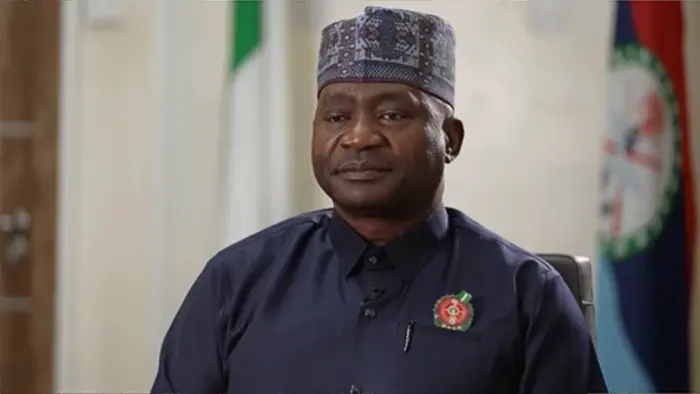
The Nigerian Armed Forces are considering a gradual withdrawal from internal security operations across the country as the Federal Government intensifies efforts to strengthen the Nigeria Police Force and restore its capacity to handle domestic security challenges.
The Minister of Defence, General Christopher Musa (retd.), disclosed this while speaking at the Abuja Roundtable themed “Promise to Proof: The Renewed Hope Conversation”, organised by the APC Progressive Strategy Roundtable.
Musa acknowledged that the military’s prolonged involvement in internal security operations had overstretched personnel, who are increasingly being deployed to tackle responsibilities traditionally handled by the police.
He explained that the government was investing in police recruitment, training, equipment and institutional reforms to enable the force to assume greater responsibility for maintaining law and order.
According to the minister, the military’s intervention in domestic security matters was necessary when threats exceeded the operational capacity of conventional law enforcement agencies. However, he stressed that such deployments should not become permanent substitutes for effective policing.
He said the armed forces were already supporting the police in building their operational capacity, with the ultimate objective of allowing soldiers to gradually return to their primary military responsibilities.
Musa reportedly observed that military personnel had endured prolonged deployments, sometimes spending years away from their families as they moved between different operational theatres.
The minister also advocated the reintroduction of tollgates on major highways, equipped with modern surveillance and vehicle identification technology, to strengthen security and curb the movement of kidnappers, bandits and other criminal groups.
He explained that technology-enabled tollgates could help security agencies identify and monitor suspicious vehicles without necessarily requiring motorists to stop for manual payments.
On the country’s security situation, the minister disclosed that troops had neutralised more than 300 terrorists and bandits, including over 10 commanders, during operations conducted in the preceding week.
He attributed the reported operational gains to improved intelligence gathering, coordinated security operations, increased defence spending and the acquisition of modern military equipment.
Meanwhile, the Executive Secretary of the Nigerian Police Trust Fund, Alhaji Mohamed Sheidu, disclosed that the Federal Government had approved approximately ₦100 billion for the rehabilitation of police training institutions nationwide.
He said the intervention was intended to address longstanding challenges involving police training facilities, operational equipment, infrastructure and personnel welfare.
The proposed gradual withdrawal of the military from internal security operations places renewed attention on the capacity of the Nigeria Police Force to protect lives and property, particularly amid persistent challenges involving terrorism, banditry, kidnapping and other forms of criminality.
However, the transition will depend on the police’s ability to develop sufficient manpower, equipment, intelligence capabilities and operational readiness to effectively manage the country’s domestic security responsibilities.
Defence Minister Christopher Musa says the Nigerian military is planning a gradual withdrawal from internal security operations as the Federal Government strengthens police capacity.