


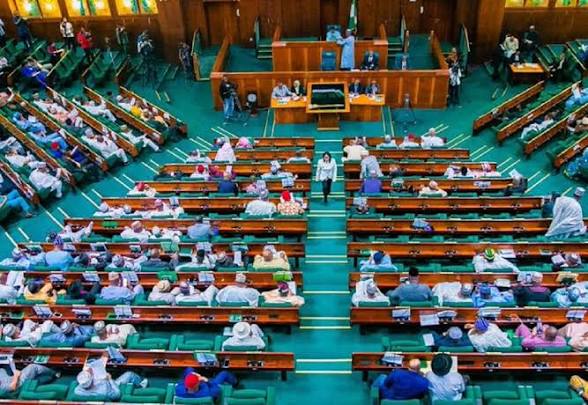
Nigeria’s State Police Push: Senate Awaits Four More Assemblies as November 17 Deadline Approaches.
The proposed establishment of state police in Nigeria has moved closer to another major constitutional milestone, with the Senate awaiting reports from four outstanding State Houses of Assembly ahead of its November 17, 2026, legislative deadline.
The development was disclosed by Senate Leader, Senator Opeyemi Bamidele, who said 32 state assemblies had approved the proposed State Police Constitution Alteration Bill, 2026, while four others were expected to submit their reports.
32 State Assemblies Have Approved the Bill
Bamidele’s latest update represents a significant increase in support for the proposed constitutional amendment, which seeks to introduce a decentralised policing structure across Nigeria.
Under Section 9(2) of the 1999 Constitution, an amendment requires approval from at least two thirds of the 36 State Houses of Assembly, equivalent to 24 states. With 32 assemblies reportedly having approved the proposal, the required threshold has been exceeded.
The four outstanding assemblies are expected to submit their reports before the National Assembly resumes on November 17. However, Bamidele’s latest statement, as reported on November 15, describes November 17 as the resumption date, rather than a newly announced formal deadline for the state assemblies.
He also indicated that the National Assembly intends to forward the constitutional amendment to President Bola Tinubu for assent this week, signalling an effort to conclude the legislative process without further delays.
What the Proposed State Police Reform Means
The proposed reform seeks to change Nigeria’s centralised policing arrangement by providing constitutional backing for the establishment of state police services alongside the existing Nigeria Police Force.
Under the proposed framework, individual states would have the authority to establish and manage their own police services, allowing security operations to respond more directly to local conditions and community needs.
Supporters of state policing argue that decentralisation could improve intelligence gathering, strengthen community engagement and enable faster responses to security threats, particularly in rural and underserved communities.
However, the proposal also raises important questions about accountability, political interference, funding, human rights protections and the potential misuse of state controlled security institutions.
These concerns remain central to the debate over how to ensure that decentralised policing strengthens public safety without undermining constitutional rights or democratic accountability.
Presidential Assent: The Next Major Step
Bamidele maintained that the National Assembly had a responsibility to advance the proposed reform, describing it as an important step towards addressing longstanding demands for a more decentralised security system.
The constitutional amendment process must be completed in accordance with the requirements of the 1999 Constitution before the proposed arrangement can become law.
President Tinubu’s assent is therefore a crucial part of the process. Until the constitutional requirements are fully satisfied and the amendment receives presidential assent, state police cannot be regarded as legally established under the proposed framework.
The development comes amid persistent security challenges across Nigeria, including kidnapping, banditry, terrorism and communal violence, which have intensified calls for more effective security arrangements.
For Nigeria, the proposed establishment of state police represents a potentially significant shift in the country’s security architecture. Its eventual success, however, will depend not only on legislative approval but also on transparent implementation, adequate funding and strong safeguards against political abuse.
As the National Assembly prepares to resume on November 17, attention is now focused on the four outstanding reports and the next steps towards completing the constitutional amendment process.