


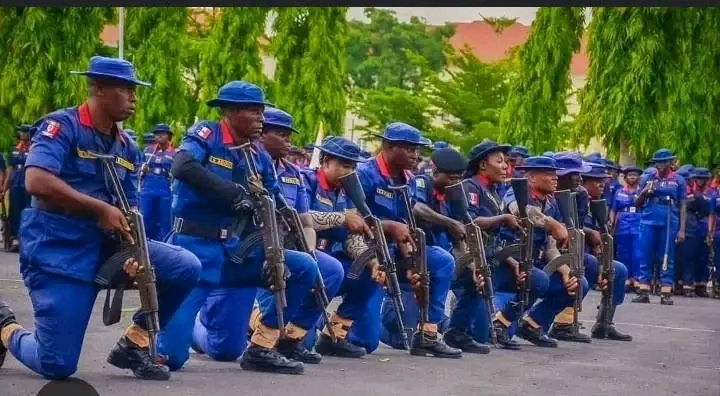
NSCDC Trains 260 Private Security Officers in Abuja to Strengthen FCT Security Response.
The Nigeria Security and Civil Defence Corps (NSCDC) has trained 260 private security officers in Abuja as part of efforts to strengthen security operations and improve the capacity of private guards to respond to emerging threats across the Federal Capital Territory (FCT).
The training is part of the Corps’ broader regulatory responsibility over Nigeria’s private security industry. The NSCDC is mandated to license, train, monitor and supervise private guard companies, with the objective of promoting professionalism, compliance and effective collaboration between private security operators and public security agencies.
The initiative comes against the backdrop of evolving security challenges in Nigeria, where private security personnel frequently serve as the first point of contact for residents, businesses, institutions and other facilities. Proper training can improve their ability to identify suspicious activities, protect lives and property, gather useful information and promptly alert relevant government security agencies.
The importance of stronger coordination between private security operators and conventional security agencies has also been highlighted by security experts and previous sector initiatives. In 2021, The Guardian Nigeria reported on a security and human rights training programme involving NSCDC officers and other law enforcement personnel, stressing the importance of professional standards, human rights and responsible security practices.
The development also aligns with the NSCDC’s continuing efforts to professionalise Nigeria’s private security sector. In May 2025, the Corps issued operating licences to 50 private security practitioners in Abuja after screening more than 200 applications, while urging operators to maintain ethical standards, recruit qualified personnel and cooperate with security agencies through intelligence gathering.
For the FCT, where Abuja hosts key government institutions, diplomatic missions, businesses and other critical facilities, strengthening the competence of private security personnel could provide an additional layer of preventive security. However, the effectiveness of such training will ultimately depend on sustained supervision, compliance with regulations and meaningful information sharing between private guards and government security agencies.
The NSCDC’s training programme therefore represents more than a capacity building exercise. It underscores the growing importance of integrating properly regulated private security operators into Nigeria’s wider security architecture while ensuring that their activities remain within the limits of the law.