


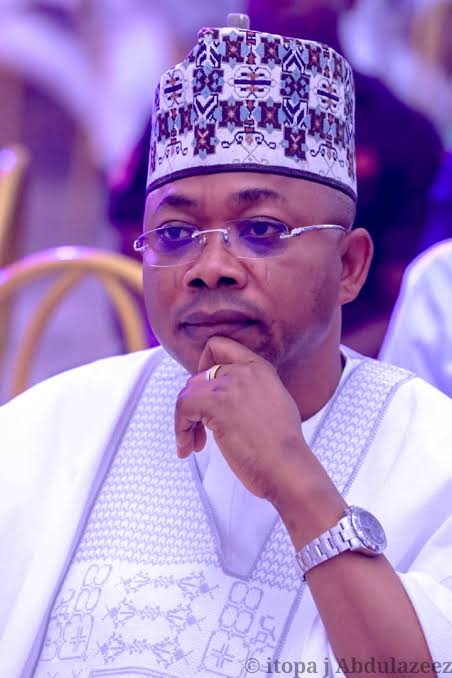
Ododo Credits Tinubu’s Revenue Reforms for Kogi’s Salary Payments, Infrastructure Development.
Kogi State Governor, Ahmed Usman Ododo, has attributed his administration’s ability to pay workers’ salaries while executing infrastructure projects to improved revenue allocations under President Bola Ahmed Tinubu’s administration.
Ododo made the remarks during a meeting with executive members of Arewa for Asiwaju (A4A), Kogi State chapter, at the Government House Banquet Hall in Lokoja.
The governor said increased financial resources accruing to the state had provided his administration with greater capacity to meet its obligations to workers while sustaining development initiatives across Kogi State.
“We are paying salaries and still doing projects. Tinubu made it possible,” Ododo said, acknowledging the Federal Government’s support.
His comments highlight the financial implications of increased revenue flows to state governments following changes in Nigeria’s fiscal environment under the Tinubu administration. However, the governor’s statement represents his administration’s assessment of the impact of the improved allocations on Kogi’s finances.
Ododo also pointed to ongoing infrastructure investments, including the proposed Kogi International Cargo Airport project at Zariagi in Adavi Local Government Area, which has received Federal Government attention.
The airport initiative is expected to strengthen transportation and logistics opportunities in the state, potentially improving trade, investment and the movement of agricultural produce and other goods.
A4A Unveils 2027 Political Mobilisation Strategy
The meeting also provided a platform for Arewa for Asiwaju to present its grassroots mobilisation plans ahead of the 2027 general elections.
The group’s Kogi State Coordinator, Abdulkareem Jamiu Mohammed, popularly known as Asuku, disclosed that the organisation was targeting 200 votes from each polling unit across the state.
With 3,508 polling units in Kogi, the group projected a total target of 701,600 votes for President Tinubu.
Mohammed said the organisation had established a mobilisation structure designed to reach communities across the state’s 21 local government areas.
He explained that the group intended to engage residents at the grassroots level while highlighting projects and policies associated with the Tinubu and Ododo administrations.
The political mobilisation effort reflects growing preparations among political support groups as Nigeria approaches another general election cycle in 2027.
Revenue Allocation and Accountability
While improved federal allocations can provide states with additional resources for salaries, infrastructure and public services, the broader challenge remains ensuring that increased revenue translates into measurable improvements in citizens’ living conditions.
For Kogi State, the sustainability of salary payments, pension obligations and capital projects will depend not only on federal transfers but also on effective public financial management, internally generated revenue and transparent budget implementation.
Ododo’s remarks therefore place renewed attention on the relationship between federal fiscal policies and the capacity of state governments to deliver development.
As political activities gradually intensify ahead of 2027, residents will also be watching how the administration converts its financial resources and development promises into tangible benefits across the state.