

Oil prices surged and global stocks fell Monday after U.S.-Iran peace talks collapsed and President Donald Trump announced a U.S. Navy blockade of the Strait of Hormuz, raising fears of disrupted energy supplies from the Middle East
Negotiations in Islamabad broke down over the weekend. The U.S. delegation, led by Vice President JD Vance, blamed Iran’s refusal to abandon its nuclear program. Tehran accused Washington of “maximalism, shifting goalposts, and blockade.”
The breakdown dashed hopes for an end to the six-week conflict that has already driven crude prices higher and stoked global inflation concerns.
Oil prices, which had fallen last week after a brief U.S.-Iran ceasefire, jumped more than 8% Monday. Both West Texas Intermediate and Brent crude topped \$100 a barrel, with WTI up 7.4% at \$103.69 and Brent up 6.9% at \$101.78.
Equities dropped across Asia and Europe. Tokyo, Hong Kong, Seoul, Sydney, Mumbai, Singapore, Taipei and Jakarta all closed lower. London, Paris and Frankfurt opened down. Shanghai edged up slightly. In contrast, Hungarian shares rose more than 3% after conservative Peter Magyar won parliamentary elections Sunday, ousting Prime Minister Viktor Orban after 16 years.
In a post on Truth Social, President Trump said the goal of the blockade is to clear the strait of mines and reopen it to shipping. He added that Iran must not profit from controlling the waterway, through which about a fifth of global oil and gas usually passes.
“Effective immediately, the United States Navy, the Finest in the World, will begin the process of BLOCKADING any and all Ships trying to enter, or leave, the Strait of Hormuz,” Trump wrote. “Any Iranian who fires at us, or at peaceful vessels, will be BLOWN TO HELL!”
He said the blockade would apply only to vessels traveling to or from Iranian ports. The U.S. military said it would begin blockading all Iranian Gulf ports Monday at 1400 GMT.
Iran’s Revolutionary Guards responded that its forces have full control over the strait and warned enemies would be trapped in a “deadly vortex” if they make a “wrong move.” Iran’s navy chief Shahram Irani called Trump’s threat “ridiculous and funny,” according to state TV.
After the talks, Vance said Washington had given Tehran its “final and best offer.” Iran’s Foreign Minister Abbas Araghchi said the two sides had been “inches away” from a deal and that “Iran engaged with US in good faith to end war,” but added they encountered “maximalism, shifting goalposts, and blockade.”
Analysts warned the move marks a serious escalation. Nicole Grajewski, an assistant professor at Sciences Po in Paris, said a U.S. blockade is “not a minor coercive signal” but would be considered an effective resumption of the war.
Malcolm Melville of Schroders noted that even if the conflict ends, oil prices would likely stay elevated. “While shipping levels could return to normal quickly, it will take weeks or even months for production levels to return to normal given the 10 million barrels a day of shut-in production and damage to some facilities,” he wrote.
Saxo Markets’ Charu Chanana said a deal was always difficult given disputes over missiles, nuclear restrictions, proxy dynamics, the Strait of Hormuz, and sanctions. “The fact the talks happened at all matters. There is still a chance negotiations restart,” she added.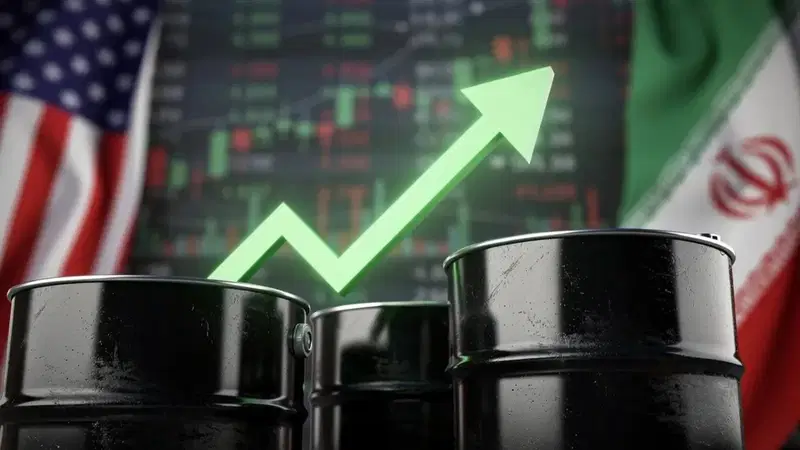

The renewed tensions also stoked inflation fears. U.S. consumer price index data Friday showed inflation hit 3.3% in March, its highest since May last year. Investors are also watching efforts to resolve the Israel-Hezbollah conflict, as Lebanese Prime Minister Nawaf Salam pushes for an Israeli withdrawal.