


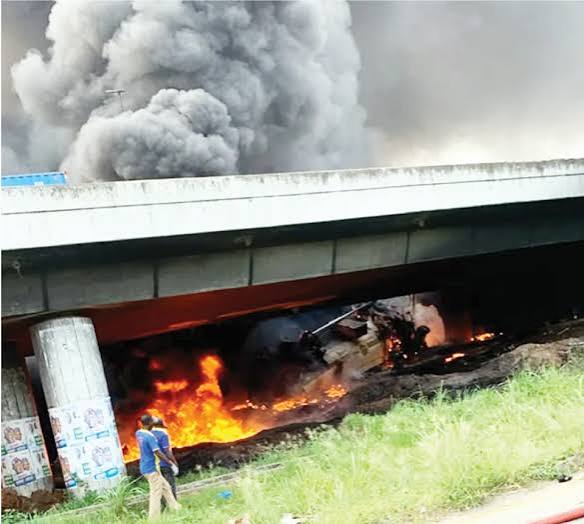
Otedola Bridge Tanker Explosion: Two Men Suffer Severe Burns as 33,000 Litre Diesel Tanker Catches Fire in Lagos.
Two men have sustained severe burn injuries after a diesel laden tanker plunged from Otedola Bridge along the Lagos Ibadan Expressway and burst into flames beneath the bridge, triggering an emergency response and disrupting traffic in the area.
The incident occurred on Monday, October 19, 2026, when the tanker, reportedly carrying approximately 33,000 litres of diesel, fell from the bridge and caught fire on the Berger bound section of the expressway. The resulting inferno prompted the deployment of emergency responders to rescue the victims, contain the blaze and prevent further damage to surrounding infrastructure.
According to the Lagos State Emergency Management Agency (LASEMA), the two adult male victims sustained second- and third-degree burns. Emergency medical personnel provided initial treatment at the scene before the injured men were evacuated to the Lagos State Accident and Emergency Centre at Toll Gate for further medical attention.
The Lagos State Traffic Management Authority (LASTMA) also confirmed the incident, stating that its emergency response team worked alongside other agencies to rescue the victims and support firefighting operations.
Emergency Agencies Mobilize to Contain the Fire
The Lagos State Fire and Rescue Service deployed firefighters to tackle the blaze, while LASEMA activated its emergency response arrangements to coordinate rescue and medical assistance.
Other agencies involved in the operation included the Federal Road Safety Corps (FRSC), the Lagos State Ambulance Service, LASTMA and the Lagos State Neighbourhood Safety Agency, alongside police personnel.
The coordinated response focused on rescuing the injured men, extinguishing the fire and reducing the risk of the flames spreading to nearby properties and infrastructure.
The incident also caused traffic congestion around Otedola Bridge, a major transport corridor connecting Lagos with other parts of southwestern Nigeria. Motorists were advised to approach the affected area cautiously and follow instructions from traffic officials while emergency operations continued.
Subsequent reports from LASEMA indicated that the fire had been brought under control and traffic flow along the affected corridor had been restored. Emergency personnel also undertook additional safety measures to prevent the fire from reigniting.
Renewed Concerns over Tanker Safety in Lagos
The latest incident has renewed concerns about the safety of transporting large quantities of petroleum products on Nigeria’s busy highways, where tanker accidents can expose motorists, pedestrians and nearby communities to serious risks.
Otedola Bridge, situated along the Lagos-Ibadan Expressway, has witnessed major tanker-related fires in previous years. A particularly devastating incident in June 2018 resulted in multiple deaths and extensive damage to vehicles. Another tanker explosion occurred in the area in March 2025, again highlighting the dangers associated with heavy-duty vehicles transporting combustible materials.
Although the circumstances surrounding the latest crash remain subject to further investigation, the incident underscores the importance of regular vehicle inspections, effective enforcement of road safety regulations and strict compliance with established standards for transporting hazardous materials.
Mechanical defects, unsafe driving practices and vehicle instability are among the risks that can contribute to heavy-duty vehicle accidents. However, authorities have yet to establish the specific cause of Monday’s incident, and no definitive conclusion should be drawn until the relevant findings are made public.
Road Safety and Emergency Preparedness
The incident also highlights the importance of rapid emergency response and coordination among relevant agencies when tanker accidents occur in densely populated urban areas.
While the swift rescue of the two injured men helped prevent further immediate harm, the severity of their injuries illustrates the potentially devastating consequences of tanker fires.
For Lagos and other Nigerian states, preventing similar incidents requires sustained attention to commercial vehicle safety, driver training, routine mechanical inspections and enforcement of regulations governing the transportation of petroleum products.
Public awareness is equally important. Motorists and pedestrians should avoid approaching fallen tankers or active fire scenes, as leaking fuel, intense heat and the possibility of further explosions can create life threatening conditions.
As emergency agencies continue to manage the aftermath of the incident, the immediate priority remains the medical treatment of the injured victims and the establishment of the circumstances that led to the tanker plunging from the bridge.
The incident serves as another reminder that effective road safety enforcement and preventive maintenance are essential to protecting lives on Nigeria’s major transportation.