


Reported by Musa Antiketu, | Journalist at Obaland magazine
Nigeria’s Rural Electrification Drive Targets Energy Poverty Through Homegrown Solar Industry
More than 85 million Nigerians still do not have access to reliable electricity, a challenge that continues to undermine economic growth, education, healthcare, industrial productivity, and overall quality of life across Africa’s most populous nation.
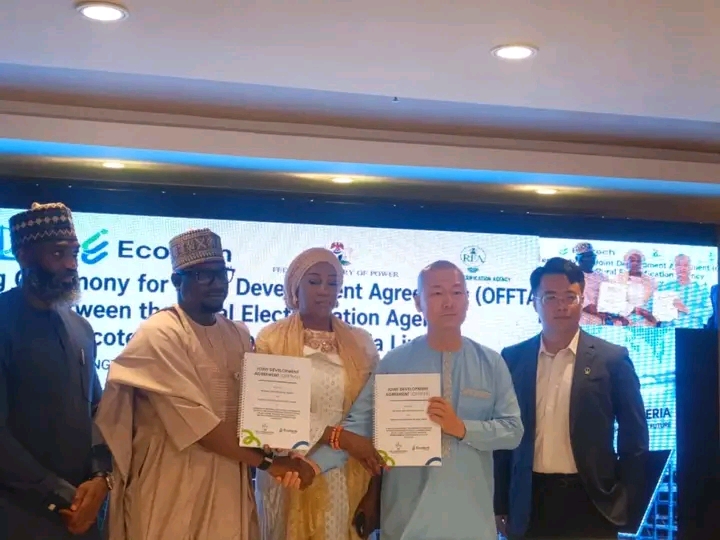
This stark reality was disclosed by the Managing Director and Chief Executive Officer of the Rural Electrification Agency (REA), who said the Federal Government is intensifying efforts to strengthen local solar manufacturing as part of a broader strategy to close Nigeria’s enormous electricity access gap and accelerate the country’s clean energy transition.
The revelation underscores one of Nigeria’s most persistent development challenges despite decades of investment in the power sector. While millions of households remain connected to the national grid, unreliable electricity supply has forced businesses, hospitals, schools, and homes to depend heavily on expensive diesel and petrol generators, increasing production costs and environmental pollution.
For millions living in rural communities, however, the situation is even more severe, with many settlements remaining completely disconnected from the national grid.
A National Energy Challenge
According to the REA, approximately 85 million Nigerians still lack dependable electricity, making Nigeria one of the countries with the largest energy access deficits globally.
The agency believes that expanding renewable energy infrastructure—particularly solar power—offers one of the fastest and most cost-effective pathways to providing electricity for underserved communities while reducing dependence on fossil fuels.
Officials say increasing domestic production of solar components will not only improve energy access but also stimulate industrialisation, create skilled jobs, reduce import dependence, and strengthen Nigeria’s renewable energy value chain.
The REA noted that local manufacturing is expected to play a strategic role in making solar technologies more affordable and readily available across the country.
Why Local Solar Manufacturing Matters
Nigeria possesses abundant solar resources, receiving significant sunlight throughout the year across most regions.
Energy experts argue that harnessing this natural advantage through local manufacturing could transform the country’s electricity landscape.
Rather than relying almost entirely on imported solar panels and related equipment, local production could lower costs, improve supply chain resilience, encourage technology transfer, and build technical capacity among Nigerian engineers and manufacturers.
Industry analysts also believe that establishing domestic production facilities would position Nigeria as a regional renewable energy hub capable of supplying neighbouring African markets.
The Federal Government has repeatedly identified renewable energy as a critical pillar of its economic diversification strategy and climate commitments.
Powering Rural Communities
The Rural Electrification Agency has in recent years implemented several initiatives aimed at extending electricity to communities beyond the reach of the national grid.
Through mini-grid projects, standalone solar home systems, solar-powered healthcare centres, and electrification programmes for educational institutions, thousands of communities have gained access to cleaner and more reliable electricity.
These interventions are particularly significant in remote areas where extending conventional transmission infrastructure may be economically impractical.
Reliable electricity in rural communities enables small businesses to operate more efficiently, improves healthcare delivery through uninterrupted power for medical equipment and vaccine storage, and supports better educational outcomes by providing lighting and digital learning opportunities.
Economic Impact of Energy Poverty
Nigeria’s electricity deficit has far-reaching economic implications.
Manufacturers frequently cite unreliable electricity as one of the biggest obstacles to competitiveness.
Small and medium-sized enterprises spend substantial portions of their operating budgets on fuel for generators, increasing production costs and reducing profitability.
The World Bank has previously estimated that inadequate electricity supply costs the Nigerian economy billions of dollars annually through lost productivity and constrained investment.
Energy poverty also affects agriculture, food processing, telecommunications, financial services, and other sectors that depend on stable electricity.
For households, unreliable power limits access to modern appliances, digital services, refrigeration, and educational opportunities, reinforcing cycles of poverty.
Renewable Energy as a Development Tool
Globally, renewable energy has become increasingly central to sustainable development strategies.
Solar technology has experienced significant cost reductions over the past decade, making it more accessible for developing economies seeking to expand electricity access.
Nigeria’s growing interest in solar energy aligns with broader African efforts to accelerate clean energy deployment while addressing climate change and expanding economic opportunities.
International development partners have also supported various renewable energy initiatives in Nigeria through financing, technical assistance, and policy collaboration.
These partnerships aim to increase private-sector participation, strengthen regulatory frameworks, and improve financing mechanisms for renewable energy investments.
Job Creation and Industrial Growth
One of the major advantages of expanding local solar manufacturing lies in its employment potential.
A robust domestic solar industry would require engineers, technicians, electricians, assemblers, logistics professionals, researchers, quality assurance specialists, and maintenance personnel.
Beyond direct employment, increased renewable energy deployment could stimulate growth across related industries including battery storage, electrical installation, software development, distribution networks, and vocational training.
Experts believe that investing in clean energy manufacturing could support Nigeria’s ambition of becoming a leading industrial economy while addressing youth unemployment.
Challenges Ahead
Despite growing momentum, experts caution that achieving universal electricity access will require sustained policy consistency, significant financing, regulatory reforms, and stronger collaboration between government, private investors, financial institutions, and development partners.
Infrastructure limitations, foreign exchange pressures affecting equipment imports, financing constraints, and security concerns in certain regions remain significant obstacles.
There is also a need for stronger local technical capacity, research and development, quality standards, and investment incentives to ensure Nigerian manufacturers can compete effectively.
Consumer awareness and affordable financing options for households and businesses adopting solar technology will also be critical to long-term success.
Government’s Broader Energy Vision
The Federal Government has consistently emphasised energy transition as part of its long-term development agenda.
Beyond expanding renewable energy, authorities aim to improve grid reliability, modernise transmission infrastructure, encourage private-sector investment, and diversify electricity generation sources.
Energy experts argue that no single solution can eliminate Nigeria’s electricity challenges.
Instead, a combination of grid expansion, decentralised renewable energy systems, gas-fired generation, transmission upgrades, battery storage technologies, and improved distribution efficiency will likely be necessary.
Within this broader framework, local solar manufacturing represents an important strategic component capable of accelerating electricity access while supporting industrial development.
Implications for Africa
Nigeria’s renewable energy ambitions carry implications beyond its borders.
As Africa’s largest economy and one of its biggest consumer markets, Nigeria’s success in building domestic solar manufacturing could encourage similar investments across the continent.
Many African countries continue to face significant electricity deficits despite possessing abundant renewable energy resources.
Regional cooperation in manufacturing, technology transfer, and energy infrastructure could strengthen Africa’s energy security while advancing the goals of the African Continental Free Trade Area (AfCFTA).
A thriving Nigerian renewable energy manufacturing sector could therefore contribute not only to domestic electrification but also to broader continental industrialisation.
Looking Forward
The disclosure that more than 85 million Nigerians still lack reliable electricity highlights both the scale of the country’s energy challenge and the urgency of sustained investment in innovative solutions.
While progress has been made through rural electrification programmes and renewable energy projects, millions remain underserved.
The REA’s renewed emphasis on developing local solar manufacturing reflects an important shift from simply importing clean energy technologies toward building domestic industrial capacity.
If effectively implemented alongside supportive policies, private investment, infrastructure development, and strong governance, the initiative could help transform Nigeria’s electricity sector, improve livelihoods, stimulate economic growth, and strengthen the country’s leadership in Africa’s renewable energy transition.
For millions of Nigerians waiting for dependable electricity, the success of these reforms could determine not only access to power but also broader opportunities for education, healthcare, entrepreneurship, and sustainable development.
Over 85 million Nigerians still lack reliable electricity, according to the Rural Electrification Agency. Obaland magazine examines Nigeria’s renewable energy strategy, local solar manufacturing ambitions, rural electrification efforts, and their implications for economic growth and sustainable development across Africa.