


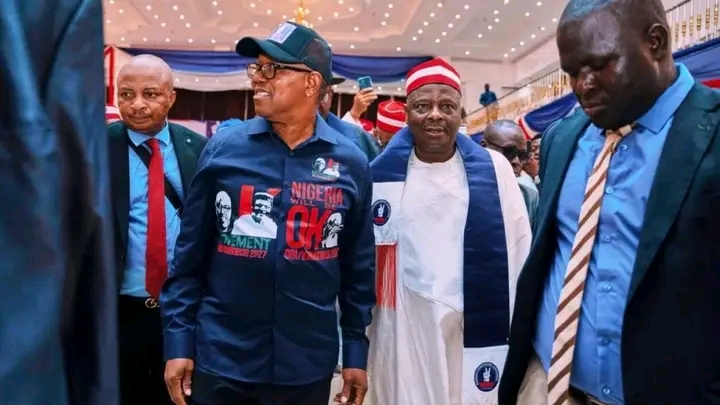
Peter Obi Unveils Kwankwaso as 2027 Running Mate, Redrawing Nigeria’s Opposition Landscape
Nigeria’s political landscape has entered a new phase ahead of the 2027 presidential election following the announcement by former Anambra State Governor and Nigeria Democratic Congress (NDC) presidential candidate, Peter Obi, naming former Kano State Governor Rabiu Musa Kwankwaso as his running mate.
The announcement, made during Obi’s acceptance speech after his affirmation as the NDC’s presidential flag bearer, signals a major political realignment that could significantly influence the dynamics of the upcoming presidential contest. The Obi Kwankwaso ticket brings together two of Nigeria’s most prominent opposition figures, combining Obi’s strong appeal among urban youths and reform minded voters with Kwankwaso’s extensive political influence, particularly across northern Nigeria.
Speaking at the event, Obi emphasized that his administration, if elected, would pursue an inclusive governance model and elevate the role of the vice president beyond a ceremonial office. He stated that Kwankwaso would serve as an active partner in governance, reflecting what he described as a commitment to collective leadership, accountability, and national development.
Political analysts view the development as one of the most consequential opposition alliances ahead of the 2027 elections. The partnership is expected to strengthen the NDC’s national reach and improve its electoral competitiveness against the ruling establishment and other major contenders. Observers note that the South North political balance represented by the Obi Kwankwaso ticket could become a significant factor in shaping voter calculations across the country.
The announcement also comes against the backdrop of ongoing political realignments within Nigeria’s opposition movement. In recent months, efforts to build a broad opposition coalition have experienced internal divisions, leading several influential figures to pursue alternative political platforms. The emergence of the Obi Kwankwaso ticket is therefore being interpreted as an attempt to consolidate support and present a unified alternative ahead of the 2027 polls.
While supporters have welcomed the development as a strategic move capable of broadening the opposition’s appeal, critics argue that the alliance will still face the challenge of translating political goodwill into nationwide electoral victories. As campaigns gradually gather momentum, the effectiveness of the partnership will likely be tested by issues such as economic reforms, security concerns, governance performance, and voter mobilization.
With Nigeria’s next presidential election drawing closer, the Obi Kwankwaso alliance is expected to remain one of the most closely watched political developments, potentially reshaping the balance of power and influencing the direction of the country’s democratic future.