


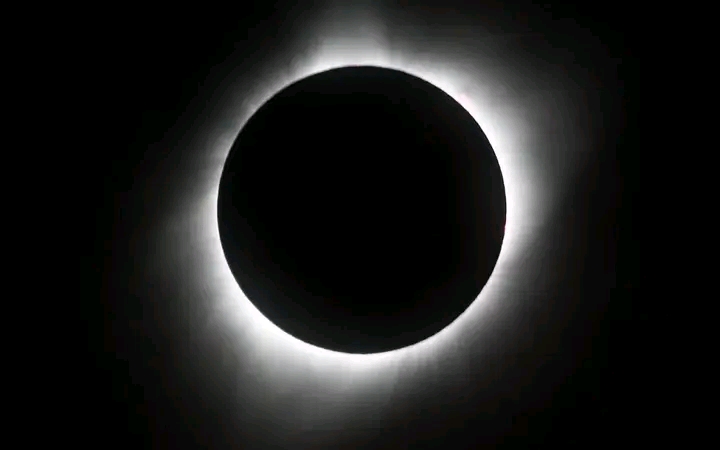
“Rare Total Solar Eclipse Set for August 12: Everything You Need to Know About the Spectacular Celestial Event”
A rare total solar eclipse is expected to captivate sky watchers on August 12, offering one of the most remarkable astronomical events of the decade. The eclipse will be visible in parts of Europe, Greenland, Iceland, and portions of the Arctic, while many other regions across the Northern Hemisphere will witness a partial solar eclipse.
A total solar eclipse occurs when the Moon passes directly between the Earth and the Sun, completely blocking the Sun’s light for observers located within the path of totality. During this brief period, daylight temporarily fades, temperatures may drop slightly, and the Sun’s outer atmosphere known as the corona becomes visible, creating a dramatic spectacle rarely seen from Earth.
Astronomers note that the August 12 eclipse is expected to attract thousands of tourists, scientists, photographers, and astronomy enthusiasts to locations along the eclipse’s path. Countries expected to offer some of the best viewing opportunities include parts of Spain, Iceland, and Greenland, depending on local weather conditions.
For those outside the path of totality, the event will still be visible as a partial solar eclipse in several European countries and nearby regions. Space agencies and astronomical organizations are also expected to provide live broadcasts, allowing millions worldwide to experience the phenomenon remotely.
Experts strongly advise the public not to look directly at the Sun without proper eye protection. Viewing a solar eclipse without certified eclipse glasses that meet the international ISO 12312-2 safety standard can result in permanent eye damage. Ordinary sunglasses, camera filters, or homemade viewing devices do not provide adequate protection.
Astronomers also recommend using indirect viewing methods, such as pinhole projectors or watching official live streams, especially for children and first-time observers.
Solar eclipses occur because of the precise alignment of the Earth, Moon, and Sun. However, total solar eclipses remain relatively rare at any single location on Earth, making each event scientifically significant and culturally fascinating.
The August 12 eclipse is expected to provide researchers with another opportunity to study the Sun’s corona, solar activity, and atmospheric conditions while offering the public a memorable glimpse into one of nature’s most extraordinary celestial displays.