


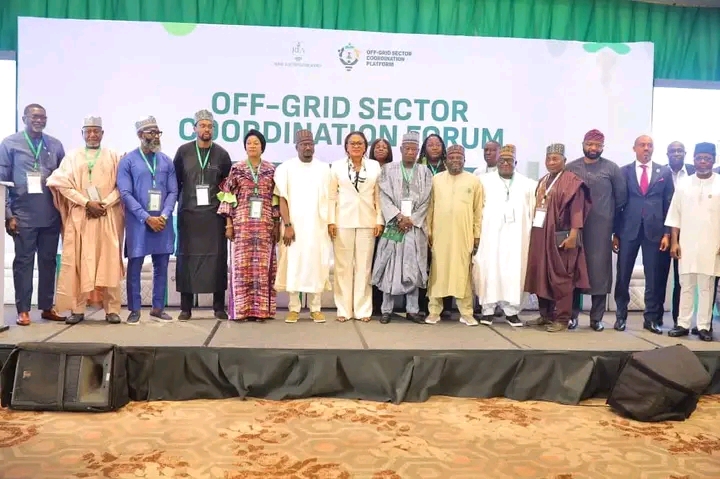
The Rural Electrification Agency (REA) is seeking stronger coordination among government institutions, state governments, development partners, financiers and private-sector operators as Nigeria intensifies efforts to expand electricity access through decentralised renewable energy solutions.
The agency’s push comes as Nigeria’s off-grid energy sector becomes increasingly diverse, with government programmes, private developers, mini-grid operators, solar companies, manufacturers, financial institutions and development organisations participating in efforts to reach communities and businesses underserved by the conventional electricity grid.
The REA is scheduled to unveil an Off-Grid Sector Coordination Forum in Abuja on September 28, 2026.The forum is designed to provide a more structured platform for stakeholders to coordinate interventions, share market intelligence and develop partnerships capable of supporting sustainable electricity access.
A major component of the initiative is the revised Off-Grid Stakeholder Coordination and Partnership Framework. The framework is expected to focus on practical areas including innovative financing, local content development, productive use of electricity and commercially sustainable business models.
The REA’s position reflects the growing importance of coordination in Nigeria’s electricity-access strategy. The agency is mandated under the Electricity Act 2023 to promote universal access to affordable and sustainable electricity for rural, unserved and underserved communities. Its responsibilities also include supporting renewable-energy development and collaborating with relevant federal ministries, state rural electrification bodies and other stakeholders.
The agency is already implementing several programmes aimed at expanding access, including the Rural Electrification Fund, Nigeria Electrification Programme, Distributed Access through Renewable Energy Scale-Up (DARES), Energizing Education Programme, Energizing Economies Initiative and Energizing Agriculture Programme. Its current approach combines public intervention with private-sector participation and development financing.
The importance of collaboration has also been demonstrated through recent projects. In February 2026, the REA signed an agreement with the Economic Community of West African States (ECOWAS) under the Regional Off-Grid Electricity Access Project to support solar electrification of 15 public health and education facilities in Nigeria. The agency also entered into an agreement with the Niger State Government to facilitate state-level collaboration and co-financing for selected sites.
Similarly, the REA secured a ₦100 billion financing partnership with Lotus Bank in February 2026 to support renewable-energy developers participating in the DARES programme. The arrangement was intended to facilitate faster deployment of mini-grid infrastructure in unserved and underserved communities.
More recently, the agency’s commissioning of renewable-energy projects has continued to highlight the role of partnerships. A 504kW interconnected mini-grid commissioned in Epe, Lagos State, was supported by the European Union and the German Government, while the Federal Government said continued cooperation with development partners, investors, state governments, communities and private-sector operators would be important to scaling decentralised renewable energy.
The push for greater coordination also comes against the backdrop of Nigeria’s broader electricity-access challenge. The African Development Bank said in September 2026 that the proposed Nigeria Electrification Project Phase II would build on the experience of the earlier Nigeria Electrification Project, using public and private financing to expand clean, reliable and affordable electricity access for rural and underserved populations.
For Nigeria, expanding electricity access involves more than installing generation equipment. Financing, regulation, technical standards, distribution infrastructure, local manufacturing, community participation and the productive use of electricity all influence whether electrification projects remain viable after deployment.
The new REA coordination platform is therefore expected to provide stakeholders with an opportunity to identify overlapping interventions, share information and establish practical areas for cooperation. The agency has indicated that participants will identify priority issues, partnerships and actions to pursue during the first 90 days following the forum’s launch.
The emphasis on productive use is particularly significant for rural and underserved communities. Reliable electricity can support agricultural processing, refrigeration, small-scale manufacturing, digital services, healthcare, education and other economic activities. Connecting communities to power without creating sustainable economic uses can limit the long-term development impact of electrification investments.
The REA’s approach also places private operators at the centre of Nigeria’s off-grid expansion strategy. Its official mandate includes creating an enabling environment for private-sector-led projects, while programmes such as DARES are structured to attract private investment into distributed renewable energy infrastructure.
As Nigeria expands its renewable-energy ecosystem, the effectiveness of the proposed coordination framework will ultimately depend on whether stakeholder discussions translate into measurable projects, improved financing access, stronger local supply chains and reliable electricity services for communities that remain underserved.
The REA’s latest initiative consequently represents an effort to move Nigeria’s off-grid sector towards more coordinated planning and implementation, bringing government, states, development partners and private operators closer together around the broader objective of expanding sustainable electricity access nationwide.
The Rural Electrification Agency is promoting stronger collaboration among government, states, development partners and private operators to expand sustainable electricity access across Nigeria.