

On November 12, 2024, residents of Kubwa, a suburban community situated in the Bwari Area Council of the Federal Capital Territory (FCT) in Abuja, voiced their frustrations regarding the ongoing issue of refuse being dumped by waste collectors, commonly referred to as “Baban bola.” The residents are calling for urgent government intervention to address the inadequate waste collection and management practices in their area.
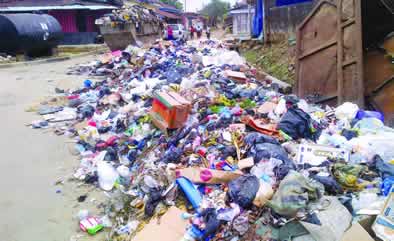
One of the primary locations affected by this issue is along the Arab Road and the nearby bridge, where waste collectors regularly dispose of trash, regardless of the close proximity to homes, schools, and local businesses. This situation has become a major concern for residents, who describe the resulting heaps of garbage as an eyesore that detracts from the community’s appearance and poses significant health risks.
Residents expressed their disappointment with the Abuja Environmental Protection Board (AEPB) and the Satellite Towns Development Department, which they believe have shown complacency in ensuring proper waste management in the area. Mr. Ifeanyi, a local resident, lamented, “There used to be a time when garbage trucks from the AEPB would pass by twice a week. Recently, we don’t see them anymore. What we see are these ‘bola’ guys who go around to collect the trash early in the morning. I thought perhaps they were commissioned by the AEPB, but if they are disposing of trash by the roadsides and on the bridge, then it can’t be.”
He further described the unsightly heaps of waste: “Those heaps can only be described as an eyesore. They deface the community, and when it rains, it stinks. Not to mention the diseases that are easily transmitted. We have tried to get across to the FCTA several times, to no avail.”
Another resident, Umar Faruk, highlighted the ongoing struggle against the refuse dumping, recalling past efforts by the community to address the issue. “These ‘bola’ people dump their refuse here, and it smells a lot. Some time ago, those who lived closer to the place and around that community fought against it. And they cleared it. But the fight wasn’t taken seriously. After a while, they started dumping refuse there again,” he explained.
The health implications of the waste accumulation are particularly concerning, especially during the rainy season. Adejoh Ameh, another resident, expressed worry over the potential health hazards, noting that the refuse creates an environment conducive to the breeding of rodents, flies, and mosquitoes. “Unfortunately, we are learning to live with it. During the rainy season, that place becomes a breeding ground for rats, mosquitoes, and even flies. With schools, community markets, and residential houses nearby, it poses a significant health hazard. We beg the Chairman of Bwari Area Council, the coordinator of Satellite towns, and the AEPB to help us,” he lamented.
In contrast, some waste collectors defended their actions, claiming they are not responsible for the dumping of refuse along the roads. Danjuma, one of the waste collectors, stated, “We are not the ones who dump refuse here. We only throw cartons and paper waste here. Those of us who are here know each other. We are not the ones who throw dirt here. If you come another day, you may meet them.”
As of the time of this report, attempts to reach Osilama Braimah, the Director General of the AEPB, were unsuccessful, as his line was repeatedly engaged. Similarly, Abdulkadir Zulkiflu, the Coordinator of the AEPB, could not be contacted as his number was unreachable. Text messages left by our correspondent had yet to receive a response.
The situation in Kubwa highlights the challenges faced by residents in managing waste effectively and the urgent need for government action to improve waste collection and management practices to safeguard public health and the environment.
Post Views: 376