

Russia and the International Atomic Energy Agency have held another round of high-level talks on the safety of the Zaporizhzhia Nuclear Power Plant, Europe’s largest nuclear facility, as both sides warn that fighting near the site continues to pose serious risks.
The 13th round of interagency consultations took place in Kaliningrad on July 21, 2026. It was led by ROSATOM Director General Alexey Likhachev and IAEA Director General Rafael Grossi.
According to ROSATOM, the discussions focused on the safety and security of the Zaporizhzhia Nuclear Power Plant, ZNPP, which has remained under Russian control since March 2022 and has been at the center of repeated safety concerns throughout the Russia-Ukraine conflict.
Likhachev told the IAEA delegation that attacks around the plant, the nearby city of Energodar, and surrounding areas have intensified since the end of April. He alleged that Ukrainian forces were increasingly targeting the area and that plant workers were being intimidated.
He said the incidents had resulted in seven deaths, including one employee of the nuclear plant, while 40 other people had been injured.
Likhachev urged the IAEA to publicly assess what he described as repeated attacks on the facility. He argued that the absence of clear international condemnation could embolden further actions that threaten nuclear safety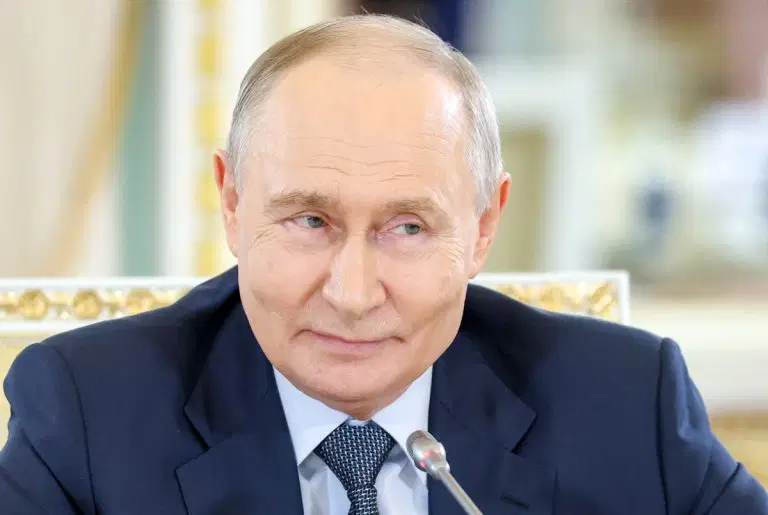

“The situation around the station is deteriorating,” the ROSATOM chief said. “We need an objective and public assessment from the IAEA.
Russian officials said significant repair work had been carried out on the high-voltage Dneprovskaya transmission line. The work involved the Ministry of Defence, Rosgvardia, specialists from grid operator Rosseti, and plant personnel.
However, Moscow said the line has not yet been re-energized from the Ukrainian-controlled side. Restoring a stable external power supply remains critical for the plant’s cooling systems and overall safety.
The plant’s six reactors have been in shutdown or cold shutdown for extended periods, but they still require electricity to run cooling pumps and safety systems. Loss of external power has been one of the IAEA’s main concerns since 2022.
The consultations also covered the continued deployment of IAEA experts at the facility. The agency has maintained a permanent monitoring mission at ZNPP since September 2022.
Both sides discussed arrangements for regular rotation of inspectors and ways to improve reporting on conditions at the plant and in Energodar. Grossi has repeatedly said that having IAEA staff on site provides vital, real-time information and helps reduce the risk of miscalculation.
The IAEA has consistently called on both Russia and Ukraine to refrain from military activity near the plant. Grossi has described the situation as “extremely fragile” and has warned that any direct hit on key infrastructure could have severe consequences.
Both delegations agreed on the importance of maintaining regular dialogue on nuclear safety and security issues at ZNPP.
The Zaporizhzhia plant has six VVER-1000 reactors and, before the war, supplied about 20% of Ukraine’s electricity. It is the largest nuclear power station in Europe.
Since Russian forces took control in 2022, the facility has been cut off from the Ukrainian grid and has relied on backup power lines. Over the past three years, both Moscow and Kyiv have repeatedly accused each other of shelling near the plant and of endangering nuclear safety.
The IAEA has avoided assigning blame in its public reports, instead focusing on the technical risks: loss of off-site power, damage to transmission lines, drone activity near the site, and the stress on plant personnel working under conflict conditions.
Experts say the biggest dangers are not necessarily a reactor meltdown — the reactors are shut down — but damage to cooling systems, spent fuel storage, or power lines that could lead to a loss of cooling.
The Kaliningrad meeting was attended by a broad Russian delegation, including representatives from nuclear regulator Rostechnadzor, the Ministry of Foreign Affairs, the Russian Armed Forces’ Radiation, Chemical and Biological Protection Troops, Rosgvardia, and Russia’s permanent mission to international organizations in Vienna.
For the IAEA, the talks are part of ongoing efforts to keep communication channels open despite the broader political breakdown between Russia and Ukraine. Grossi has traveled to both Moscow and Kyiv multiple times since 2022 to push for a “nuclear safety and security protection zone” around the plant. That proposal has not been implemented.
The agency continues to publish regular updates from its team at the site, focusing on power lines, water supply, staffing, and any signs of military activity.
No new agreement was announced after the July 10 meeting. Both sides said they would continue technical consultations.
For now, the plant remains in a precarious position. It is operating without generating electricity, dependent on external power, and located in an active conflict zone.
Likhachev’s call for a public IAEA assessment of the recent incidents puts pressure on the agency to take a clearer stance. The IAEA, however, has traditionally sought to remain technical and impartial, focusing on facts gathered by its inspectors rather than political statements.
Grossi has said he will continue to brief the UN Security Council and IAEA member states on conditions at the plant.
With fighting ongoing and infrastructure fragile, the risk has not gone away. As the IAEA put it in previous reports, “a nuclear accident cannot be ruled out.”
The Kaliningrad talks show that, even amid broader hostilities, Russia and the IAEA still see value in sitting at the same table to discuss one plant. For the millions of people who live within reach of Zaporizhzhia, that dialogue remains the best hope for preventing the worst.