


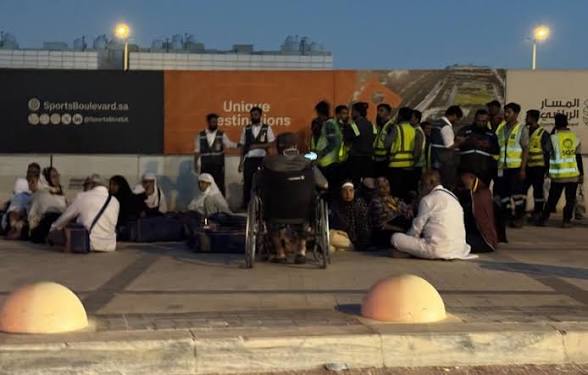
Saudi Arabia Extends Riyadh Airport Closure After Deadly Missile Strike Kills 12, Injures Over 300.
Saudi Arabia has extended the closure of King Khalid International Airport in Riyadh following a deadly missile attack that killed at least 12 people and injured 309 others, marking a significant escalation in the kingdom’s worsening conflict with Yemen’s Houthi rebels.
The attack, which occurred on Saturday, October 10, 2026, prompted aviation authorities to suspend airport operations while emergency teams assessed the damage and security agencies evaluated the safety of the facility. The continued closure on Sunday disrupted air travel and raised concerns about the safety of one of Saudi Arabia’s most important international transport hubs.
According to Saudi Arabia’s General Authority of Civil Aviation, the victims included four Saudi nationals, two Bangladeshi citizens, and one national each from the United States, Egypt, Jordan, Syria, Palestine and Sudan. Authorities confirmed that 309 people were injured, with several reported to be in critical condition. The injured were receiving medical treatment at hospitals.
The attack also caused damage to airport infrastructure, although authorities were still assessing the full extent of the destruction. The suspension of operations forced airlines to cancel or disrupt services, leaving passengers facing uncertainty over departures, arrivals and connecting flights.
Houthi Rebels Blamed as Regional Tensions Escalate
The Saudi led coalition fighting in Yemen has blamed the attack on the Iran backed Houthi movement, which has intensified its military operations against Saudi targets in recent days. The strike was reportedly the latest in a series of attacks on King Khalid International Airport within the same week, raising serious concerns about the vulnerability of civilian aviation infrastructure.
The renewed attacks come amid escalating hostilities between the Houthis and forces aligned with Yemen’s internationally recognized government, which receives Saudi support. The conflict has repeatedly drawn in regional powers and contributed to instability across the Arabian Peninsula and the wider Middle East.
The Houthis have presented their attacks as retaliation against military operations targeting their positions in Yemen. However, strikes that endanger civilian populations and critical transport infrastructure raise serious concerns under international humanitarian law, which requires parties to armed conflicts to distinguish between civilian and military targets.
The latest incident could further complicate diplomatic efforts to contain the conflict and prevent a broader regional confrontation. Saudi Arabia and its allies now face mounting pressure to strengthen air defence systems and protect critical infrastructure against further missile and drone attacks.
International Concerns Grow Over Aviation Safety
The closure of Riyadh’s main international airport has implications beyond Saudi Arabia, given the facility’s importance to international travel, business and regional connectivity. Prolonged disruptions could affect passengers, airlines, cargo operations and commercial activities linked to the Saudi capital.
Several foreign diplomatic missions have issued security advisories urging their citizens to avoid the affected airport and surrounding areas amid continuing security concerns. Regional governments have also expressed concern over the attack and its potential consequences for stability across the Middle East.
The incident highlights the growing risks to civilian infrastructure as the conflict expands beyond Yemen’s borders. Airports, seaports, energy facilities and major transport corridors are essential to regional commerce and humanitarian operations, making attacks on such locations particularly consequential.
For Saudi Arabia, the immediate priorities include treating the injured, assessing the damage, restoring safe aviation operations and preventing further attacks. The authorities have yet to establish a definitive timeline for the airport’s full reopening.
What Happens Next?
The extension of the closure underscores the seriousness of the security situation facing Saudi Arabia as hostilities with the Houthis intensify. Any decision to resume flights will depend on security assessments and confirmation that airport facilities can operate safely.
The wider implications will depend on how Saudi Arabia and its allies respond to the attack, whether further strikes occur and whether diplomatic efforts can prevent additional escalation.
For civilians across the region, the central concern remains the risk that continued military exchanges will produce more casualties, disrupt essential services and deepen an already protracted conflict.
As investigations and damage assessments continue, the attack on King Khalid International Airport stands as another warning of the potentially devastating consequences when armed conflicts threaten civilian infrastructure and international transport networks.