


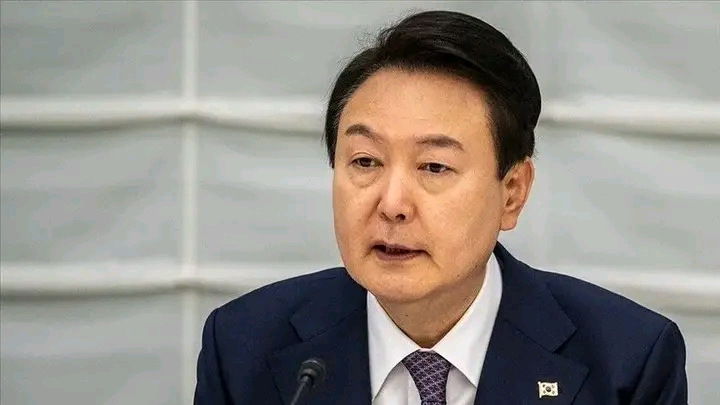
“South Korea’s Supreme Court Upholds Seven Year Prison Sentence for Former President Yoon Suk Yeol Over Martial Law Conviction”
South Korea’s highest court has upheld the seven year prison sentence imposed on former President Yoon Suk Yeol, bringing a definitive legal conclusion to one of the country’s most consequential constitutional and political crises in recent history.
The ruling affirms lower court decisions that found Yoon guilty of crimes linked to his controversial declaration of martial law in 2024, a move that triggered widespread political unrest, institutional challenges, and public debate over the limits of presidential authority in South Korea’s democratic system.
According to court findings, the former president’s actions during the martial law episode violated constitutional and legal provisions governing the use of emergency executive powers. Prosecutors argued that the declaration undermined democratic institutions and exceeded the lawful scope of presidential authority. The Supreme Court agreed with the lower courts, rejecting the former leader’s appeal and confirming the seven-year custodial sentence.
The decision marks a significant moment for South Korea’s judiciary, reinforcing the principle that public officials, regardless of rank, remain accountable under the rule of law. Legal experts say the judgment also reflects the country’s strong constitutional framework and the independence of its judicial institutions in handling politically sensitive cases.
The case has attracted widespread international attention, with analysts describing it as a defining chapter in South Korea’s democratic evolution. Observers note that the verdict could have lasting implications for future administrations by reinforcing constitutional checks and balances and discouraging the misuse of emergency powers.
Political reactions remain divided, with supporters of the former president criticizing the ruling, while opposition figures and civil society groups have welcomed the verdict as an affirmation of judicial independence and democratic accountability.
As South Korea continues to navigate the political aftermath of the 2024 crisis, the Supreme Court’s decision is expected to remain a landmark precedent in the country’s constitutional and legal history.