


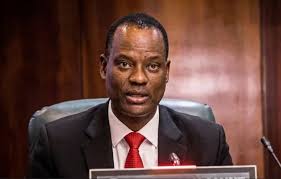
Nigeria does not currently have enough freely available crude oil to meet the full supply requirements of the Dangote Petroleum Refinery and other domestic refineries, Finance Minister Taiwo Oyedele has said, highlighting a major challenge facing the country’s petroleum industry.
Oyedele made the disclosure during an appearance where he addressed growing calls for the Federal Government to introduce a production subsidy to support local refineries and reduce the cost of petroleum products.
According to the minister, Nigeria’s daily crude oil production, estimated at approximately 1.8 million barrels, does not represent the volume available to the Federal Government for domestic distribution.
He explained that production-sharing contracts, joint-venture agreements, operating expenses and royalty obligations determine how much crude oil ultimately remains available to the government.
Under these arrangements, oil companies recover eligible production costs, while crude allocations are shared according to contractual terms. Consequently, the government cannot direct the entire volume produced in the country to domestic refineries.
Oyedele said Nigeria currently lacks up to 700,000 barrels of freely available crude oil daily to meet the Dangote refinery’s full requirement.
The minister also noted that the refinery may still need to import certain grades of crude oil because Nigerian crude does not always provide the most suitable feedstock for its operations.
The shortfall raises questions about Nigeria’s ability to maximise the benefits of domestic refining while maintaining sufficient crude oil production for exports and other contractual commitments.
The Federal Government introduced the crude-for-naira arrangement to support local refining and improve stability in the domestic petroleum market. However, Oyedele acknowledged that available crude volumes remain insufficient to meet the full requirements of the Dangote refinery and other local operators.
He expressed hope that increased crude oil production would eventually enable Nigeria to supply domestic refineries more adequately, with a long-term ambition of refining all crude produced locally and exporting refined petroleum products instead.
The debate comes amid renewed public concern over rising petrol prices and proposals to restore subsidies in different forms. The government has maintained its opposition to returning to the former fuel subsidy system, arguing that the policy would place additional pressure on public finances.
For Nigeria, the challenge extends beyond establishing large refining facilities. Sustainable domestic refining also depends on increasing crude production, improving access to feedstock, addressing contractual constraints and creating a reliable supply framework for local operators.
The extent to which Nigeria can resolve these structural problems will influence the country’s energy security, foreign-exchange requirements and ability to reduce its dependence on imported petroleum products.
Finance Minister Taiwo Oyedele says Nigeria lacks sufficient freely available crude oil to meet the full needs of the Dangote refinery and other domestic refiners, citing production costs and contractual obligations.