


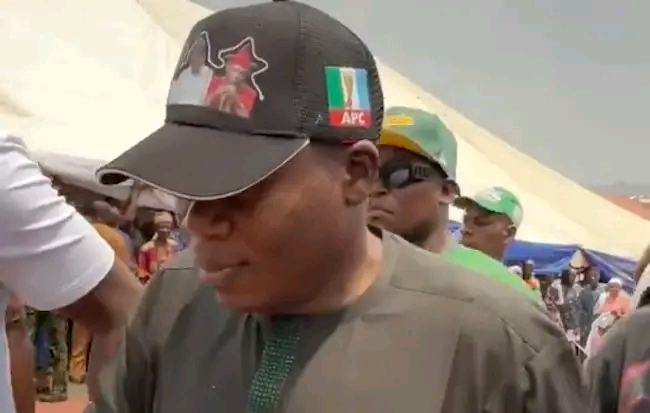
“Sunday Igboho’s APC Cap Appearance Triggers Political Storm, Rekindles Debate Over Yoruba Nation Movement’s Direction”
Ibadan, Nigeria Prominent Yoruba nation activist, Sunday Adeyemo , widely known as Sunday Igboho , has ignited widespread political debate and social media controversy after appearing publicly wearing a cap associated with Nigeria’s ruling All Progressives Congress (APC), prompting questions about the ideological direction and perceived neutrality of the Yoruba self determination movement.
Images and videos circulating across social media platforms in recent days show Igboho wearing an APC branded cap during a public appearance, triggering mixed reactions among supporters, critics, and political observers. The development has sparked intense discourse, with many Nigerians comparing the situation to past reactions surrounding separatist leaders and their perceived engagement with mainstream political structures.
Social Media Backlash and Public Reactions
Online reactions were swift and deeply polarized. Some supporters defended the activist’s personal freedom to engage politically, arguing that wearing a party symbol does not necessarily signal formal alignment. Others, however, expressed disappointment, suggesting the appearance could undermine the independence narrative historically associated with the Yoruba nation agitation.
Commentary across X (formerly Twitter), Facebook, and TikTok reflected broader anxieties about whether separatist movements can maintain credibility while appearing connected to established political parties.
Several commentators drew parallels with Nnamdi Kanu, leader of the Indigenous People of Biafra (IPOB), noting how political symbolism often shapes public perception of separatist advocacy in Nigeria’s highly sensitive ethnic and political landscape.
Political Symbolism and Movement Identity
Analysts say the controversy highlights the delicate balance between activism and political engagement in Nigeria’s evolving democratic space. The Yoruba nation movement has historically positioned itself as advocating regional autonomy and self determination, often critical of federal governance structures.
Political scientist observers note that symbolic gestures such as attire linked to political parties can carry significant implications in Nigeria, where identity politics and party affiliations remain deeply intertwined.
“Public perception matters enormously in movements built around ideological independence,” Lagos based governance analyst Tunde Afolabi told local media. “Even informal associations can reshape narratives and influence public trust.”
Silence From Key Stakeholders
As of the time of reporting, neither Sunday Igboho nor official representatives of the APC had issued a detailed clarification regarding the circumstances surrounding the appearance.
The absence of an immediate response has further fueled speculation, with supporters awaiting an explanation that could clarify whether the incident reflects personal expression, political outreach, or a broader strategic shift.
Broader Context: Separatist Movements and Nigerian Politics
Nigeria has witnessed increasing agitation for self determination across different regions over the past decade, often driven by grievances relating to governance, security, and economic inclusion. Movements advocating regional autonomy have operated largely outside formal party politics, making any perceived alignment with ruling structures particularly sensitive.
Observers warn that controversies of this nature may influence public discourse ahead of future political cycles, especially as identity based movements continue to shape national conversations about restructuring and federalism.
For now, Igboho’s appearance has underscored the growing intersection between activism, symbolism, and political perception in Africa’s largest democracy a reminder of how imagery alone can reshape national debates.