

The Federal Government and Organised Labour on Wednesday adjourned the minimum wage talks till Thursday (today) when the negotiation is expected to continue.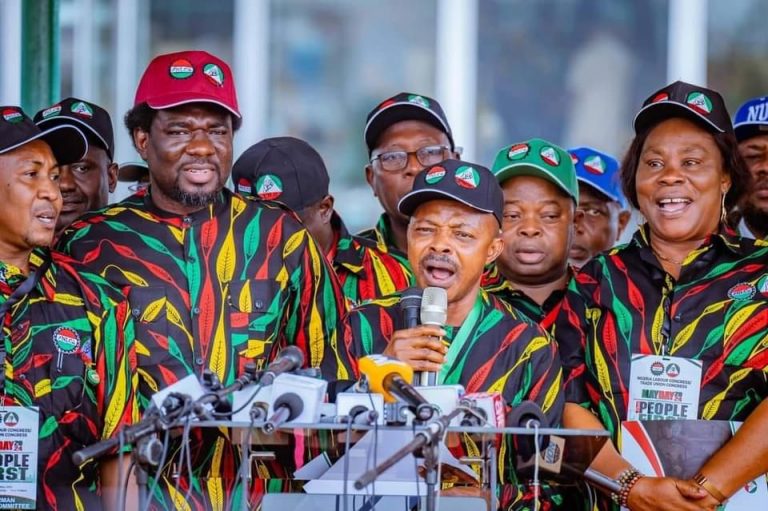

The Tripartite Committee on National Minimum Wage postponed the session in anticipation of the Minister of Finance, Wale Edun, submitting the salary template to President Bola Tinubu today.
Tinubu had on Tuesday directed the finance minister to present the cost implications for a new minimum wage within two days.
The President gave the order at a meeting with the government negotiation team led by the Secretary to the Government of the Federation, George Akume, at the presidential villa in Abuja.
Sources in the labour unions privy to the committee meeting said the parties decided to await the outcome of the presidential template before proceeding with further negotiations.
A source who attended the meeting said, “The meeting has been adjourned until Thursday. We showed understanding because we all know that the president gave the minister of finance 48 hours to come up with a minimum wage. So, we decided to give them the time. We will be meeting by 2 p.m.”
A top labour official who is a labour representative on the tripartite committee explained that the template was crucial to the minimum wage negotiation.
The source, who cannot be quoted because he was not authorised to disclose information to the media on the negotiation, expressed confidence that the talks would record good progress once the presidential template is presented to the parties.
The Minister of Information and National Orientation, Mohammed Idris, had hinted that the President wished to know the financial implications of the new minimum wage in 48 hours.
Briefing journalists on the presidential directive, the information minister said, “We were all there to look at all issues, and the President has directed the minister of finance to do the numbers and get back to him between today and tomorrow so that we can have figures ready for negotiation with labour.”
Idris assured of the president’s readiness to accept the committee’s resolutions, adding that “The president is determined to go with what the committee has said and he’s also looking at the welfare of Nigerians.
“Government is not against or opponent of labour discussions; the government is not an opponent of wage increase, but what is there is that government is always there to ensure a balance between what government pronouncement is and what the realities are on the ground.
“And therefore, we will work assiduously to ensure that whatever promises the government makes are promises that will be kept. That is the idea of this meeting.”
Furthermore, he said Tinubu directed the government representatives to work collectively with the organised private sector and the sub-nationals to achieve a new affordable wage award for Nigerians.
Idris explained, “The President has given a marching order that all those who have negotiated on behalf of the Federal Government and all those who are representatives of organised private sectors, the sub-nationals to come together to have a new wage that is affordable, sustainable and realistic for Nigerians.
“The wage is not just that of the Federal Government; as I mentioned earlier, the sub-nationals are involved, the organised private sector is involved; the Labour stepped out during that procedure. Now we have come back to the negotiation table.”
The minister assured that all hands would be on deck to present a new minimum wage for Nigerians in one week.
“All of us will work together assiduously within the next week to ensure that we have a new wage for Nigeria that is acceptable, sustainable and realistic,” Idris said.
Despite the intervention of the leadership of the National Assembly, labour embarked on a nationwide strike on Monday and Tuesday, crippling economic activities nationwide.
Banks, airports, public schools and courts were shut, forcing the Federal Government to convene an emergency meeting to find a way out of the impasse.
Following a meeting with the SGF, National Assembly leaders, and the National Security Adviser, Nuhu Ribadu, on Thursday, the unions announced on the suspension of industrial action for five days after President Tinubu agreed to pay a national minimum wage higher than N60,000. The tripartite committee pledged its readiness to convene daily until a new minimum wage is announced.
In an interview on Channels television, the President of the Trade Union Congress, Festus Osifo, said the unions would not insist on its N494,000 demand, indicating that the labour leaders were willing to accept a reasonable compromise
“There was a massive loss of revenue. If you were going to take N100 of revenue a day, and you don’t fly at all, you will probably make N2 or N3. And then there’s more to it because we must accommodate all the people that didn’t fly. So, you may be unable to sell seats for a long time because you’re dealing with a backlog,” he explained.
The Assistant General Secretary of the Aviation Round Table, Olumide Ohunayo, emphasised the strike’s broader impact on the aviation industry.
“It’s not only the airlines. The aviation industry lost lots of money due to the strike. The airlines, airport terminals, concessionaires, taxi drivers, and others. In fact, the entire ecosystem lost millions of naira, even the charter flights
“Some flights were cancelled. People are now forced to reschedule flights and see if they can get seats on a future date. And in getting those seats, ticket prices have jumped due to the rush to get seats.” he stated.
Pointing out the long-term economic effects on the aviation sector, the Chief Executive Officer of Centurion Security Limited, John Ojikutu, said, “The domestic airlines will lose some money, and that will affect the economy. The kind of money I’m talking about is not coming from local airlines because they contribute virtually nothing. If you compare the money they make from ticket sales to the money we make from foreign airlines, that is where the problem is.
“In the next two, three days, they would have cleared all those passengers, and we would now go back to our normal aviation problems, which are fuel and ticket fares,” he said.
Speaking on the long-drawn minimum wage negotiation, Debo Adeniran, the Executive Director of the Centre for Anti-Corruption and Open Leadership, urged the Federal Government and labour unions to finalise their talks quickly.
“The FG and the labour unions should not waste any more time beyond the 48 hours given to the finance minister. Everything is already concluded; they need to harmonise their positions based on their capacities to raise resources,” Adeniran stated.
Stressing the need for swift negotiations, he noted, “Labour unions and the FG should be realistic, which should not take an eternity to conclude. They should aim to finalise everything by the end of tomorrow (today).”
Adeniran also cautioned the labour unions against rushing to embark on strikes.