


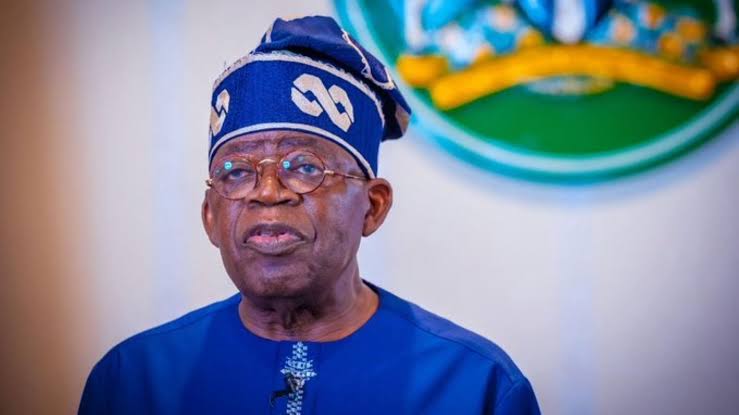
President Bola Tinubu has said Nigeria is making a decisive break from decades of dependence on crude oil revenue and will speed up a shift to a gas-powered economy, calling the present period “the decade of gas.”
Represented by Vice President Kashim Shettima, Tinubu spoke on Tuesday, October 6th, 2026, in Abuja at the fifth anniversary of the Nigerian Upstream Petroleum Regulatory Commission (NUPRC). The regulator was set up under the Petroleum Industry Act (PIA).
A statement signed by Stanley Nkwocha, the Vice President’s media aide, carried the remarks.
The President said the government had “already reduced” its dependence on oil revenue and intended to go further. He said the aim was no longer an economy that only extracts and exports petroleum, but one in which oil and gas feed manufacturing, agriculture, infrastructure and jobs.
He credited growth in agriculture, manufacturing, the digital economy and the creative industries under the Renewed Hope Agenda. He added that oil still matters, saying petroleum earnings help keep the naira stable and fund the Federation.
On gas, he said Nigeria, which he described as holding Africa’s largest reserves, would expand supply for power, industry and clean cooking. He said it would also cut gas flaring and methane emissions and grow renewable energy alongside gas.
He pledged that Nigeria would meet its climate responsibilities without sacrificing energy access and development.
Tinubu said investors who had pulled capital out of Nigeria were returning, and that the country had been Africa’s top upstream investment destination for two years running. He credited his administration’s reforms and the PIA framework for restoring confidence.
A Wood Mackenzie report found Nigeria attracted about $5.3 billion in sanctioned upstream capital in 2025, the most in Sub-Saharan Africa, in a year when regional upstream spending fell 18%.
The President also set conditions. Operators who enjoy incentives, he said, must deliver on work programmes, local content, environmental duties and obligations to host communities. The NUPRC, he added, must account publicly for its own performance.
He promised to protect the sanctity of contracts and settle disputes quickly. He acknowledged that the PIA alone was not enough, saying investors had complained of high costs, slow contracting and unclear fiscal terms on complex projects, and that the government had acted on those concerns.
He described the NUPRC as the “bridge between government policy and investment on the ground.” He directed it to keep procedures and timelines clear, coordinate with other agencies so investors are not caught between overlapping requirements, and stay independent, fair and firm.
Minister of State for Petroleum Resources (Oil), Heineken Lokpobiri, said Nigeria produces about 1.7 million barrels of crude oil a day and has more than 37 billion barrels in reserves. NUPRC data puts oil and condensate reserves at 37.01 billion barrels as of January 1st, 2026.
Lokpobiri said the country still needs far more investment, exploration and licensing rounds. He urged the commission to remove bureaucratic obstacles that could deter investors.
NUPRC Governing Board Chairman Magnus Abe said the commission’s creation under the PIA showed that reform of the sector was making progress.
Government figures show how far the shift has gone, and how far it has to go. The Presidency said in 2025 that non-oil sources supplied ₦15.69 trillion of the ₦20.59 trillion collected in the first eight months of that year, or three in every four naira.
In February, Tinubu ordered that oil and gas revenues due to the Federation be paid directly into the Federation Account.
The anniversary also featured awards to former directors of the Department of Petroleum Resources, which was reconstituted as the NUPRC under the PIA, for their part in reforming the upstream sector.