


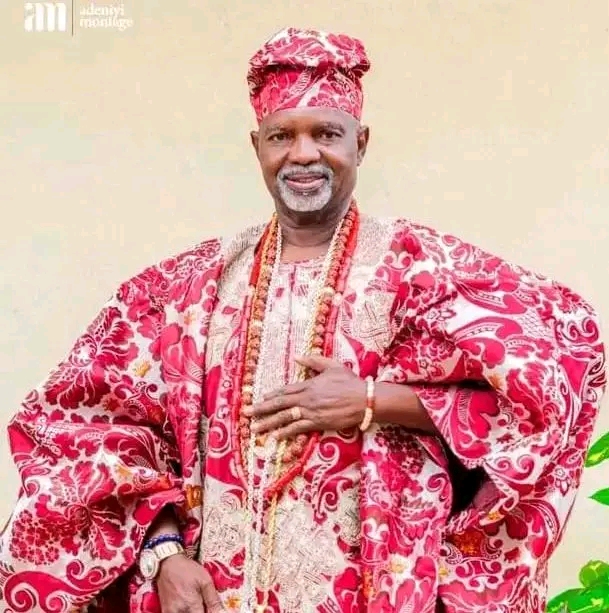
Reported by Musa Antiketu, | Journalist at Obaland magazine.
BADAN, OYO STATE — President Bola Ahmed Tinubu has joined the Olubadan of Ibadanland, Oba Owolabi Olakulehin, and Oyo State Governor Seyi Makinde to mourn the passing of Oloye Alabi, a respected chieftain of the Olubadan-in-Council and elder statesman whose decades of service helped shape the political and traditional institutions of Ibadan.
Oloye Alabi died on Tuesday at the age of 89, after a brief illness. His death has triggered an outpouring of tributes across Yorubaland, with leaders describing him as a bridge between tradition and modern governance, and a man whose counsel was sought by governors, ministers, and royal fathers alike.
In a statement issued by the State House, President Tinubu described the late Oloye as “a custodian of Yoruba values and a stabilising voice in times of political transition.” Governor Makinde, who visited the Olubadan Palace in Oke Aremo on Wednesday, declared three days of mourning in Oyo State and ordered flags to fly at half-mast.
For Obaland Magazine, this moment is more than the loss of one man. It is the closing of a chapter in Ibadan’s storied chieftaincy system a system that has produced presidents, military leaders, academics, and business moguls, and which continues to influence decision-making across Southwest Nigeria and the wider African diaspora.
Who Was Oloye Alabi? A Life Rooted in Ibadan’s History
Born in 1937 in the heart of Ibadan North, Oloye Alabi rose through the ranks of the Ibadan chieftaincy hierarchy over 40 years. He was turbaned as a chief during the reign of the 40th Olubadan, Oba Samuel Odulana Odugade I, and served under five successive Olubadans.
To understand his significance, one must understand Ibadan. Unlike other Yoruba kingdoms with a hereditary monarchy, Ibadan operates a unique military and civil chieftaincy succession line. Chiefs ascend from the Otun and Balogun lines, a system designed to reward service, wisdom, and community leadership rather than birthright alone.
Oloye Alabi belonged to the civil line. Colleagues say he was known for three things: dispute resolution, mentorship of younger chiefs, and quiet diplomacy during moments of political tension in Oyo State.
“Oloye was the man governors called at 2am when there was trouble in the markets or between communities,” said Chief Adebayo Adeyemi, a fellow member of the Olubadan-in-Council. “He never sought the microphone. He sought solutions.”
Beyond the palace, Oloye Alabi was a businessman and education advocate. He founded two community secondary schools in Ibadan North and funded scholarships for over 300 students between 1998 and 2023. Records from the Oyo State Ministry of Education show that one of those schools consistently ranked among the top 20 public schools in the state for WAEC performance.
He also served as a board member of the Ibadan Chamber of Commerce and was a patron of several Pan-African cultural groups promoting Yoruba language and heritage in the UK, US, and Brazil.
Presidential and State Tributes: “An End of an Era”
President Tinubu’s condolence message, signed by his Special Adviser on Media and Publicity, struck a tone of national significance.
“The death of Oloye Alabi is a profound loss not only to Ibadanland and Oyo State, but to Nigeria,” the President said. “At a time when our nation needs the wisdom of elders to navigate economic and social transitions, Baba’s transition reminds us of the importance of institutional memory and traditional leadership in nation-building.”
The President recalled meeting Oloye Alabi during his time as Lagos State Governor, noting that the late chief had advised him on inter-ethnic relations and community policing.
Governor Seyi Makinde, speaking at the palace after signing the condolence register, called Oloye Alabi “a living encyclopedia of Ibadan politics.”
“From the days of Chief Bola Ige to today, Baba was consistent,” Makinde said. “He told truth to power. He defended the poor. And he never allowed partisan politics to destroy the unity of Ibadan.”
The Governor announced that the state government would be part of the burial arrangements and would work with the Olubadan Palace to document Oloye Alabi’s oral history as part of Oyo State’s cultural archive.
The Olubadan of Ibadanland, Oba Owolabi Olakulehin, described the deceased as “my brother, my advisor, and my conscience.” In a palace statement read by the Ekerin Olubadan, the monarch said the chieftaincy council had lost “one of its strongest pillars.”
*Context: Why Traditional Rulers Still Matter in 2026 Nigeria*
In Nigeria’s Fourth Republic, the role of traditional rulers is often misunderstood. They hold no constitutional power, yet their influence on security, land disputes, elections, and social cohesion remains enormous.
According to data from the Nigeria Governors’ Forum, over 60% of community-level conflict resolution in Southwest Nigeria in the last five years involved traditional institutions.
Oloye Alabi was part of that ecosystem. During the 2019 and 2023 election cycles, he chaired a committee of Ibadan chiefs that mediated between political parties to prevent violence in 11 wards. The Independent National Electoral Commission, INEC, in its post-election report, cited Ibadan North as one of the most peaceful urban LGAs in Oyo State.
Pan-African scholars argue that this model — where elected government and traditional authority co-exist — is one of Africa’s most durable governance innovations. Professor Wale Adebanwi of the University of Oxford, in a 2024 paper on “Traditional Authority and Democratic Consolidation,” cited Ibadan’s chieftaincy system as a case study in institutional resilience.
“Chiefs like Oloye Alabi were not relics,” Prof. Adebanwi wrote. “They were adaptive institutions. They translated state policy into local language, and they translated local grievances into state policy.”
That dual role is why President Tinubu and Governor Makinde both moved quickly to pay tribute. In a country grappling with insecurity, inflation, and youth disillusionment, elders who command moral authority are seen as critical stabilizers.
*Reactions Across Yorubaland and the Diaspora*
News of Oloye Alabi’s death spread quickly on radio, television, and social media. By Wednesday morning, hashtags #RIPOloyeAlabi and #IbadanMourns were trending in Nigeria.
The Ooni of Ife, Oba Adeyeye Ogunwusi, sent a delegation to Ibadan, describing Oloye Alabi as “a custodian of Omoluwabi values.” The Alaafin of Oyo, Oba Abimbola Owoade, also issued a statement, noting that the late chief had worked with him to revive cultural festivals in Oyo.
In the diaspora, the Yoruba World Congress and the Egbe Omo Yoruba in North America released joint condolences. Dr. Anthony Alabi, coordinator of the group in Houston, Texas, said: “Baba funded the Yoruba language classes for our children here. He believed that if we lose the language, we lose the soul.”
Market women at Bodija and Dugbe markets held a candlelight vigil on Wednesday night. Many recalled how Oloye Alabi intervened during the 2021 market fire, helping to secure federal relief funds for affected traders.
The Succession Question and Ibadan’s Next Steps
With Oloye Alabi’s passing, attention now turns to the Olubadan-in-Council. Under Ibadan tradition, the council will meet to declare a vacancy and begin consultations for a successor. However, sources at the palace told Obaland Magazine that the council is in no rush.
“The priority now is burial and honoring his memory,” a senior chief who asked not to be named said. “Politics can wait.”
Governor Makinde has urged the people of Ibadan to remain peaceful during the mourning period. Security has been increased around the palace and major markets as a precaution.
The burial is expected to hold next week in accordance with Islamic rites, as the late chief was a Muslim. It will be attended by dignitaries from across Nigeria and the Benin Republic.
*A Pan-African Legacy: Tradition as Soft Power*
For Obaland Magazine, Oloye Alabi’s life reflects a larger African story: the role of elders in preserving identity while engaging with a changing world.
Across the continent, from the Ashanti Kingdom in Ghana to the Zulu Kingdom in South Africa, traditional leaders are redefining their relevance. They are partnering with tech hubs, running NGOs, and speaking at the United Nations.
Oloye Alabi did the same on a smaller scale. In 2022, he hosted a delegation of African-American tourists in Ibadan as part of a “Roots and Culture” exchange. He told them: “You left 400 years ago, but your seat at the table is still here.”
That sentiment captures why his death matters beyond Oyo State. It is a reminder that Africa’s development will not only be driven by GDP figures and startups, but also by the institutions that hold communities together.
As Nigeria prepares for the 2027 general elections, political analysts say the voice of elders like Oloye Alabi will be missed. “We need people who can call a governor and a market woman by the same name and both will listen,” said Dr. Ayo Olukotun, a political scientist at Olabisi Onabanjo University.
What Happens Next
1. Mourning Period: The Oyo State Government has declared three days of mourning. Government activities will be low-key.
2. Burial Arrangements: The family, in consultation with the Olubadan Palace, will announce burial details. Islamic prayers will be held at the Central Mosque, Ibadan.
3. Tributes and Documentation: The Oyo State Ministry of Culture and Tourism says it will produce a documentary on Oloye Alabi’s life.
4. Chieftaincy Process: The Olubadan-in-Council will meet after the 40-day mourning period to discuss succession.
President Tinubu is expected to send a federal delegation to represent him at the funeral.
Conclusion: The Weight of Memory
Oloye Alabi’s death comes at a time when Nigeria is debating the future of its institutions. In Abuja, lawmakers talk about constitutional reform. In Ibadan, people talk about the man who settled their land case without collecting a kobo.
Both conversations matter. But for millions in Oyo State, leadership is not abstract. It is the chief who answers his phone, the elder who shows up at a naming ceremony, the voice that says “let us not fight.”
President Tinubu, in his statement, said: “May his soul rest in peace, and may his legacy of service continue to inspire us.”
Governor Makinde put it more simply at the palace: “Ibadan will not forget.”
As flags fly at half-mast and condolence registers fill up, one thing is clear: the passing of Oloye Alabi is not just news. It is history.
President Bola Tinubu and Governor Seyi Makinde mourn Oloye Alabi of the Olubadan-in-Council. Read Obaland Magazine’s detailed report on his legacy, Ibadan chieftaincy, and what his death means for Oyo State and Nigeria.