


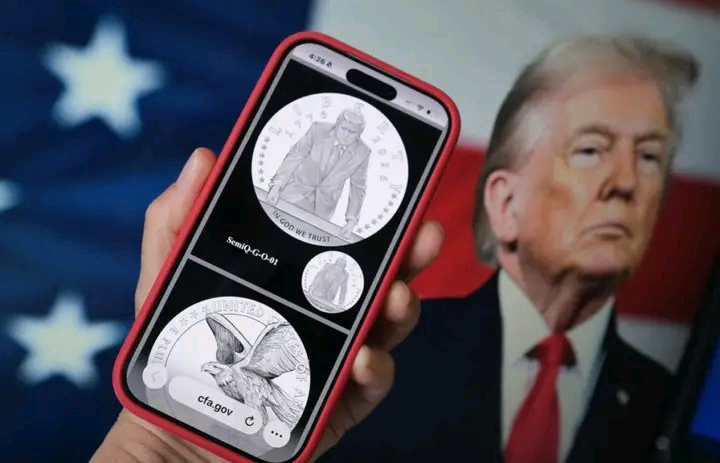
“Trump Becomes Face of Semiquincentennial Gold Coin After Federal Panel Approval Historic Move Spurs Legal, Ethical Debate”
Washington, D.C. A federal arts commission dominated by appointees of U.S. President Donald J. Trump unanimously approved the final design for a 24‑karat commemorative gold coin bearing his likeness to mark the United States’ 250th anniversary on July 4, 2026. The decision clears the way for the United States Mint to begin production of the coin, a move that has ignited political controversy and legal scrutiny both domestically and internationally.
The U.S. Commission of Fine Arts, whose members were appointed by Trump following a reconstituted leadership earlier this year, voted in favour of the design on March 19, 2026. The coin’s obverse (front) depicts Trump leaning forward over a desk with the word “LIBERTY,” the dates “1776 2026,” and the motto “IN GOD WE TRUST.” The reverse design features a bald eagle in flight framed by traditional inscriptions. Officials have not announced the coin’s denomination or final size, though discussions included proposals for a larger diameter than standard collector pieces.
Treasury officials presented the design during the commission’s meeting, with Acting Chief of the Mint’s Office of Design Management affirming that Trump personally reviewed and approved the image. Supporters, including U.S. Treasurer Brandon Beach, defended the design as emblematic of American resilience and democratic spirit in advance of the Semiquincentennial celebration.
Despite unanimous approval by the Trump appointed panel, the decision has prompted sharp criticism from lawmakers, numismatic experts, and constitutional scholars. Federal law traditionally prohibits living individuals from being depicted on U.S. currency a measure intended to preserve the nation’s democratic principles and avoid comparisons to monarchic or authoritarian symbols. Critics argue that even as a non‑circulating commemorative item, the Trump coin could undermine longstanding norms and raise legal questions about the proper scope of executive and Treasury authority.
Senators including Jeff Merkley have framed the initiative as inconsistent with American precedent, noting that such depictions have historically been reserved for deceased leaders or symbolic figures. The Semiquincentennial gold coin will join broader efforts by the Trump administration to associate the current presidency with enduring national milestones drawing both praise from supporters and rebuke from opponents who see the move as politically motivated.
The legal debate is further complicated by semiquincentennial coinage legislation passed in 2020 that authorizes the Treasury Secretary to issue commemorative pieces “emblematic” of the U.S. 250th anniversary. While that law does not explicitly forbid living figures on commemorative coins, longstanding currency design norms and federal statutes regarding portraits on legal tender remain points of contention.
As the U.S. Mint advances production plans, observers will be watching closely for legal challenges, market reception among collectors, and the broader cultural implications of placing a sitting president’s image on a major national commemorative coin.