

A U.S. federal court has scheduled the trial of Venezuela’s ousted president Nicolás Maduro and his wife Cilia Flores for June 23 2027, more than two years after the pair were captured in a U.S. military operation in Caracas.
During a brief hearing on Wednesday, Judge Alvin Hellerstein of the Southern District of New York set the date following a joint request from prosecutors and defense attorneys.
Maduro, 63, and Flores have been held at the Metropolitan Detention Center in Brooklyn since January, after pleading not guilty to federal drug trafficking and firearms charges.
On January 3, U.S. commandos carried out a nighttime raid on Maduro’s compound in Caracas. The operation, which involved naval, air and ground forces, resulted in the detention of Maduro and Flores and their transfer to the United States.
U.S. prosecutors allege that during his presidency Maduro used state institutions to protect and promote large-scale drug smuggling, and that he worked with cartels to move cocaine into the United States.
Maduro faces four charges: narco-terrorism conspiracy, cocaine importation conspiracy, possession of machine guns and destructive devices, and conspiracy to possess machine guns and destructive devices.
Flores faces three counts: cocaine importation conspiracy, possession of machine guns and destructive devices, and conspiracy to possess machine guns and destructive devices.
Both have denied all charges. Maduro has called his detention a “kidnapping” and described himself as a “prisoner of war.”
At Wednesday’s hearing, Maduro appeared in a beige prison uniform and glasses. He did not address the court beyond greeting the judge. Flores, also in a prison uniform with her hair tied back, sat a few feet away with their legal team.
Outside the Manhattan courthouse, protesters gathered. Some waved Venezuelan flags and signs reading “Free President Maduro.” Others held placards calling Maduro and Flores “dictators
Judge Hellerstein also set November 17 for a hearing focused on defense motions.
A central issue will be a challenge to the legality of the January capture. Defense lawyers argue that the manner of arrest raises constitutional and international law questions. Prosecutors say the operation was lawful and necessary given the charges.
The long gap until trial reflects the complexity of the case, including classified evidence, international witnesses, and voluminous financial records. Both sides agreed more time was needed for discovery and pretrial motions.
In April, the U.S. government granted a limited license allowing Venezuela to pay for Maduro’s and Flores’s legal defense. That had previously been blocked under U.S. sanctions.
The couple had asked the court to dismiss the case in part on that basis, arguing that denying them access to funds violated their constitutional right to counsel of choice. The court allowed the funding to proceed, but the broader dismissal motion remains pending.
Maduro is also facing a separate civil lawsuit in the United States. Families of five young men killed in Venezuela between 2017 and 2020 allege that Maduro ordered extrajudicial killings through an elite security unit known as the Special Action Forces, or FAES.
The complaint filed last month says the victims were among thousands allegedly killed under Maduro’s command by units including FAES, which was dissolved in 2021 after widespread reports of human rights abuses, including findings cited by the United Nations.
Maduro is expected to seek immunity in the civil case on grounds that he was a head of state at the time of the alleged acts. The New York Times first reported the expected immunity claim.
The United States has also taken direct control over Venezuela’s oil exports. Proceeds are being placed in special accounts overseen by Washington, a move U.S. officials say is intended to prevent funds from being used to support the charges alleged against Maduro.
Maduro led Venezuela from 2013 to 2026. His government was widely accused of political repression. Both his 2018 and 2024 re-election bids were rejected as fraudulent by numerous countries, including the United States and most of Latin America and Europe.
The January raid effectively ended his rule. Rodríguez’s interim government has said it is focused on restoring basic services and engaging in dialogue, but the country remains under heavy international scrutiny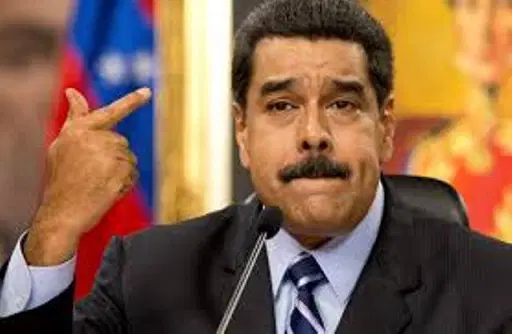

Between now and June 2027, the court will handle pretrial motions, evidence disputes, and questions about jurisdiction and the legality of the capture
Prosecutors are expected to present communications, financial transactions, and testimony linking Maduro’s office to drug trafficking networks. The defense will likely argue that the charges are politically motivated and that the arrest violated Venezuelan sovereignty.
Legal experts say a trial of a former head of state on U.S. criminal charges is unprecedented in scale. The outcome could set new precedents for how the U.S. prosecutes foreign leaders.
For now, Maduro and Flores remain in federal custody in Brooklyn. They will return to court in November for arguments on the defense motions.
Judge Hellerstein closed Wednesday’s 20-minute hearing by confirming the June 1, 2027 trial date and urging both sides to meet deadlines for filings.
The case will continue to draw global attention not only for the charges, but for what it says about accountability, sovereignty, and the limits of U.S. law enforcement beyond its borders